Bicycling the Rim Drive Crater Lake National Park and Atrial Fibrillation

I haven’t blogged for a while because we’ve been on vacation in Croatia for two and a half weeks, and of course after being gone for that long I’ve been incredibly busy at work. I am working on along blog entry (actually it’ll be a separate blog) about Croatia, so stay tuned.

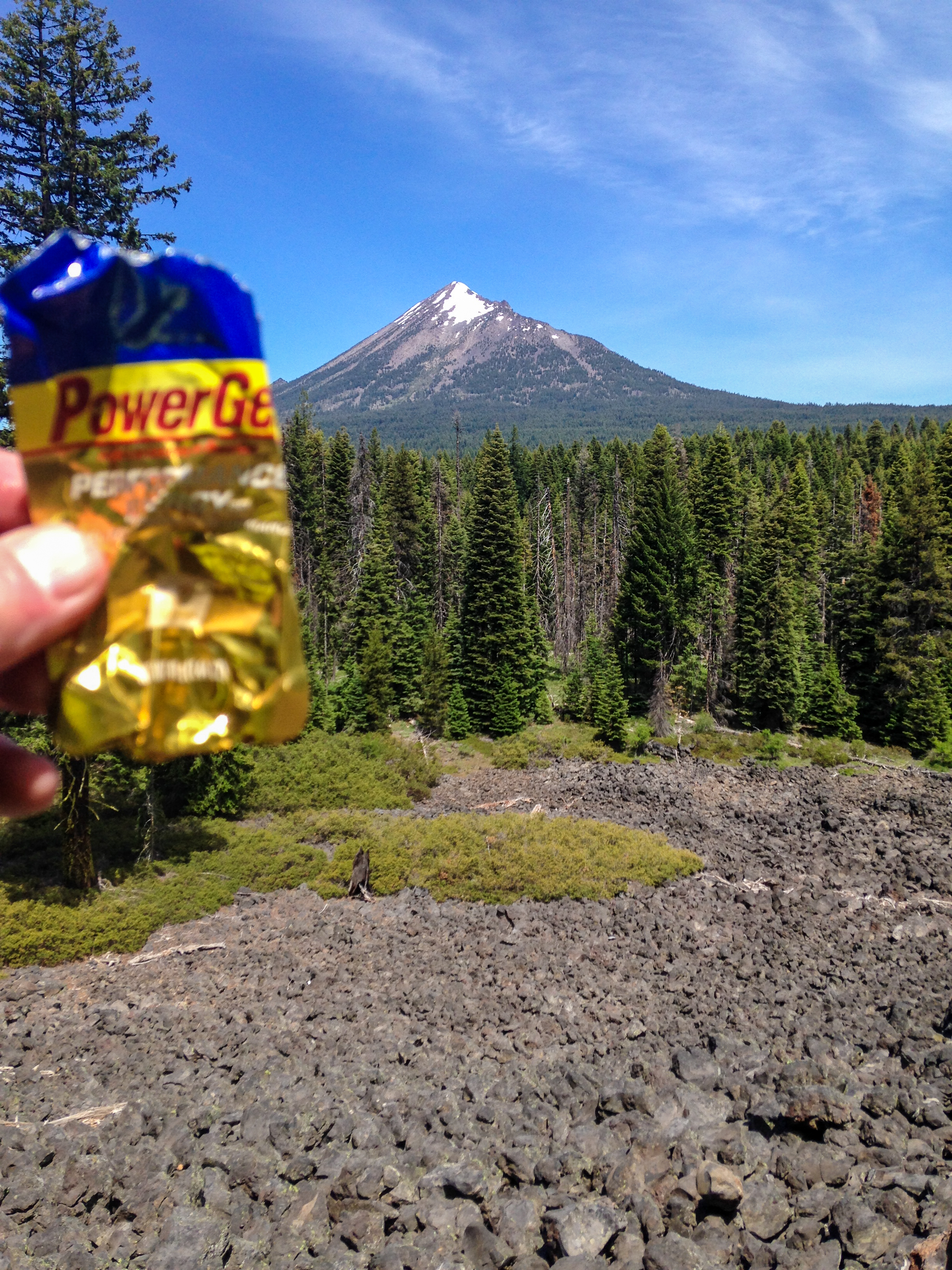
crater-1
Me During a Brief Rest Stop

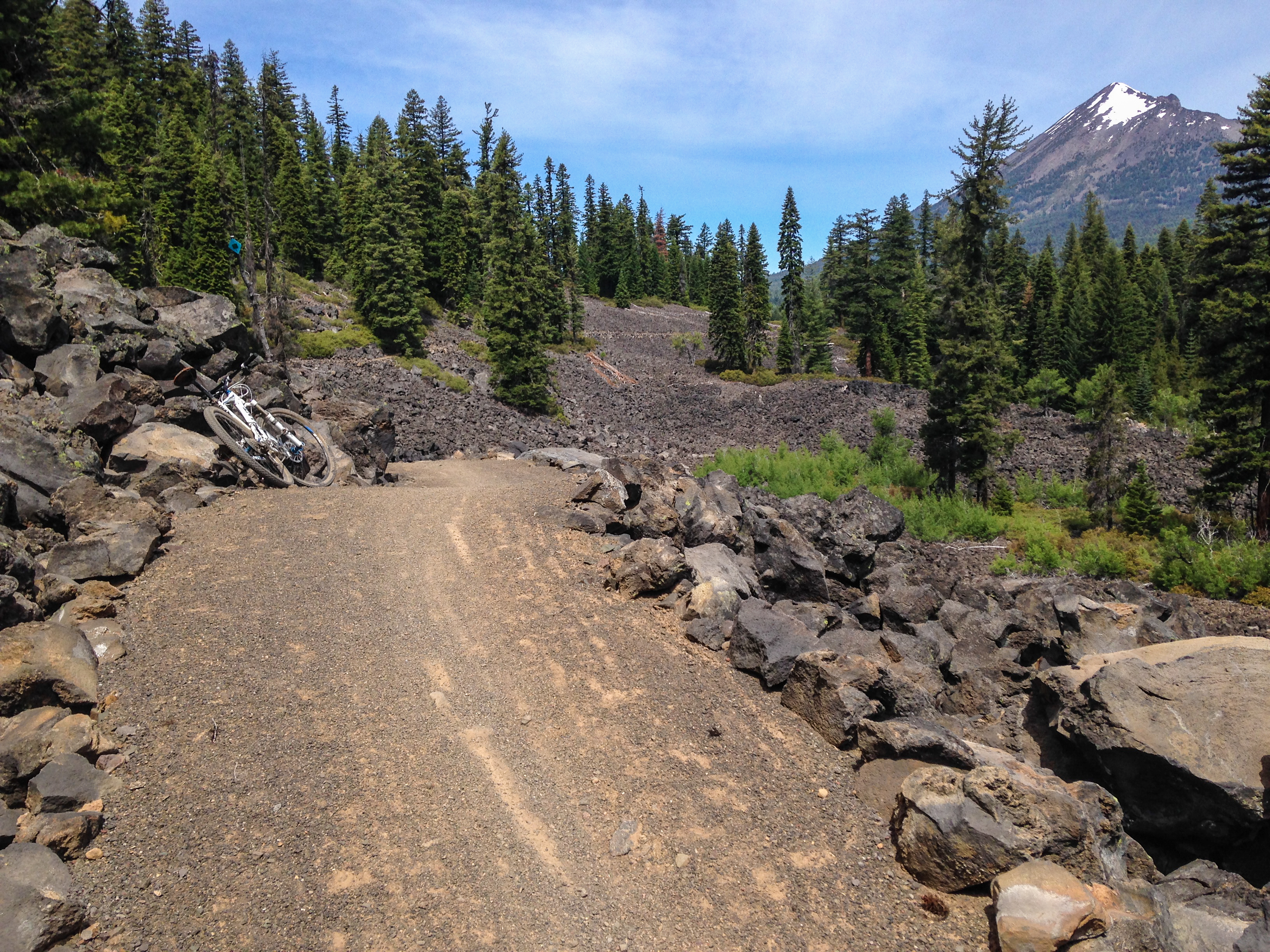
In my opinion bicycling around Crater Lake is one of the finest bike rides in the entire United States, and Crater Lake National Park will, from time to time, close of twenty-four of the thirty-three miles of the Rim Drive to allow bicyclists, hikers, and runners to have a relatively car free day. This year they had vehicle free days on two Saturdays: September 20 and 27, and I made time to be there for both days.

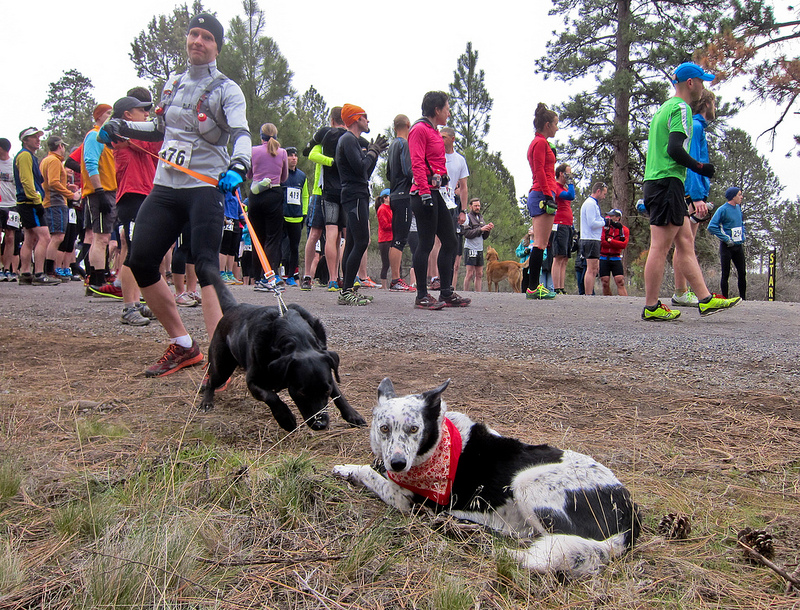
Since I live near Crater Lake N. P. I’ve had the opportunity to ride the rim several times, but this year was my first time doing it in permanent atrial fibrillation (and while on a beta blocker). Always a challenging ride under any circumstances, adding a fib and a beta blocker to mix changes things a bit.

Most riders start at the Steel Visitors Center (Park Headquarters) and ride clockwise. The first thing on the agenda is a three mile climb with 650 feet of elevation gain up to the Rim Village. This is actually the steepest hill along the route, but not the most difficult, in my opinion, mostly because the legs are still fresh. It is quite odd to pedal up a climb like that and find a lake at the top. There are several climbs and descents along the thirty-three mile route, and rarely is there any flat road, and the two toughest climbs, in my experience, are in the second half of the ride – the long easy climb to Cloud Cap (where most people stop to sigh and eat their Clif Bar) and the last grind up to Dutton Ridge. I might even say that you only need two gears to ride the rim – whatever you use as your easiest climbing gear and a big gear for coasting downhill.

Elevation varies from 6700 to 7700 above sea level. Personally I don’t have an issue with the elevation at Crater Lake because I’m used to living at higher elevation, but people coming from sea level might feel it.
15380655085_92b99626d0_h
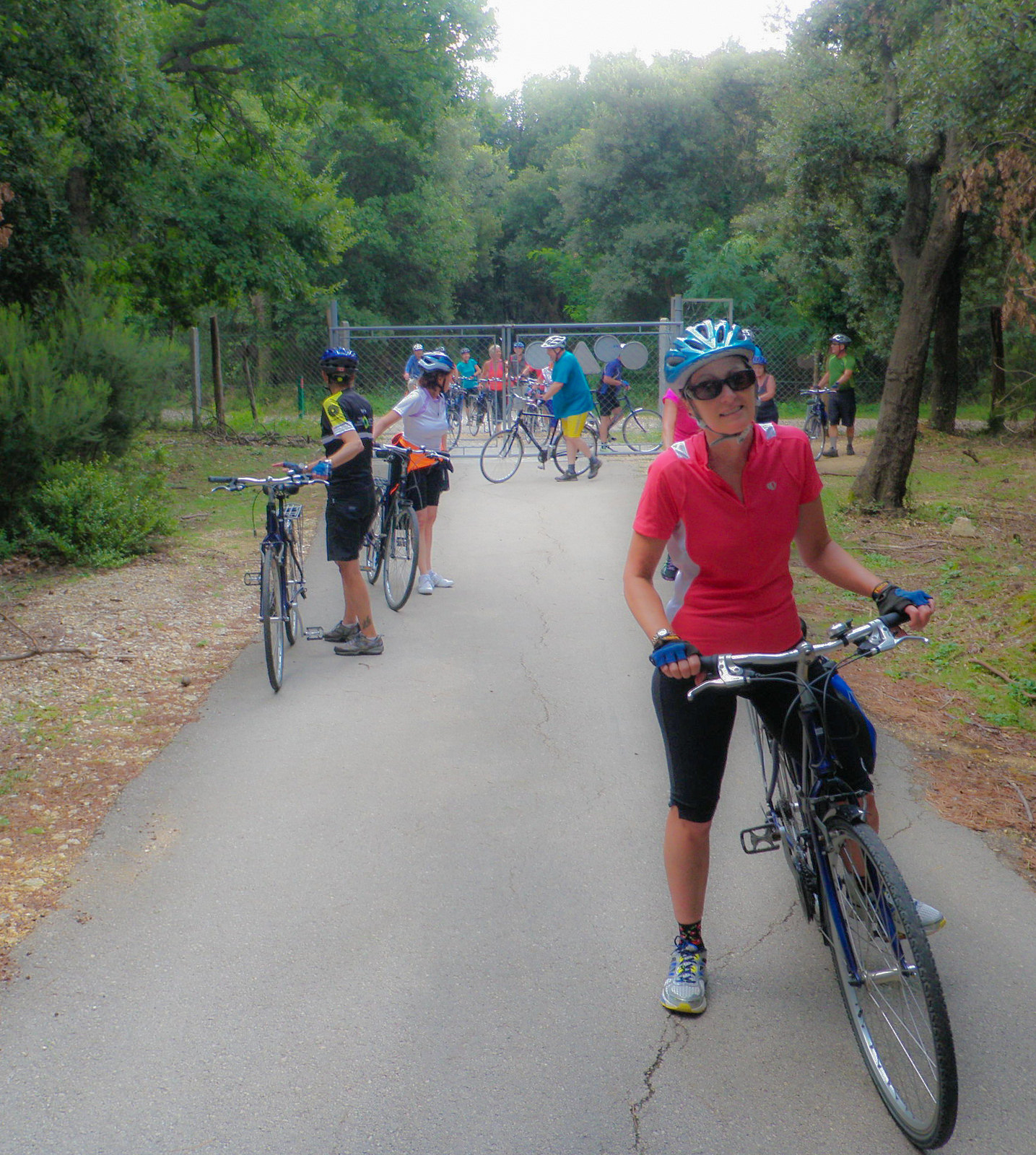
Bicycling in Croatia with Margo

To be honest, none of the climbs (going clockwise) are particularly steep, and there is only a total of about 3500 feet of climbing, but the climbs are so long and persistent that it seems like more. The descents can be fast and one could easily go 50 mph down the descent from Cloud Cap, but don’t. The speed limit is 35 mph and there are often surprising potholes encountered once you get up above 40 mph. The vehicle free days are great because you don’t have to worry about cars behind you. One day I was descending at 45 mph, a speed at which the wind in my ears prevents hearing anything, riding right down the middle of the lane, and was passed by a van. I thought, “What’s your hurry, bro? I’m already going 10 mph over the speed limit!”

The scenery is world class and seeing it slowly, up close on a bike, complete with the sounds and the smells is unimaginably beautiful. Being there on a vehicle free day with hundreds of bicyclists from all over Oregon is even better – there is an amazing energy in the air on the vehicle free days.
8692082027_d68bd64741_k
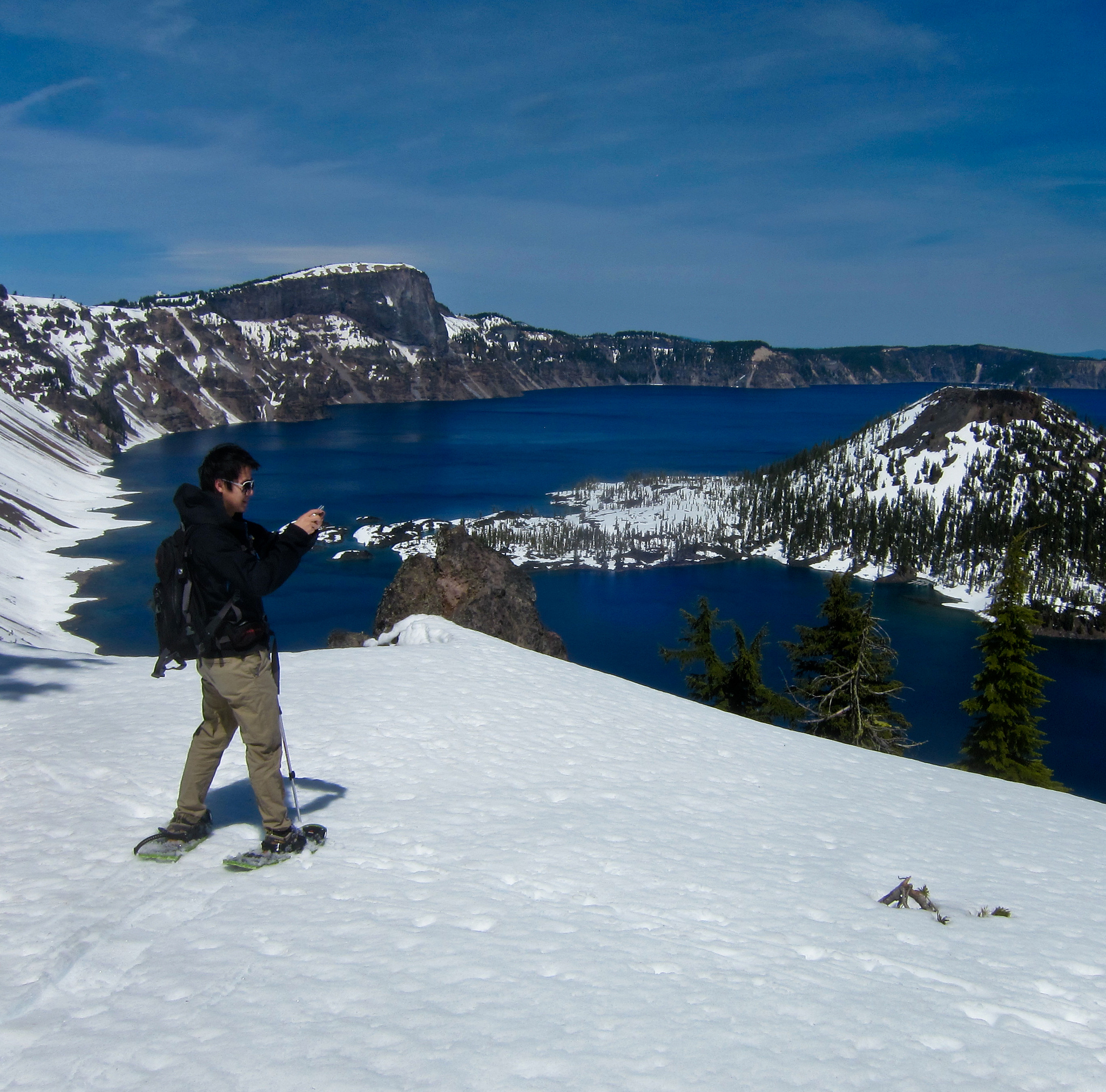
Snowshoeing with Libo April 2013

If you are going to ride the rim, especially on a vehicle free day, keep in mind that once you are past the Visitor Center and the Rim Village (basically once you are past the first three miles) there is no water. I’m a heavy sweater so I’ll take three liters on a hot day. Actually along the last big climb there are some little “waterfalls” right along the roadside and I have seen people filling their water bottles there and it is probably fine; but it is definitely not tested and designated as potable water. Also keep in mind that there will be no SAG wagon trailing you so make sure you have the proper gear and tools for changing flat tubes and minor repairs.

As far as riding the rim in a fib while on a beta blocker, well, it is much slower. I was able to ride it but it took me at least an extra hour. I had a triple chainring on my old road bike, and I used to be able to do the entire ride in the middle chainring (except for part of the first climb); but now I am using my easiest gear for most of the climbing (my new bike has compact double, but the gearing is similar). I think I need to be happy with being able to complete the ride without falling to pieces, and quit lamenting my slower speed.

cratermarg-1
Photo by Margo

My personal preference, now that I am in a fib, is to keep going and minimize rest stops. It seems every time I stop it’s like starting over again. On the first Saturday I was riding with a group of friends, including my wife Margo (her first time doing the rim ride) and I told them I wouldn’t be stopping much and that they could catch up to me. The last I saw them was at the top of the first climb, and I actually completed the ride a half hour or so ahead of them – they had fun, stopped at the many overlooks, stopped for lunch. I was the tortoise to their hare; slogging up the hills and only stopping a few times.

Another difference is that now that I am on an anticoagulant I brake a lot on the descents. I’m usually the biggest rider in whatever group I’m riding in and consequently the slowest climber that makes up for that by being the fastest descender. No more. Now I think about how descending slowly will help me keep my blood inside my body and I was passed by dozens of riders on each hill. As a matter of fact I kept getting passed by the same groups over and over. They’d pass me on the climb, then I’d pass them at the top of each hill where they’d stop to look at the stunning view of the lake, then they’d pass me on the descent and I’d pass them again at the bottom of the hill where they’d evidently stop to chat. Over and over – sort of fun.
3429636703_c25574ae6e_o
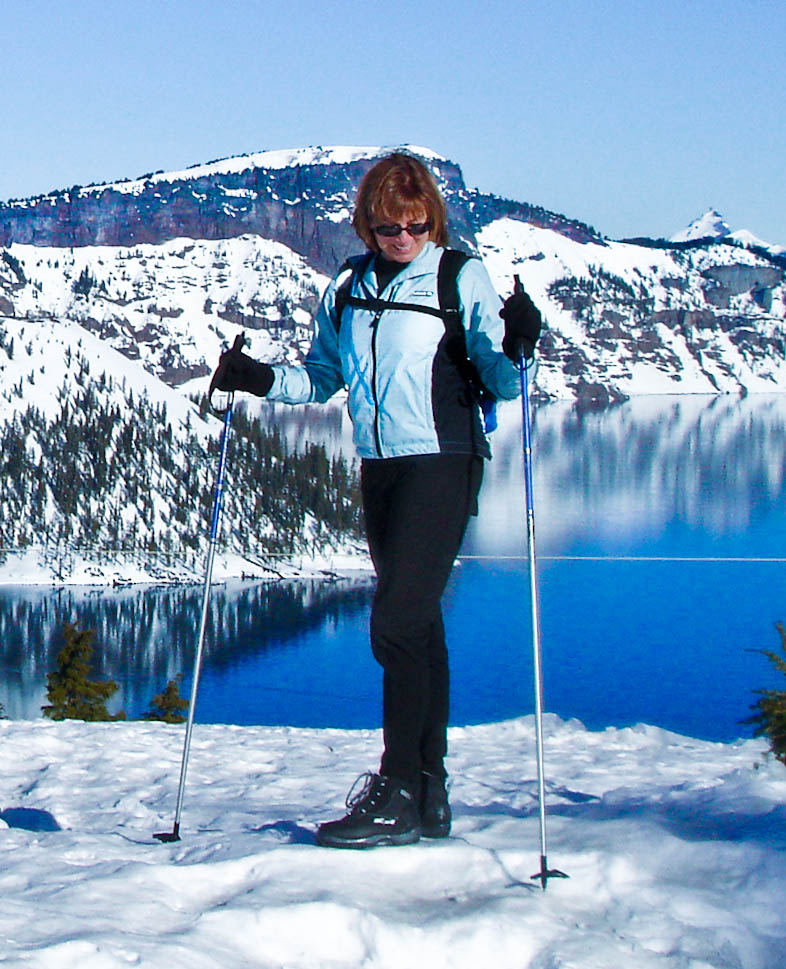
Skiing with Jan (evidently I’m relying on old photos because I only took one photo for two days of riding around Crater Lake – like I said I don’t stop enough!)

I returned and rode the Rim Drive again the following weekend as well but my friends didn’t accompany me. It was a much cooler, windier day and looked like rain, and they had other plans. I ended up doing the first half and deciding to make it an out and back. I was thinking about the big descent down the other side of Cloud Cap in the heavy wind and thought that might not be the best idea on account of my being anti-coagulated. I learned that riding the rim counter-clockwise is not as safe as riding clockwise. When riding clockwise the lake is to your right; but when riding counterclockwise there was quite often a steep drop off and no shoulder and no guard rail. The drop offs weren’t a thousand feet or anything like that but they were certainly much further than I wanted to go over on my bike so I did the long descents towards the middle of the lane although I pissed off a few drivers I will live to ride again. There is no way I will ever ride the entire rim counterclockwise. Keep in mind that most drivers are looking toward the lake (why wouldn’t they) and if you are between the driver and the lake they are likely to see you. But when riding the other direction there is more risk of being unseen.


Carter Lake Century 2011 (not my video)

Another good time to ride around Crater Lake in the Crater Lake Century. I have never ridden with the organized century (I’ve always been training for something at that time – it’s held in August) but I have been told it is a blast. As far as I know the Rim Drive isn’t closed during the century but there are about 300 riders up there that day. The number of applicants is limited so register early if you want to get in. The century, obviously, involves more than the thirty-three mile Rim Drive and in addition to more climbing from Fort Klamath up to the Park Headquarters, there is some routing around the local farmlands near Fort Klamath to make it an even one hundred miles.

I would love to hear from other bicyclists, especially cyclists dealing with atrial fibrillation. Please feel free to comment below.
SOB Trail Run 15K Race Report: Atrial Fibrillation, Running, Beta Blockers – My First Impression

SOBcourse1
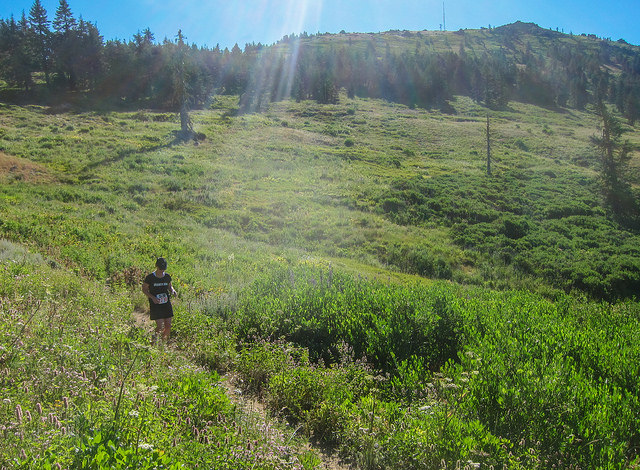
SOB Trail Run

I have been in permanent atrial fibrillation for a couple of years now, but only been taking an anticoagulant (Pradaxa). But things have changed and for the past month I have been on a beta blocker, carvedilol.

Prior to starting the carvedilol, while in permanent atrial fibrillation, I had been able to run two marathons and one ultramarathon (50K) without any more trouble than the normal marathon type suffering, but over the past six months I have noticed things have been changing. I’ve slowed down, even for me, and distances are getting harder. My last half marathon was a joke and I was at the end of the pack within the first two miles. After a run or mountain bike ride of an hour or more I would have problems afterwards – my blood pressure would drop and my pulse would stay high. After a long run, especially if it was a hot day (which they all are, recently) I would get so light-headed after standing up I sometimes had to grip onto something to remain standing.

A visit to the cardiologist, and a subsequent echocardiogram, revealed that my heart rate was increasing and my ejection fraction was decreasing, and for that reason the cardiologist wanted me to start on a beta blocker.

A beta blocker, in this case carvedilol, is a drug that reduces stress on the heart by slowing the heart rate, decreasing the force with which the heart beats, and reduces the tone of the arteries throughout the body. The end result is that blood pressure is reduced, as is heart rate. The heart needn’t work so hard.

SOBcourse50m
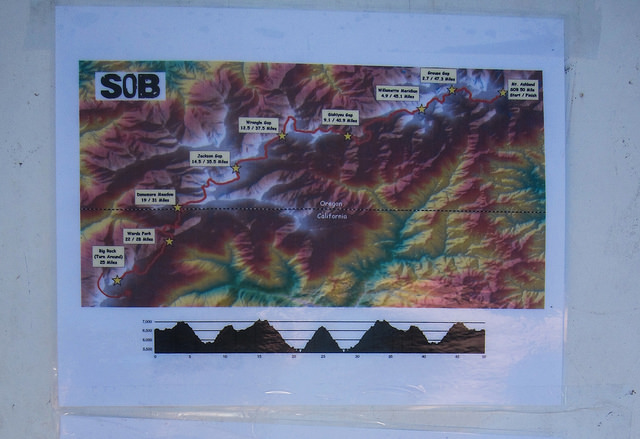
SOB 50 Mile Course – tough!

Some non-endurance athletes actually use beta blockers as performance enhancing drugs – it is said that it calms a person, reduces performance anxiety, and is commonly used in less endurance specific sports such as golf, target shooting, archery, and even in music performance.

Clearly these drugs are performance diminishing for endurance sports like distance running and mountain biking. We like to stress the heart, raise the heart rate, and we don’t have very much stress – we’re long distance runners after all – the mellowest people around.

I generally am in at least half marathon shape year round. Even if I’m not training for anything my weekend long run is going to be between nine and twelve trail miles. Prior to starting the beta blocker I had signed up for the 15K at the SOB Trail Run at Mount Ashland (Oregon) – one of my favorite races. This relatively high altitude run is basically all up and down trails and fire roads (zero flat sections) and I have done it at least six times in the past, including completing it twice in atrial fibrillation. I was curious to see how being on the beta blocker would affect my race.

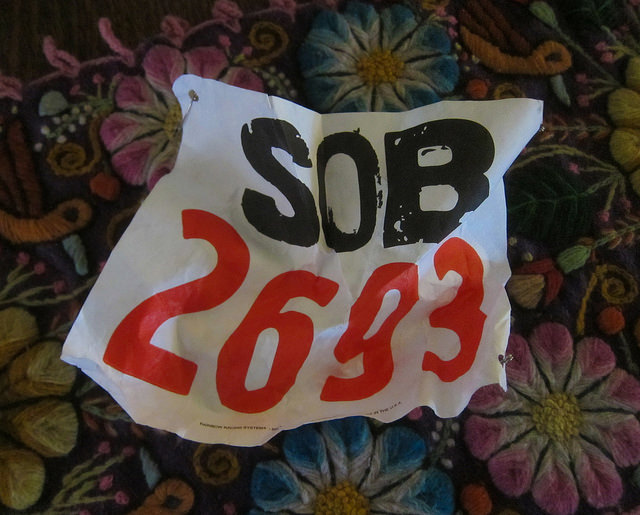
SOBnumber
DNF

The answer was I DNFed (did not finish) and dropped out fairly early in the race. That was terrible – most of my friends were running the 50K or the 50 mile and I DNFed the little 15K???

The course at the SOB is brilliant, really. A lot of trail races start out right away on singletrack, but the SOB has about a mile(?) of fire road at the start so everybody has plenty of time to figure out whether they are going to be running with the fast people or the slow people before they hit narrow Pacific Crest Trail. I ended up at the very back of the group that was running, but I was still in front of the few people who were walking the 15K.

I found that as soon as the course headed up hill I was unable to run. My chest felt funny – not chest pain, just felt weak, not right, and my legs felt dead. I wasn’t short of breath, I was just unable to do it. I decided, in my typical OCD mode, to continue running for five more songs on my iPod shuffle, and then turn around and drop out, thinking that I should at least get a little bit of a work out in, and that I could justify keeping the T-shirt I had paid extra for. I knew I could have walked the course, but that is not what I went there to do.

I was delighted that the fifth song on my iPod turned out to be an oldie from my high school days: Yours is No Disgrace by Yes. Not actually I song I still like very much, but in this context it seemed like a cosmic pat on the back.

http://youtu.be/Vd4jeeu90Rk
A Cosmic Pat on the Back

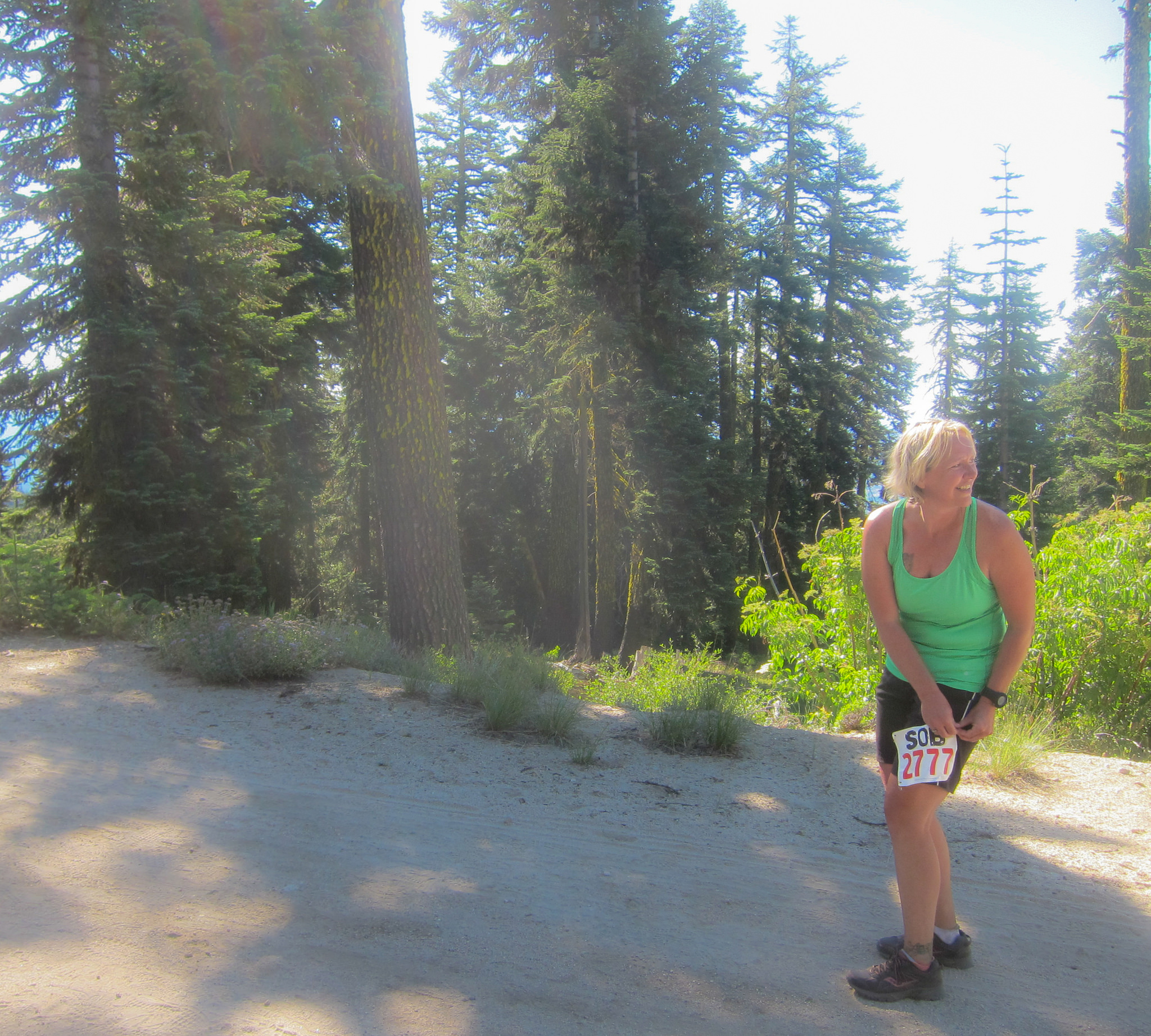
On the way back I met a woman who was also DNFing (sprained ankle) and we walked the last section of the race together, commiserated, and removed our numbers so they wouldn’t mistake us for the top finishers. At the finish line we informed the race officials that we had dropped out so they didn’t need to send a search and rescue team to find us.

SOBdnf
DNFing and commiserating together as we remove our race numbers

So this article is, basically, my first impression of being on a beta blocker, in addition to the atrial fibrillation, and trying to remain an endurance athlete.

So far I feel that the beta blocker is more of a hindrance to my running and cycling than the atrial fibrillation alone had been – but then again, because of the atrial fibrillation my heart function is gradually diminishing.

I should say, on a positive note, that the beta blocker is working, and is doing what it is supposed to do. I check my heart rate and blood pressure at least once per day and since I started the carvedilol I am right where the cardiologist wants me to be. And I can understand why people who aren’t trying to be athletes might like the med – it seems to have a mild calming effect. Furthermore I no longer feel like my heart is a fish flopping around in my chest, and my post work out blood pressure and heart rate has stabilized.

I am optimistic that the carvedilol will be worthwhile and will help me preserve and regain my ejection fraction. But really, what choice do I have?

So here is how things have changed so far (compared to just permanent a fib without the beta blocker):

1.) As far as mountain and road biking is concerned I have been able to ride all the hills that I used to be able to ride, although I am much slower. My wife now has to wait for me at the top of a climb, and that’s fine. I am delighted I can still ride and don’t have to get off and walk my bike.

2.) Running is more negatively influenced. My previous slow pace is even worse, and hills are quite difficult. Not surprisingly I do not like this one bit. A slow jog feels like a 5K effort. But I am still able to run – Yay!

3.) Long runs in heat are not possible. I am just not able to do a long run in heat, and lately every day has been warm. Understand that I am a big red-faced Irish-American who considers anything over sixty degrees to be hot running weather; plus I live in a very sunny place, a high desert climate without a lot of shade. It is not surprising that this is happening. A normal person running in heat will have a higher heart rate for a given pace, and will need to slow down. If you are on a beta blocker that reduces the maximum heart rate by a significant amount, well: “game over.”

OLYMPUS DIGITAL CAMERA
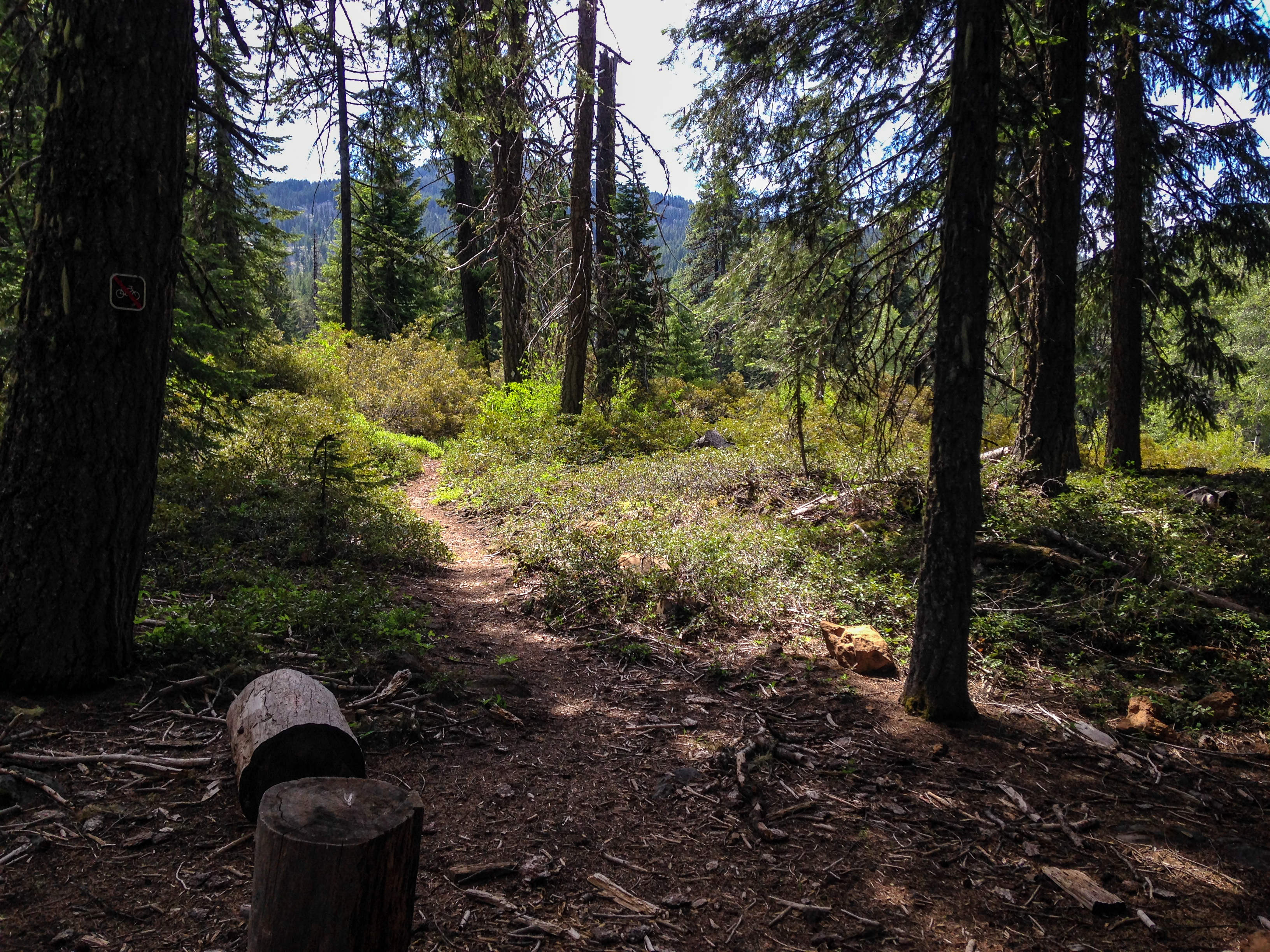
My goal is to continue running and mountain biking on trails like this: Brown Mountain Trail

4.) I suspect that the beta blocker might be making me lazy. I don’t know if that is the right word, but I had a full day off in the middle of the week a while ago and I had planned on, among other things, writing this article and going for a trail run, and next thing I knew it was late afternoon and I hadn’t done a thing. What? By that time there was a thunderstorm so I was not going out for a run – but the article still hadn’t been started. I hope this is not going to be the case from now on. Being lazy and depressed is far from my idea of fun.

I am going to wait until I have had more experience with the beta blocker and write a better informed article. I’m going to sign up for a relatively flat (downhill, actually) trail half marathon and try to redeem myself.

In the meantime I would love hear about other people’s experiences with the dreaded beta blockers. Please post a comment below.
Joe’s Story: A Middle-aged Runner Deals with Atrial Fibrillation and Heart Failure – A Guest Post by Joe

This is Joe’s Story – a guest blog article based on Joe’s comment on this blog describing his fascinating experience with atrial fibrillation and subsequent heart failure. Joe has really demonstrated persistence and a positive attitude that, I think, a lot of athlete’s with atrial fibrillation possess. Joe is making a comeback from serious, life-threatening heart failure, and he has done a good job of accepting the new reality of his post a fib performance.

+++++++++++++++++++++++++++++++++++++++++++++

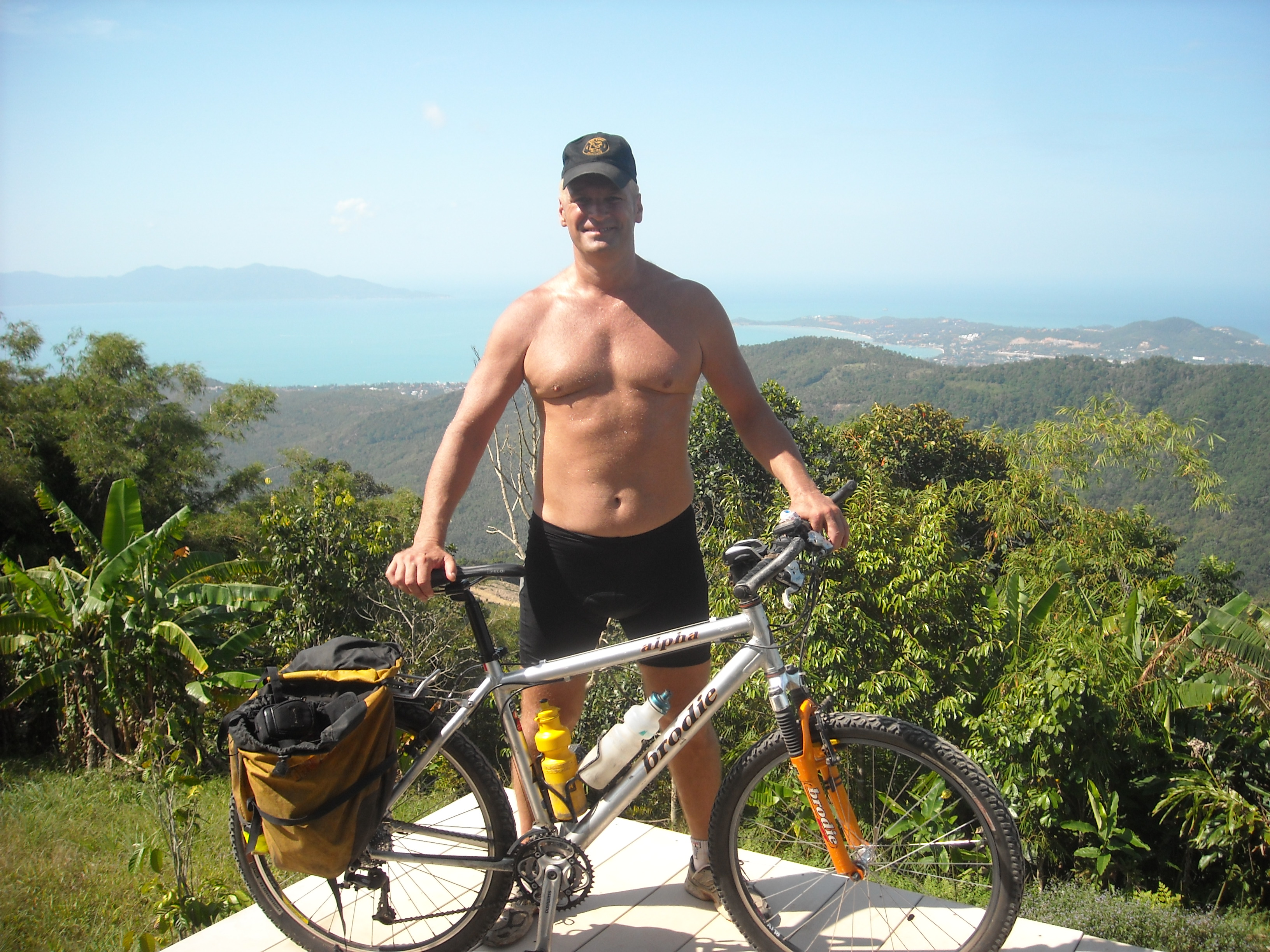
1Joebike
Joe Triumphant

Hi Everyone – I’ve had A-Fib for about three years now.

I live in the tropics and cycle, run, do weights. I train five days a week but not hard or too easy. I believe I got into this mess when I cycled up our small mountain here on the island I live on three times a week back then. I would only drink reverse osmosis cleaned water consuming about four liters just going up the mountain. I’d do weights in the morning and cycle in the afternoon and believe me it gets hot and humid. It’d take me about two hours to cycle up to the top of this very very steep course. (approximately 5K to the top)

In hindsight now I guess I’d been over-training terribly and not putting back potassium and minerals into my body at all. I happened by luck (or fate) to be given a heart monitor and thought it was cool to use it on my cycle ride up the mountain. I set the max at 185 and started off – as soon as I started up the steep hill after a five kilometer preamble the damn thing started beeping – it was at 205 and I just started up the hill! Like an idiot (ha ha) I kept going and it would not shut up. Did it the whole way up and for the next month it was like that. Can’t believe it now I did that but as I’m in constant A-Fib now the reality speaks for itself.

Been put on beta blockers and have to take warfarin. I suffered a sever influenza sickness last year and it really took a toll on my ticker. My left ventricular ejection fraction (LVEF) was only 17% when I finally went to see the Cardiologist here as the echo showed.

Fast forward now to a month and a half and I’m back up to 35%. The goal is to get back to 55%! I love running and exercise and like some of you wrote would rather plonk on the trail then sit on the couch, so be it. I used to run with the goal of just finishing the run and was happy about it.

jabba
This is Joe’s heart on heart failure

Then I got into times, was happy about that too. Before my illness last winter my times were at my all time best. Slow for a lot of runners but for me great. After all I run to please me so I accept what ever pace I come home at. Not a biggie. The doc was amazed at how fast my heart recovered and I even saw the difference on the screen of my heart’s movement. The echo I had before it looked like Jabba the Hutt sleeping. I think I attribute this to doing a LOT of research on the internet getting informed of what I was dealing with and trying it slowly with my Doctor always in the know. He was very skeptical of the supplements I was taking but has done an about face now. I also believe the coconut water I drink everyday now has helped in a big way. I noticed I don’t have an ammonia smell anymore when I sweat. I always had that smell when I drank the Osmosis water. I drink a mineral water now along with the Coconut water.

Anyways – I do prattle on. The thing is not to Panic and get informed!

I wear a Polar T-80 watch with GPS and follow the Zone rules. Yeah, I’m running about four minutes slower than normal but I feel great after a run now and do not dread the next one. Hoping my pace will kick up a notch as the info says it will as the body adapts.

2Joe_cap

This forum is great may I add and it sure is reassuring to read of Peep’s in their 80′s who’s lived with A-Fib for 20 or so years and keep running. Hopefully one day soon someone will find a cure for this curiously annoying ailment.

When I had 17% ejection rate it happened really fast. The time line is like this: on a Friday I ran a very fast 5K run for me. One of my best times. Later that day flew to spend three days with a friend, and after returning home I got ill and by Wednesday was full blown into whatever ailment I had (Influenza?). I tried running a week later but could not even go further than 50 yards! Then I stopped and decided to rest a week, do nothing and fight this illness. Well, it got worse and worse – my lungs started filling up with fluid and at night I could hear bubbling in my lungs. Fast forward a week of no sleep, etc, etc, and went to a doctor was put on antibiotics. I didn’t get better, still the same symptoms. (Turns out the heart, because of it not beating properly causes the fluid to back up and then it seeps into the lungs so any of you with these symptoms see a doc. You can do a thumb press on your shin and if the indentation stays and is deep you’ve got fluid retention and need a diuretic).

After a couple more weeks of this I decided because of previous symptoms I felt there was something wrong with my heart again. Seemed to be doing the same old symptoms of A-Fib. I thought I was free of it for almost two years or else it was Silent A-Fib and I did not know it!

My cardiologist gave me an echo and all he said was “What did you do?” Man, you don’t want to hear that from your doctor!

Like I said before I even could see my heart wasn’t doing anything. Just sort of sitting there: legs up – arms crossed!

He put me on meds again and the dreaded warfarin. They worked almost right away! I was on Codarone (amiodarone) for only a month and everyone should know that this is a dangerous drug! Long half life and it’s like shaking hands with the devil. Used a lot as a last resort. But! – for short periods it works miracles. Using it over six months or more can have repercussions.

Well, that day I came home from the doc’s I tuned up my mountain bike and went for a very short ride. I was out of breath the whole time. Did this for a couple of weeks and got stronger. Started weights again, and just started using the bars with no weights. Did this very very slowly and now after two months I’m almost back to benching 200. (ha ha – good for me anyways) The last check up the doc said my heart (Left ventricular ejection fraction) was up to 35% and I saw the difference in the video as well! Made me feel very very happy.

So now I’m trying something I never thought I’d do. I bought a Polar T-80 Heart monitor with GPS and run and cycle in the Zone. I exercise according to my heart rate. I’m finding I’m no longer exhausted during the rest of the day and overall feel better, stronger. It’s taking time to lose that competitive spirit though – ha ha ha – I’ve got friends who are in their 70′s running faster than me. My slowest times in years but I’ll stick to it and see if my times automatically come back up as the research suggests. This has to be done. I love being active but I hate being dead more so I have to accept and live accordingly. Don’t Panic!

A heart pumping at 33% efficiency feels a lot better than 17% I can tell you. I do more things than most of my friends. It still amazed me though how I can do weights for a hour, run for an hour then eat, chill and later in the day walking up a flight of stairs takes my breath away. It’s like a reminder – oh yeah I’ve got heart problems. A friend wisely told me that it could be like losing weight: fast in the beginning; then slower. I hope my ejection fraction % will keep increasing till 55%. Considered normal. Then I’ve got to deal with the A-Fib.

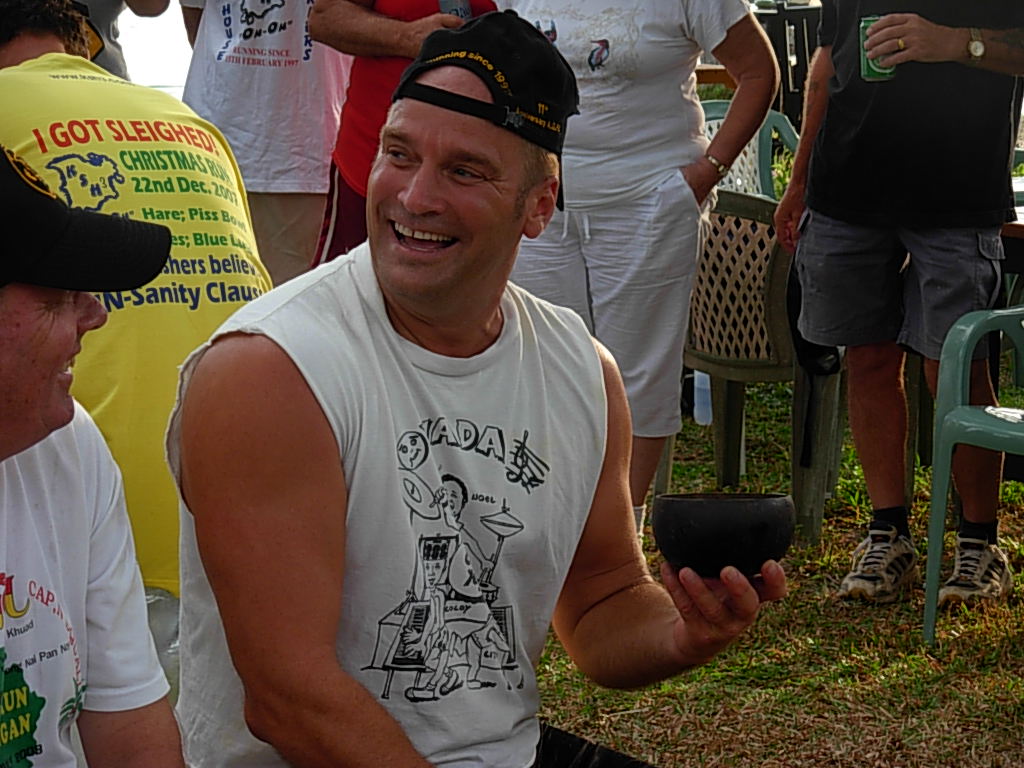
SAMSUNG CAMERA PICTURES
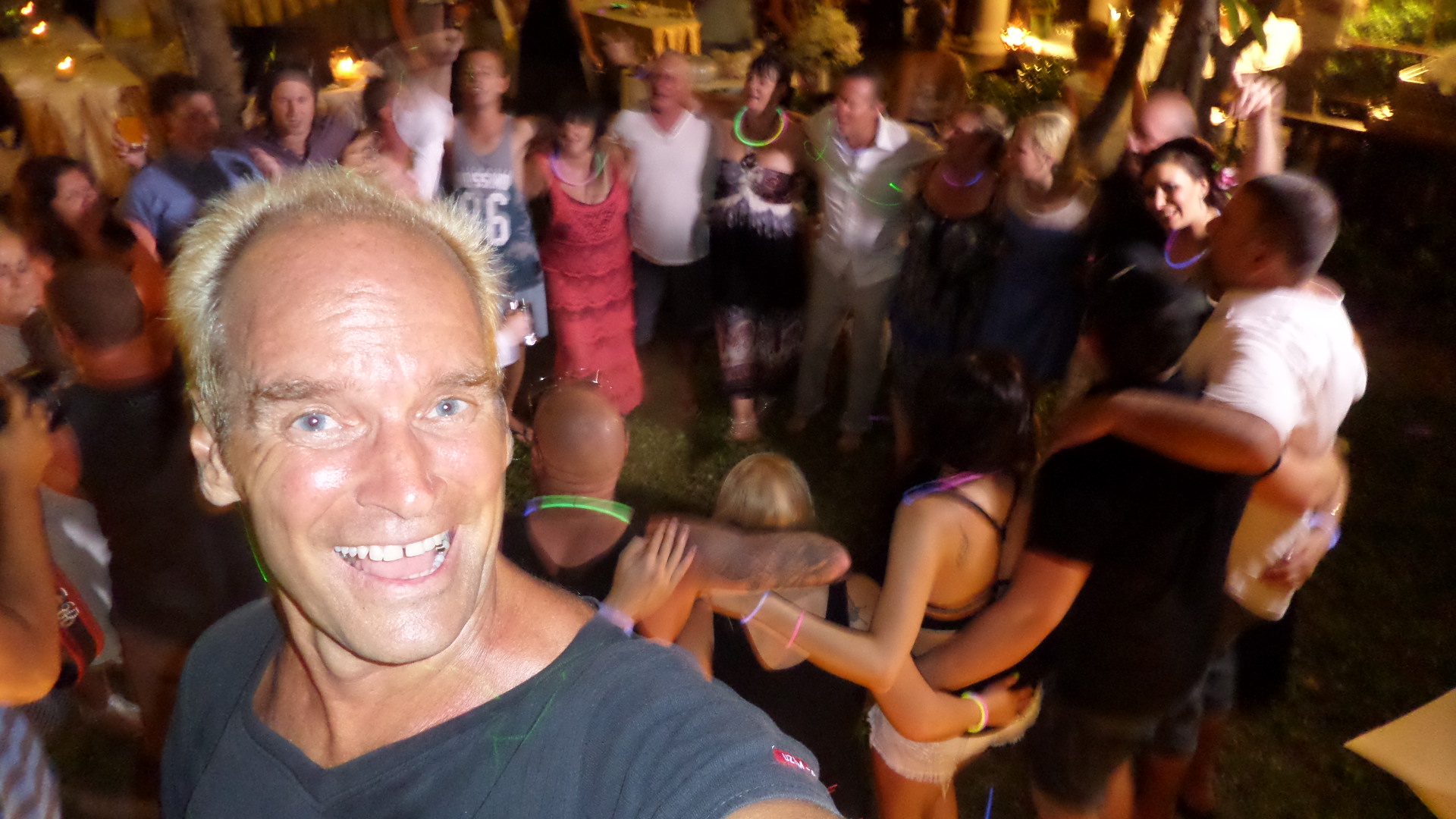
Joe still the life of the party – but no more beer for this guy!

A very important footnote: I used to drink beer everyday for years! Love the amber fluid. After my first A-Fib about five years ago I stopped for about three months. Then about two years ago I only drank on Friday and Saturday. For two years I did this. No exceptions. I’m 51 now and even this was taking it’s toll I believe. Now I’ve cut it out completely and will go the distance – sort of sucks but I’m close to the three month period now and will keep going. My next visit to the docs is in August so I’ll hopefully remember to post what transpires.

If anyone is interested in what I’ve been taking for supplements, eating, drinking, and exercising please leave a message on this blog and I’ll be most happy to share. One thing I’ve always found frustrating with most blogs is when I’ve read what someone has done and it worked there was no follow up. I’ll try and keep posting on this one. Great site! Peace out…………… don’t Panic : )

+++++++++++++++++++++++++++++++++

Update (from Joe)

Hi everyone. Went for my one month checkup at the cardiologist today and the results were better and improving. The Doctor said my heart has shrunk by a noticeable margin which is a good sign. (had an echo) It’s getting stronger. The ejection fraction went up a bit as well to around 37%. Getting nearer to 40% then in a few months hopefully 50 or 55%!! I was also able to wean off one med by half. I felt it in my run today – a really great run. Will continue on meds and supplements plus exercise and diet as is for another month. See ya then!

Running with Atrial Fibrillation – It’s Okay To Be Slow! Forget The Pearl Izumi Advertisements

I saw some recent Pearl Izumi ads posted on The Trail and UltraRunning group on Facebook and thought I’d comment.

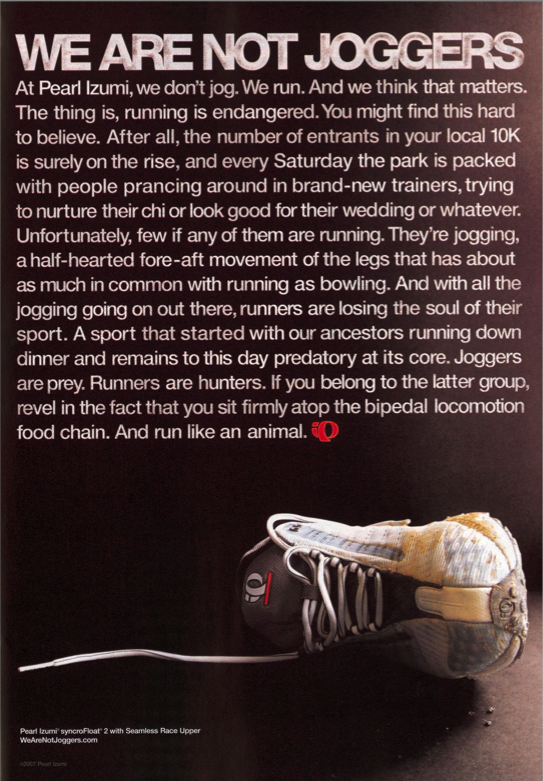
There are a number of Pearl Izumi ads that make fun of slow runners, here are two examples:

Pearl Izumi1
Pearl Izumi – Trying to sell shoes by denigrating slow marathoners

pearl_izumi2
Divide and Conquer – Pearl Izumi teasing “joggers”

The remaining ads can be found on this excellent blog:

Short, Round, and Fast

One of the nice things about endurance sports, from half marathon and up, is that most participants do not have this type of attitude. It is a live and let live culture. It seems like half marathons in particular are a plce where you generally see conspicuously non-athletic looking athletes – and good for them!

pearlnonathl3
Half Marathon Participant – Right on!

As for me, I’m in permanent atrial fibrillation, which makes me slow, and now I have to take a beta blocker, which makes me even slower.

But I’m certainly not going to stay home, and I’m going to remain a trail runner, even if I’m slow, and I still plan on signing up for distance events. At my last half marathon I was very surprised to see almost the entire field, including people who would previously never had been in front of me, pass me, get smaller, and disappear from sight. In the first two miles. Not fun. I was thinking, “Whoa, where’d everybody go?”

Contrary to how it might appear to faster runners who are observing slower runners, it’s not always easy being slow. It might actually be more difficult. Yesterday on a four mile trail run, my first run on the beta blockers (more on that later), I rounded a corner and saw another runner behind me. He was an individual who I had seen at the trailhead, who appeared to be a bit older than me, and who was wearing jeans and a long sleeved shirt on a ninety degree day. I thought, “Oh man, I don’t want to get passed!” and I cranked up my speed. I don’t think I was running fast at all, maybe about a ten minute mile, but the burning in my lungs and legs felt like a fast 5K. “This is ridiculous!” I thought, saddened. This is “fast” for me now.

But that is my new reality.

As far as Pearl Izumi is concerned they evidently think that being assholes, and creating some controversy, will make their ads stand out. They may be correct. There are a lot of competitors out there, they have an extremely small market share, and it is said there is no such thing as “bad publicity.” I knew that they made shirts, and jackets; but until now I didn’t even know they sold shoes.

pearlizumi3 dog
Pearl Izumi Shoes – so fast you’ll kill your dog!

One of their ads last year, which featured a runner who ran so fast in his new Pearl Izumi shoes that he killed his dog, made quite an impression. Of course they apologized and had their (unfunny) ad featured in news stories and blogs for weeks.

By the way, my main nylon running jacket is made by Pearl Izumi. I like it, it’s a good jacket. I’m not going to boycott them or burn the jacket, or anything like that. I just want to say in this blog that slow runners are probably slow for a reason – and that reason isn’t necessarily poor character or laziness.

spraguerun
Me – Lazy jogger with atrial fibrillation after a twenty mile training run. I ran so slow that my dog survived!

Or even if the slow runner does have poor character, or is lazy, well, what’s it to you?

And guess what – Pearl Izumi got three of their ads posted in my little blog (and elsewhere) – for free!

Runner’s High – a Gift?

Is distance running therapeutic? Is mountain biking addictive? Is there such thing as a good addiction? If my atrial fibrillation worsens and I could no longer do long runs or bike rides – how hard would it be to kick the habit?

highlakes
High Lakes Trail – Southern Oregon

Today in the hospital lounge, while I was eating some potato chips, somebody was telling me how bad potato chips are for me. Whatever – I have given up almost everything in the world that is bad for me. I haven’t drank alcohol in several years, haven’t smoked a cigarette in decades, gave up meat and eggs a couple of years ago, I’m almost dairy free, and I haven’t taken recreational drugs since high school in the seventies. Potato chips, which I feel are good enough to be “worth it,” are about it for me. Well, that and diet soda, which is also an unhealthy habit that I have.

But what about “runner’s high?” Is that my addiction?

And what exactly is runner’s high? Does it even exist? I’ve been hearing about it for a long time, even before I started running in the early 80s.

Allegedly the athlete’s brain is “flooded with endorphins, more powerful than any street drugs!”

Many distance runners claim to experience euphoria during or after running, and some claim they’ve never had it happen – not even once.

The endorphin theory is the oldest, but more recently I’ve read about how endocannabinoids (naturally occurring neurochemicals related, in a way, to the active ingredient in cannabis) might be the cause of runner’s high.

Another article I recently read attributes runner’s high to “dopamine, serotonin, and endorphins.”

Whatever the cause, it certainly appears to be real.

pct
Pacific Crest Trail via Brown Mountain Trail – Klamath County, Oregon

Ultrarunner Dean Karnazes describes the role that running has in his life: “Some seek the comfort of their therapist’s office, other head to the corner pub and dive into a pint, but I chose running as my therapy”

“I’m convinced that a lot of people run ultramarathons for the same reason they take mood-altering drugs. I don’t mean to minimize the gifts of friendship, achievement, and closeness to nature that I’ve received in my running carer. But the longer and farther I ran, the more I realized that what I was often chasing was a state of mind – a place where worries that seemed monumental melted away, where the beauty and timelessness of the universe, of the present moment, came into sharp focus.”
― Scott Jurek, Eat and Run: My Unlikely Journey to Ultramarathon Greatness

Actually, a recent New York Times article states that on good experimental evidence it has been finally determined that exercise does indeed produce a flood of endorphins in the brain. Lucky us!

Researchers in Germany, using advances in neuroscience, report in the current issue of the journal Cerebral Cortex that the folk belief is true: Running does elicit a flood of endorphins in the brain. The endorphins are associated with mood changes, and the more endorphins a runner’s body pumps out, the greater the effect.

I won’t review the article here, but please read it – an elegant experiment, and solid conclusions.

But irrespective of the cause, what is runner’s high and what does it mean to endurance athletes? Can a person become addicted to it?

Personally I feel that the term runner’s “high” is a misnomer. I would describe it better as an altered state of consciousness rather than a high. Maybe I’m splitting hairs but I have never felt intoxicated by endurance sports.

Euphoria might even be too strong of a term – but maybe not. There are times during and after running when everything appears exceptionally crisp and beautiful. That’s why I love trail running, in Oregon, in the wilderness – does that happen to people in health clubs running on treadmills?

traillunch
After an hour or so even carb gels seem remarkably delicious!

Also – music becomes intensely enjoyable. I do run with an iPod and sometimes I feel I am going back to the days back in high school when I smoked pot and would listen, chemically enhanced, to suddenly amazing music on headphones. Except now instead of sitting in a darkened basement I’m moving through the woods. It’s funny – a lot of the music that, for me, is most enjoyable on long runs, is the same type of music that I believe would be most enjoyable to a person who is stoned. Sometimes a song sounds so good I’ll repeat play a song two or three times.

But another reason I don’t like the title “runner’s high” is it isn’t all euphoria, beauty, and music joy. I think the exercise induced altered state of consciousness can involve a certain amount of emotional lability. Here’s an example: once I was on a twenty mile trail run, and at mile sixteen an old song I hadn’t heard in years, Careful With That Axe, Eugene, started playing in my random shuffle. This very early, nine minute long Pink Floyd song is sort of a novelty song; a one chord song that slowly builds on a rising and falling bass line with a mellow organ playing over it. At one point a whispering voice says, “Careful with that axe, Eu-zhene.” And then there is this horrific screaming and dissonant guitar, and finally it evolves back to the mellow bass and organ. Back when I was in high school, if we had somebody over who had never heard the song before, we’d put it on and turn down the lights, and of course when the screaming began it would scare the crap out of the first time listener, and we’d all have a good laugh.

Well I knew all about what was going to happen during that song and wondered if I would start laughing when the “axe” section came up. Imagine my surprise when I burst into blubbering tears when the screaming began. I should state that this was shortly after my ex-wife (with whom I was still friendly) and her family had died in a horrible house fire – but honestly I wasn’t even thinking about that until the screaming in the song. I know I wouldn’t have been anywhere near that emotional if I hadn’t just put in sixteen hilly trail miles.

Other times while running something will strike me as funny I will begin laughing giddily – out there all by myself, or in the back of the pack at a marathon. Or an angry song will play and I’ll feel, like, GRRRRRRR!, become angry – quite a catharsis.

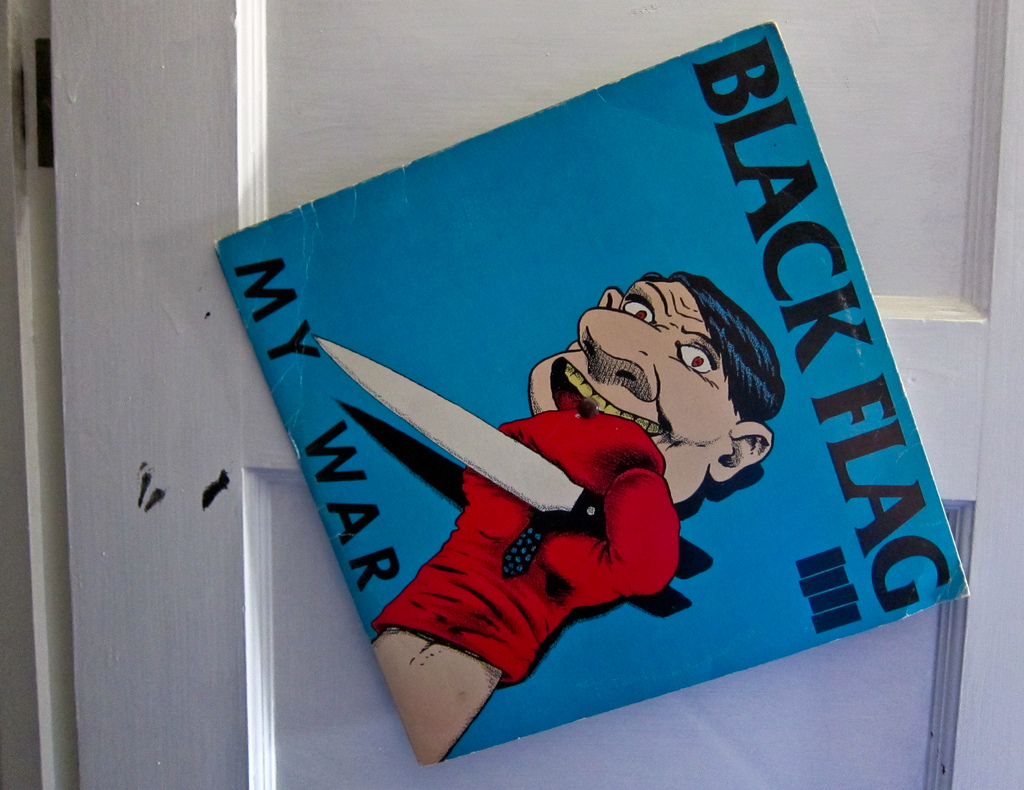
mywar
GRRRRRRRR!

So is exercise induced altered state of consciousness addictive? I’m thinking: yes.

A CAGE questionnaire is commonly used to assess alcoholism.

Try applying it to your running:

C – Have you ever felt you needed to cut down on your running?
A – Has anybody ever annoyed you or criticized your running?
G – Have you ever felt guilty about your running?
E – Have you ever felt you needed a run first thing in the morning (Eye-opener) to steady your nerves?

Well – I can honestly say I’ve never felt guilty about my running, but the rest of those questions, well . . . .

And I can state for the record that with my atrial fibrillation, and the likely progression of my a fib, including my upcoming need to be on a beta-blocker, I have been dreading the day when I am no longer able to run. Very depressing.

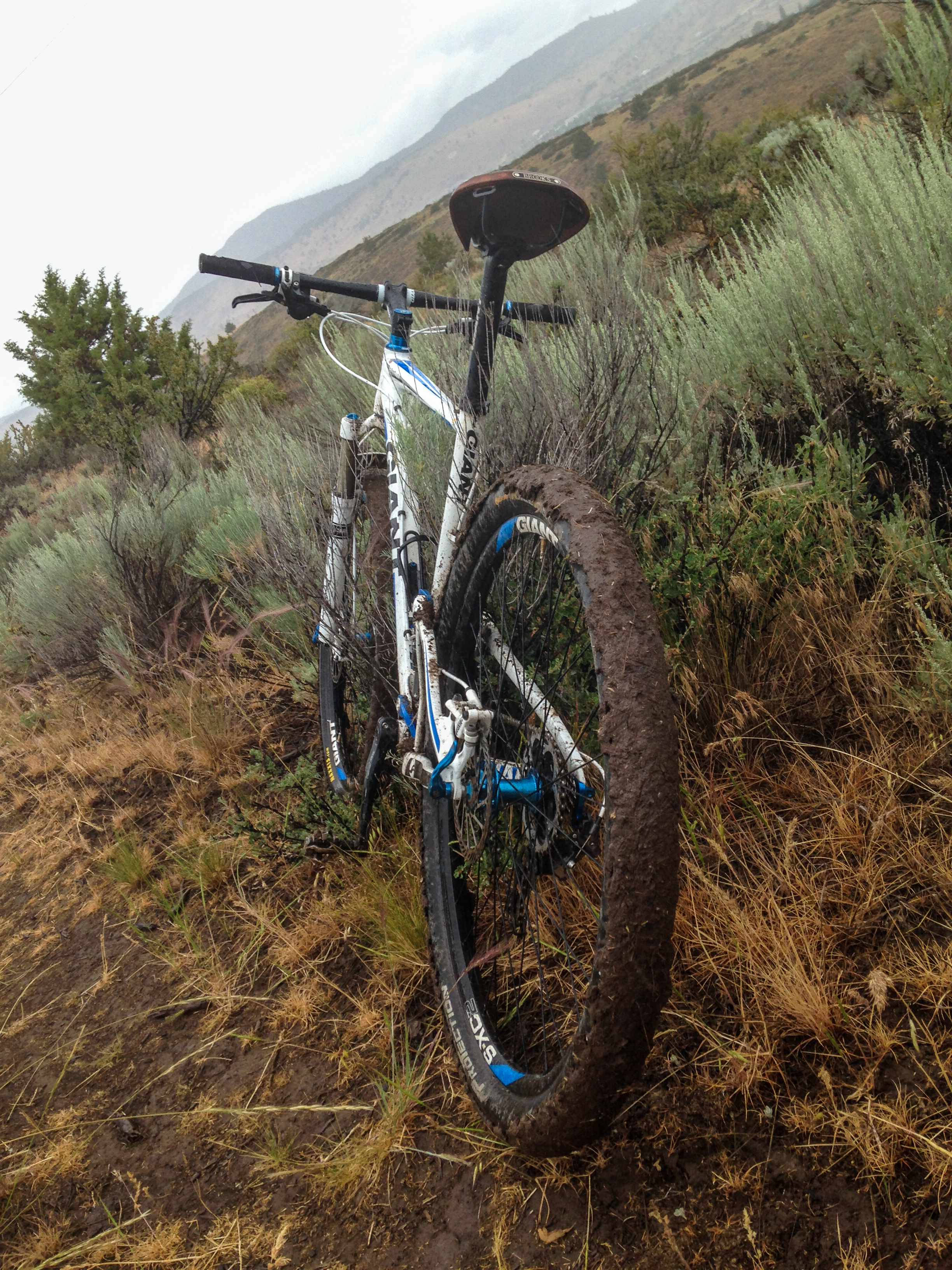
mudbike
Biking in A Fib – like riding through mud

Aside from that I have a theory. I think it is obvious that not everybody will experience anything like a runner’s high. Clearly many people hate the way running makes them feel, and they are the people who think distance runners are completely nuts. And why wouldn’t they? Based on the time they ran two miles and felt nothing but fatigue and pain, and interpolating that up to, say, thirty-one miles, their obvious conclusion would be “WTF?” to use the parlance of our times.

lavabeds
Lyon’s Trail – Lava Beds National Monument

But as for myself, and I’m guessing most of the people who would be interested in this blog, the so-called runners high can be generally considered to be a gift.

Diversion: How to talk to your children about distance running:

Emergency Pack for Trail Running or Mountain Biking While on Anticoagulants (Coumadin, Xarelto, Pradaxa, Plavix)

This article is a work in progress and is only a description of my strategy for the time being. I hope to learn from readers of this blog about how to better plan for a trail debacle.

pctrun
Heading out for a trail run on the Pacific Crest Trail

What kinds of things should a person like me, who is dealing with atrial fibrillation and is taking an anticoagulant (I take Pradaxa), carry on a long run in the wilderness? Or during a long mountain bike ride in remote areas?

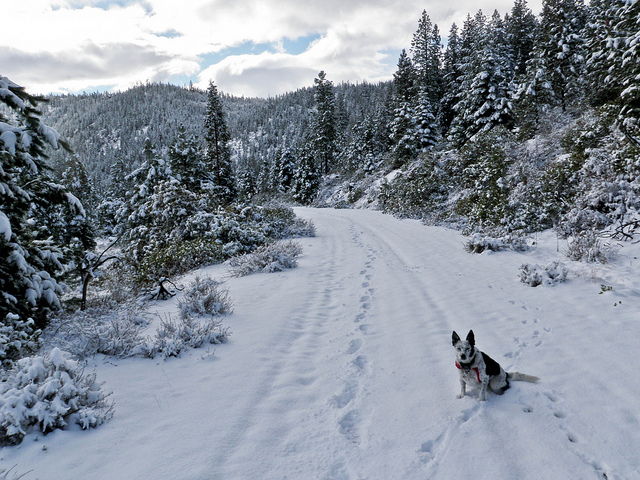
When the high country in our local wildernesses is not covered with snow, I will generally do runs, nearly every weekend, of anywhere between six to twenty miles. I almost always run alone (except for my trail buddy – Ringo).

Dangerous and a bad idea? Possibly. But this is what I enjoy in life so I don’t plan on stopping any time soon.

The most important piece of equipment is a phone. People complain that everybody is always on their smartphone, and they should NOT be talking on their phones on mountain summits when everybody else is trying to get all Zen-like and self-actualized, and whatever – that’s a different discussion. You certainly don’t even need to have your phone on; but you absolutely should take it with you, and it should be fully charged. The days of getting hopelessly lost and spelling out SOS with rocks hoping a search plane will find you are fading into the past. A smartphone is a GPS and a direct link to help.

I always carry my iPhone in a baggie with my ID and a sheet of paper towel (which I use for unrelated toilet purposes).

iphone
Fully charged and protected from water

Even if there is poor cell phone coverage in your local high mountain or deep canyon wilderness, and a phone call isn’t always possible, I find that a text message can often still be sent. It might take a while but it eventually will be sent, especially if I am moving along a trail.

There is the standard emergency gear that most people take, often called the “ten essentials” which most people carry while in the wilderness. Of course there is truly no such thing as a standard ten essentials and the list of things you carry will vary depending on the season, your skill set, your location, and your past experience.

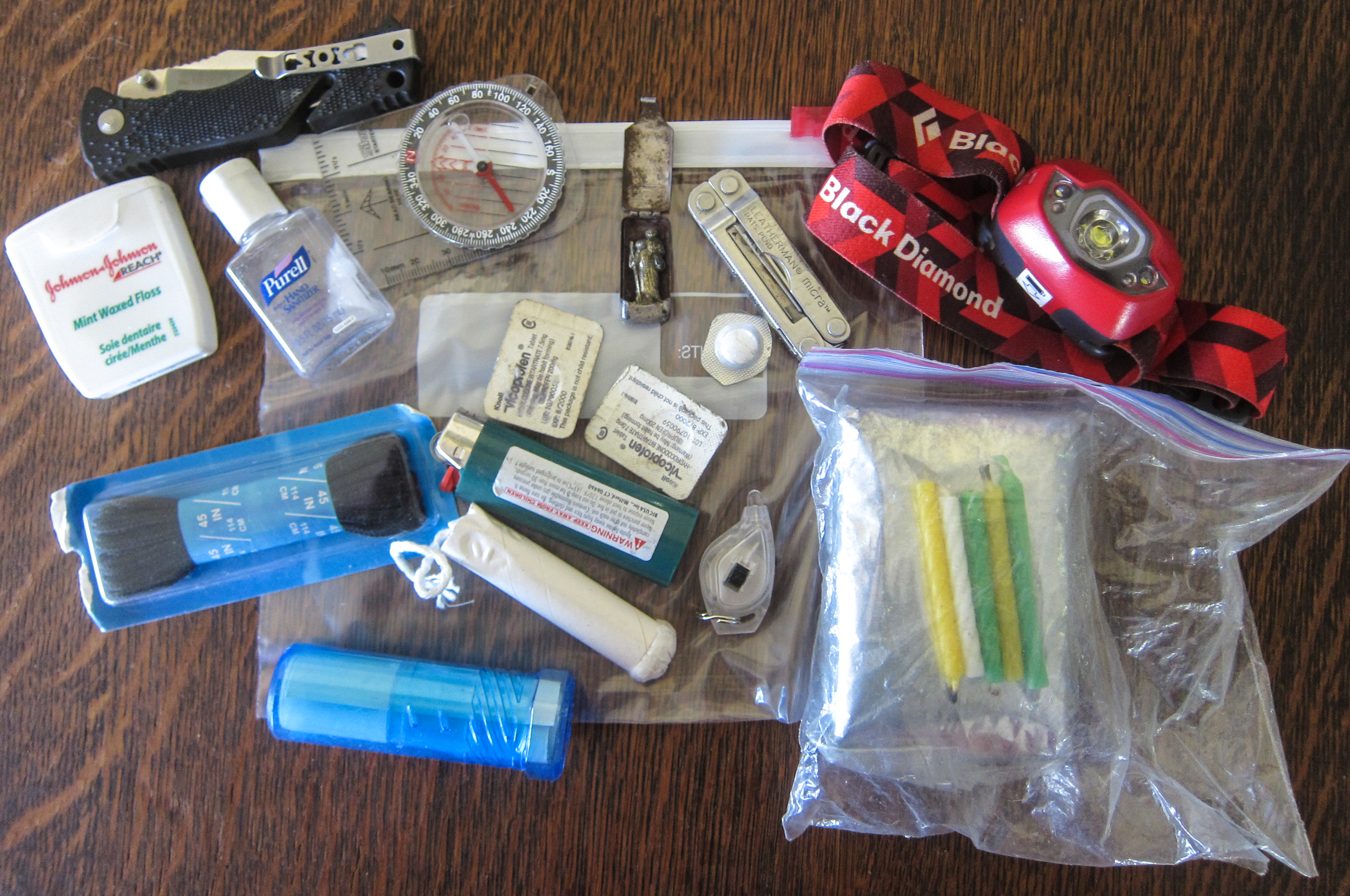
emergency
My generic survival gear

I got out my little survival kit that I typically carry in the wilderness, and of course not everything is pictured here, and I might not even have all of this stuff with me on any given trip. Naturally I will also have other things like food, gels, electrolytes, a jacket, and plenty of water.

What I found in my default wilderness pack is:

Two knives – a mini-leatherman tool and a standard knife. I will only actually carry one of these.

Two lights – a headlamp and a tiny LED flashlight (one is plenty).

Fire starter – a cigarette lighter, birthday candles, a tampon, and hand sanitizer (which I discovered has completely evaporated).

A space blanket, a compass.

Repair gear (Shoe laces, tenacious tape, dental floss)

Pain pills: Vicoprofen samples – okay they expired in 2000 but I’m guessing they are still good (at least for a placebo effect). Missing: Benadryl for allergies or yellow jacket stings, and I probably should have some of my Pradaxa in case I end up unexpectedly staying out overnight. Also missing: small roll of duct tape, safety pins, and my whistle!

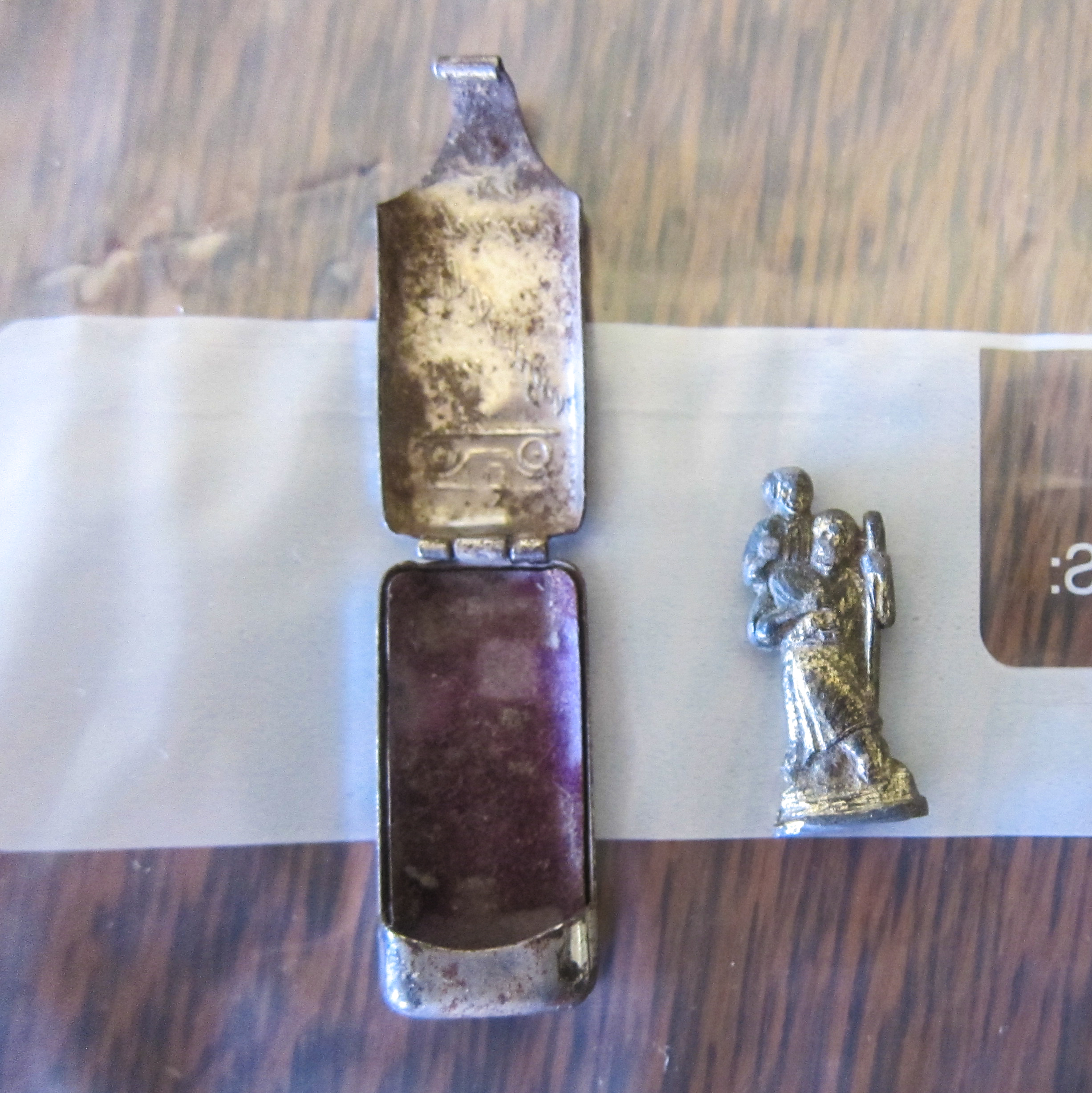
stchristo
Saint Christopher Medal

Oh, and there is a Saint Christopher medal. This one belonged to my grandfather. Well it probably won’t change anything, but it certainly couldn’t hurt. Feel free to substitute your own personal good luck charm.

But what about specific items for the runner on an anticoagulant? Is there anything else beyond the “ten essentials”?

map
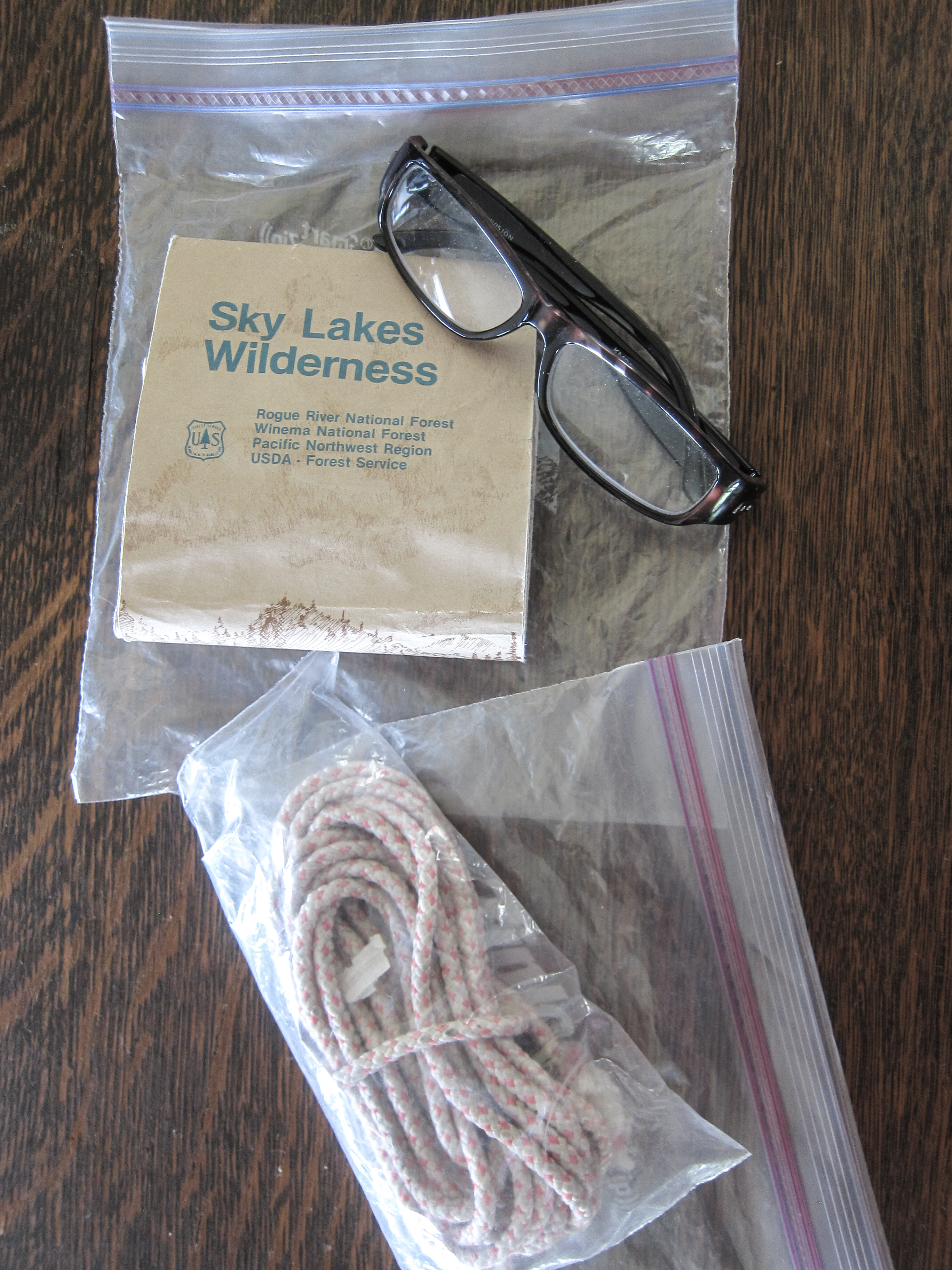
Other stuff: Map with reading glasses (if needed) and some rope

Obviously having a major bleed while running alone in the wilderness would be a disaster. Death is certainly a possibility. How can a trail runner prepare to increase the odds of a good outcome?

I always make sure to let somebody know (usually my wife) where I’m going and I also send her a text (I text “OOTW” short for “out of the woods”) when I get back to my vehicle.

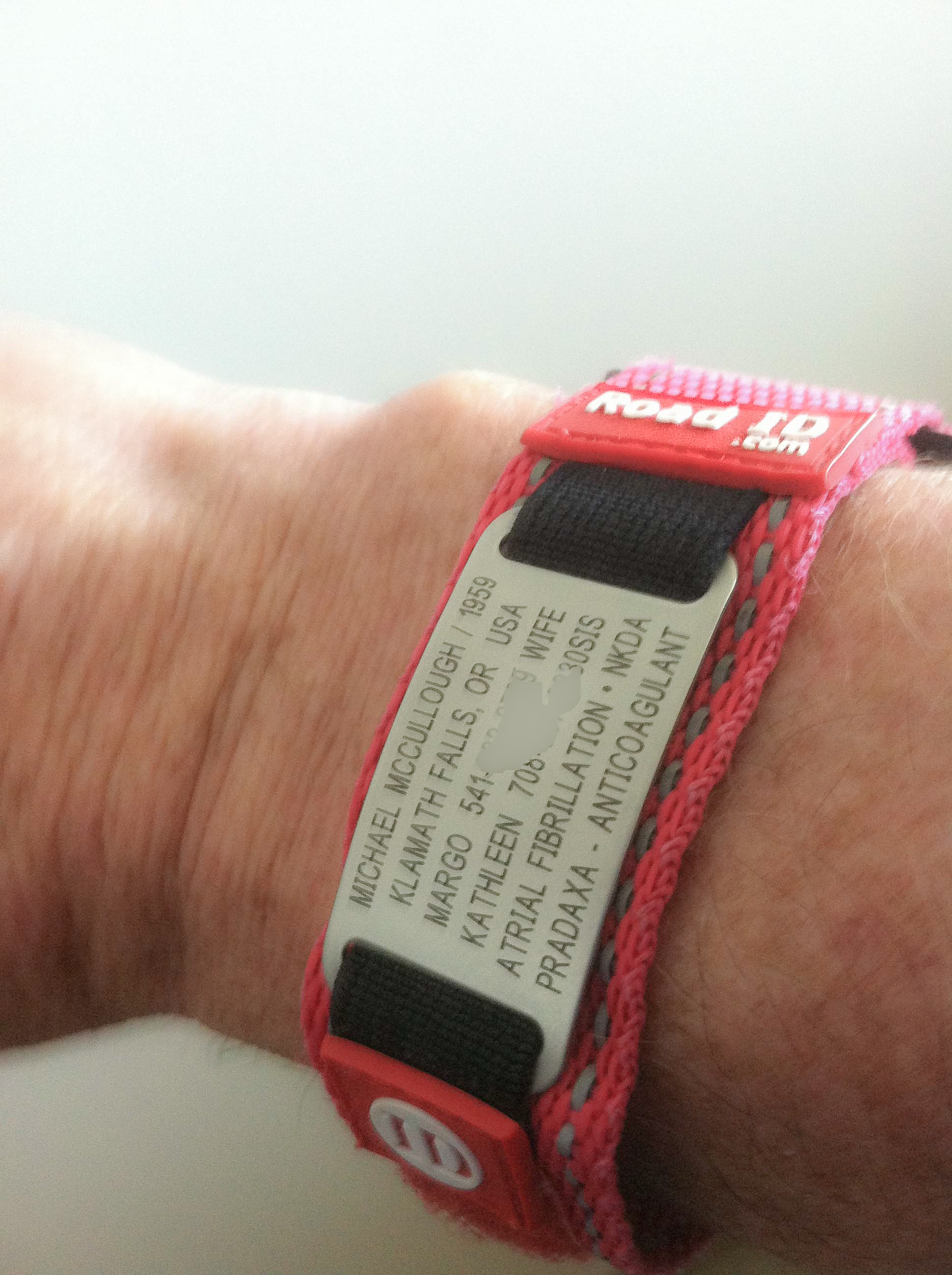
I also wear a Road ID. This way if somebody finds me they will know I am on an anticoagulant. Maybe this won’t help, but it certainly is worth wearing. At least they will be able to figure out why I bled out so quickly (I know – not funny).

roadID
My Road ID

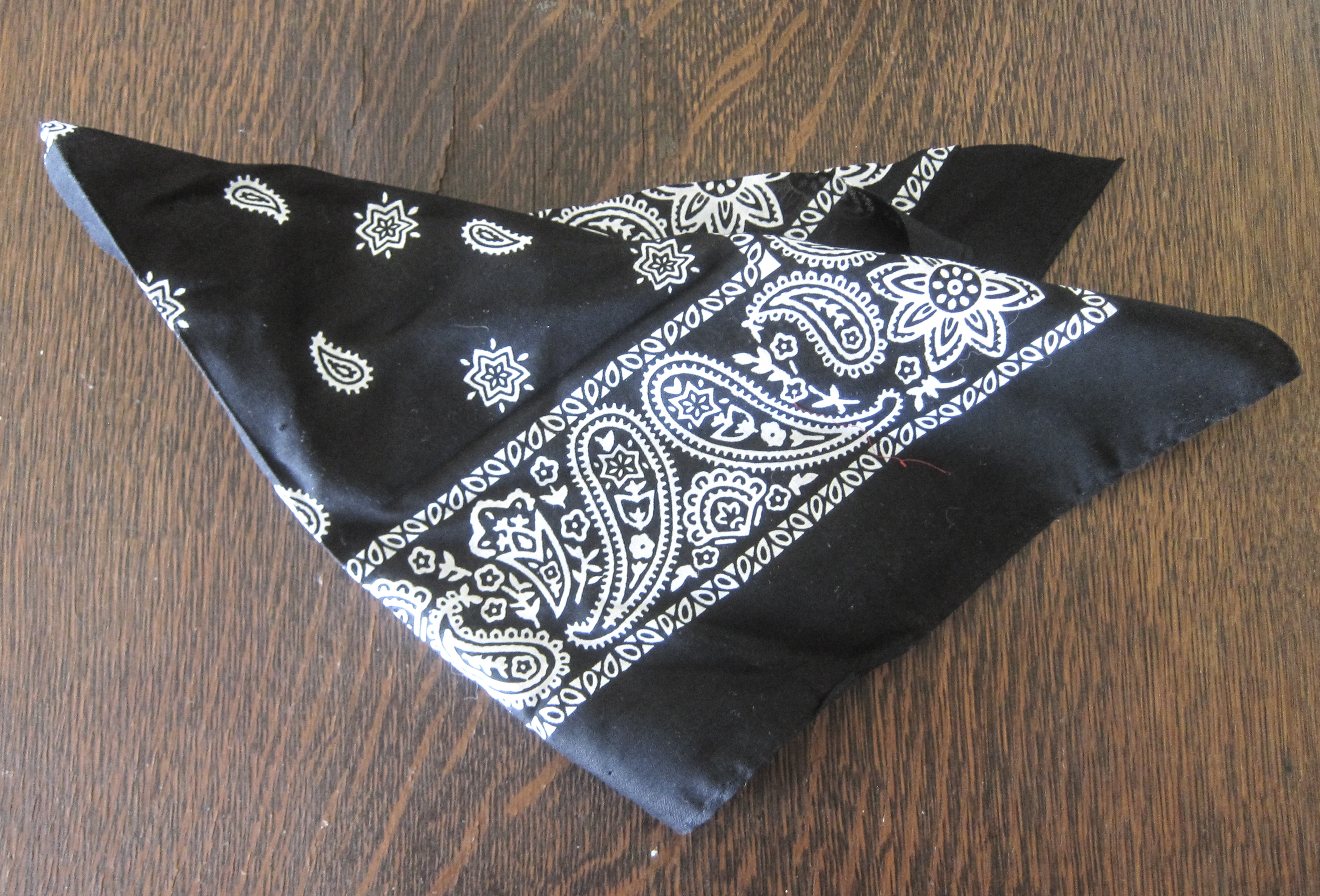
Another item I always carry is a bandanna. This can be used for a number of purposes, such as making a field dressing; but I want to have it in case I need a tourniquet. Plus – I have an extra one because my trail dog always has one draped around his neck.

bandanna-2
Bandanna

My bandanna came in handy a week ago when my wife Margo (not on an anticoagulant) crashed her mountain bike and punctured her left thigh with her brake lever. I used it to make a compressive dressing before we road our bikes back to where we could get a ride to the hospital.

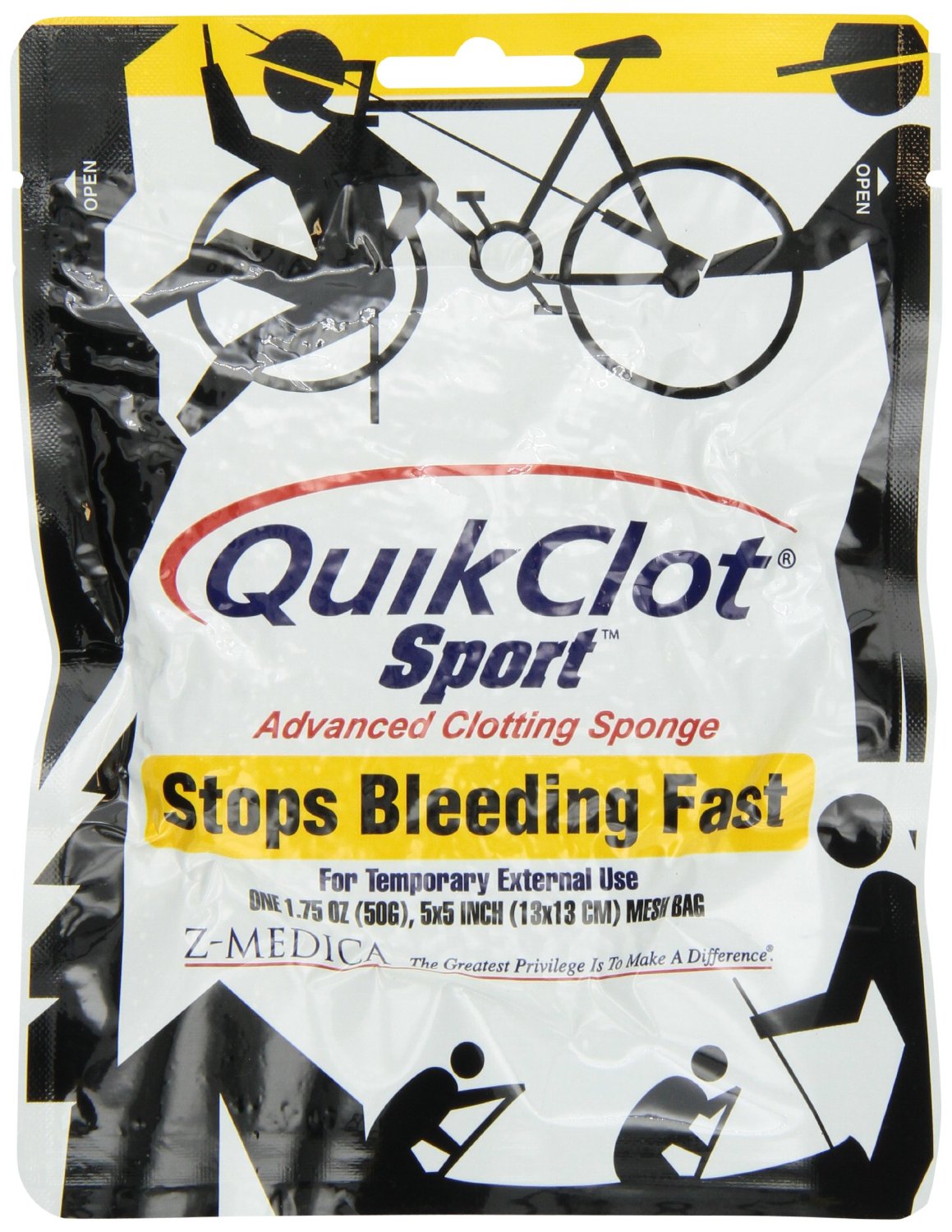
One item I do not currently have but definitely need to obtain is a Quickclot field dressing. Evidently these things really work and are routinely used in combat situations. It is a topical coagulant (an anti-anti-coagulant?) which helps clot blood and also serves as a physical barrier to bleeding. I’ve been meaning to obtain one of these for a long time. They are available online via amazon.com, and I just ordered one.

quickclot
Quickclot

Question: Will the Quickclot sponge even work on bleeding in an individual who is on a direct thrombin inhibitor like Pradaxa? Answer: I have no idea. I’ll let you know if I ever get a chance to find out.

In case of bleeding the most important first step is to apply direct pressure. As a surgeon I have a lot of experience with this. Usually sixty seconds of direct thumb pressure will stop or slow most bleeding, but of course if you take an anticoagulant it will take longer. Apply direct pressure as long as necessary. Elevate the wound if possible. Don’t try to clean out major wounds as this will restart bleeding – that can be done later at the hospital.

A tourniquet is a last resort, but the bandanna can be used as a compressive dressing if needed.

Please understand that an anticoagulant doesn’t completely stop clotting of blood, it just makes it take longer. Eventually bleeding will stop. Hopefully before all the blood leaves your body!

OLYMPUS DIGITAL CAMERA
Ringo always has a spare bandanna for me

Bonus – How to stop a nosebleed:

I have been plagued by frequent nosebleeds since I was a child but, oddly enough, I haven’t had a single nosebleed since I started Pradaxa a couple of years ago. The best method I have found is to pinch the nose, fairly tightly, just above the nostrils, and lean forward. Don’t lie with your head back – that doesn’t work. Hold for a full sixty seconds. Repeat as necessary.

If you are, like me, a trail runner or mountain biker on an anticoagulant, I would love to hear from you. Please leave comments and suggestions in the comments area below.

Thanks.

Too Much Water? Not Enough Salt? Hyponatremia in Marathon Runners

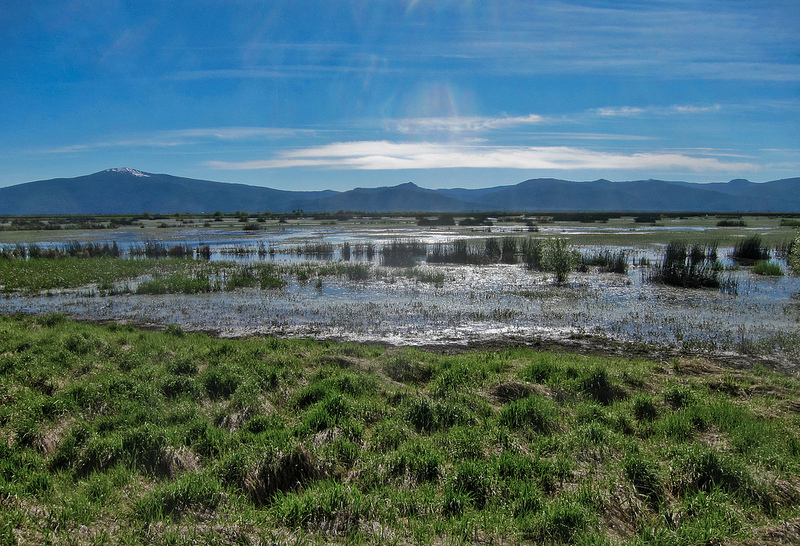
wetlands

Hyponatremia (low sodium, or “water intoxication”) is a risk for runners with atrial fibrillation. It is certainly a risk for me and I believe I have experienced it a number of times in the past. Personally, I am much bigger than most marathoners (6’3” 205 lbs), and because of that and the atrial fibrillation, much slower – so I’m out there twice as long and sweating twice as much. Plus – over the years it has been drilled into all of us to make sure we drink enough water.

Ironman athletes, ultrarunners, and bigger runners are all at increased risk because we are simply out there for much longer periods of time. Women athletes tend to be at higher risk for hyponatremia – it has been found that women hydrate more during a race.

Drinking enough water is a good idea – but it needs to be accompanied by increasing salt intake.

OLYMPUS DIGITAL CAMERA

Normal levels of sodium are about 135-145 mEq/L. Symptoms are likely to begin at 130 or lower and if you get below 120 the condition may become fatal. While there are a number of medical causes for hyponatremia marathon runners fall into the category of consuming too much water and not enough sodium, and sweating out valuable sodium. Think of the white dried salt on your temple or on your hydration pack straps after a long run.

Symptoms include bloating, headache, swelling (check to see if your ring or wristwatch seems to be getting tight), nausea, vomiting and eventually weakness, restlessness, confusion, and well . . . it just gets worse from there. It is particularly problematic for runners because some of the symptoms (headache, nausea, cramps, and dizziness) are the same symptoms for dehydration so the impulse is to drink more water – which of course makes it worse.

OLYMPUS DIGITAL CAMERA

There is currently an ongoing study at the Houston Marathon involving volunteers who are followed closely, weighed, fluid intake measured, lab studies obtained, etc. The study found that runners with lowered sodium levels drank more water, retained more water than normal volunteers, and they lost more total sodium and had saltier sweat.

Runners who were dehydrated but not hyponatremic had higher heart and respiratory rates, felt worse, and had lower blood pressure than hyponatremic runners. The hyponatremic runners felt better, but had more nausea and bloating.

What can be done?

Drinking less water is sometimes recommended but it is difficult to do when you are used to drinking a lot of water while running. I’ve tried drinking less water during a marathon and frankly I think it made things worse. Also some runners can become hyponatremic without over-doing the water consumption.

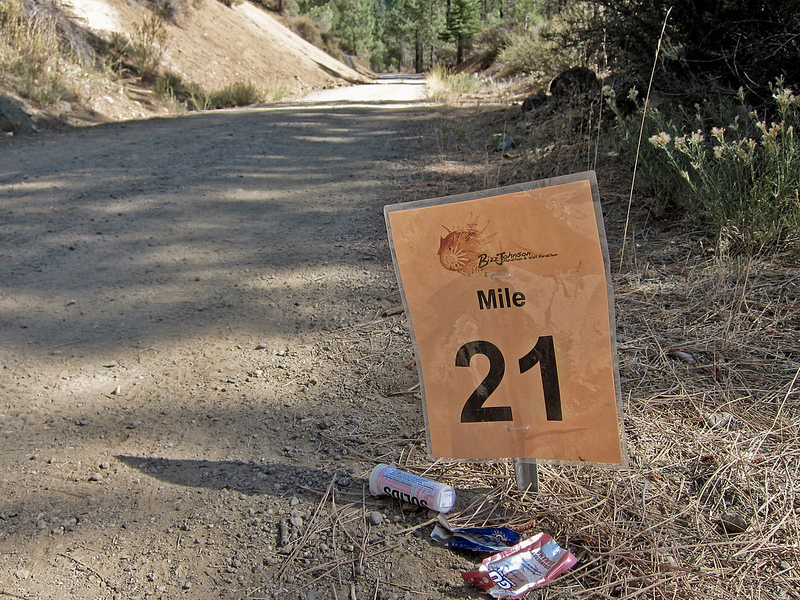
21mile

Weighing yourself frequently along the course and looking for weight gain (water retention) has been recommended – YEAH RIGHT! How is this going to happen?

Personally I try to drink water with sodium supplemented (NUUN, GU Brew), and try grabbing some little pretzels at aid stations (if available); but some research suggests this might not always be helpful.

“Watch out for feelings of confusion, nausea, fatigue, and particularly vomiting and swollen hands and feet. If you experience these, seek medical help.”

Fatigue? Really? Fatigue during a marathon – you don’t say? Isn’t that generally a part of the experience?

I don’t have a good answer. I know I’ve had problems with this – I’m clearly in the high risk category for hyponatremia. I also generally have particularly poor races if it is a warm day.

My interventions include

1.) Drinking enough water
2.) Electrolyte supplements in my water (NUUN, Gu Brew)
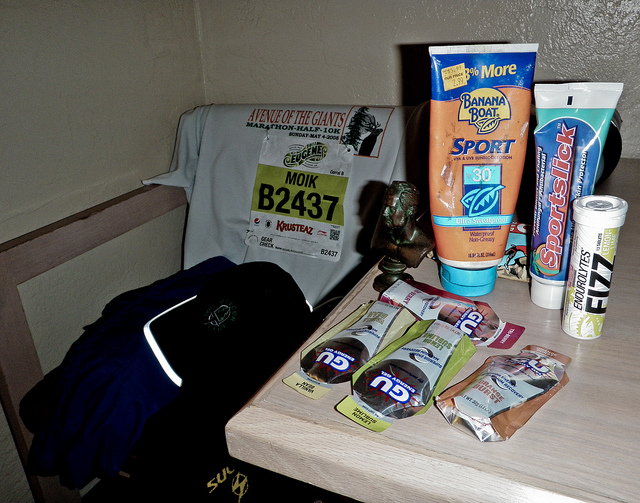
3.) Additional electrolyte supplementation (SaltStick caps, Endurolytes caps, little pretzels)
4.) Making sure I have a salty snack or meal after a race or long run
5.) Trying to dress so I’m a little cool rather than a little warm

I’d love to read your suggestions – please leave a comment if you have any experience with hyponatremia and suggestions as to how to avoid it.

Update (March 13, 2014):

I found this terrific article posted on Twitter by Dr. Larry Creswell. The key points are quoted below.

KEY POINTS

Most medical scientific organizations recommend low or moderate sodium diets to the general population in order to reduce the risk of high
blood pressure (hypertension).

Regular physical activity reduces the risk of hypertension.

Athletes lose sodium in sweat during exercise. The amount of sodium that is lost during endurance exercise depends on the sweating rate and
the concentration of sodium in the sweat. In turn, sodium loss during exercise depends on individual factors, such as genetics, fitness and heat
acclimatization, as well as the type, intensity and duration of exercise and the external environment.

Sodium ingestion by endurance athletes does not typically increase blood pressure, so low sodium diets are not recommended for individuals
who participate in long-term aerobic exercise.

Sodium ingestion during or following endurance exercise will help to stimulate thirst and drinking as well as stimulate fluid retention by the kidney.

No athletes are immune to hypertension, so athletes should monitor their blood pressure as they do their general health. This is particularly
important for older athletes, athletes with a genetic predisposition to hypertension, stroke or other cardiovascular disease.

Next Event – Vernonia Marathon Sunday, April 13, 2014

trainingOCE
Training on the OC&E near Sprague River, Oregon

I’ve signed up for a Spring marathon – specifically the Vernonia Marathon. It is in Northern Oregon – North and West of Portland – a part of the state that I have never visited. I think this might be my 18th or 19th marathon but I’m not sure.

I just did my first true long run and I feel pretty good. I informally classify runs like this: two to six miles are shorter runs, like mid-week type runs. Medium long runs are nine to twelve miles. I’ll usually try to do a nine to twelve mile run every weekend even if I’m not training for anything. In fact, if I’m not training for anything at all sometimes that’s my only run of the week (with mountain biking or hiking on other days). I think of a true long run as being fourteen miles and up. There’s something about that distance that, for me, seems pretty serious. Anything over thirteen requires more fortitude.

I didn’t just start training for an April marathon this weekend – I’ve been training for weeks – but my weekend long runs have only been eleven to twelve miles.

As far as my atrial fibrillation is concerned nothing has changed – I remain in atrial fibrillation all the time, my running has slowed, and I need to make sure I drink enough water and eat something salty afterwards. After the fourteen miler I went through the drive through at Burger King and bought each of the dogs a cheap burger from the value menu (the dogs aren’t vegan), and just an order of fries (with salt) for me. This way I avoid the dizziness I sometimes get from standing up after a long run.

mywearinessamazesme
Sophie Tired After a Long Run

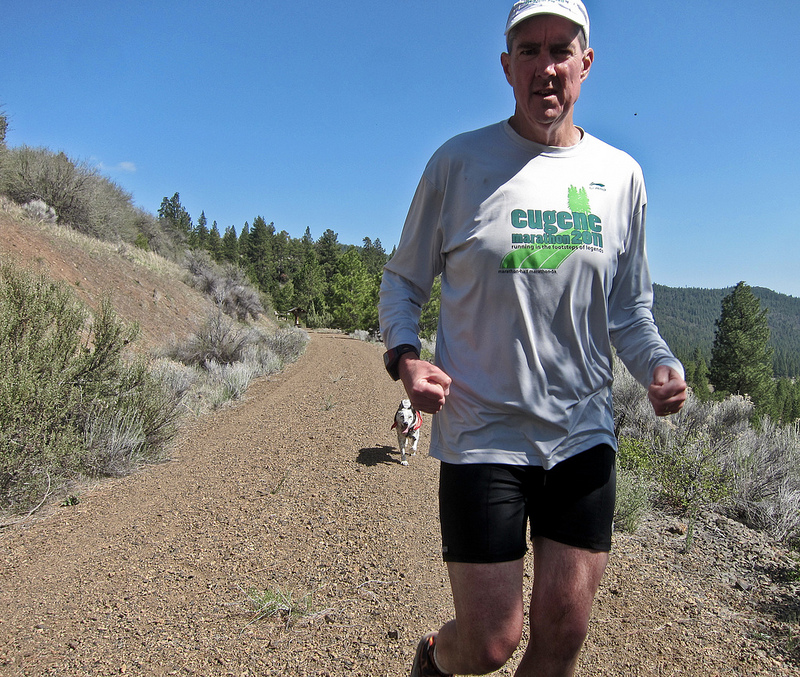
The Vernonia Marathon course is on a paved bike trail. This is the first Rails to Trails project in Oregon – the OC&E Woods Line State Trail being the second. I chose it because I like to train on the OC&E and have completed the Bizz Johnson Marathon (on an un-paved rail trail) seven times.

OLYMPUS DIGITAL CAMERA
Sophie on Paved Portion of the OC&E Trail

I dislike running on pavement so hopefully there will be a dirt trail off to the side of the paved part. If not – well, a paved trail seems a lot softer because it is simply pavement on top of gravel as opposed to pavement on top of concrete (which is what our local streets are.)

I expect the Vernonia Marathon should be a small, informal, fun race and I won’t know anybody there except for my friend Claude who is also going to run it.

OLYMPUS DIGITAL CAMERA
Winter Training

My race strategy is to start out slow and then take it easy. The course profile looks hilly – but how steep can a rail trail be? Trains can’t go up more than a one or two percent grade, right? I think the hills will be gradual – like the Bizz Johnson course.

Funny – I always enjoy the training much more than the actual races.

If anybody has any experience with this event please comment below. See you there.
Atrial Fibrillation News Update

Here are a few internet news stories related to atrial fibrillation. In the future I’ll try to update more frequently so I don’t end up with four topics in one blog entry.

OLYMPUS DIGITAL CAMERA

Overall, the increase in risk of heart attack was about 70% in AF patients, even after accounting for other cardiovascular disease risk factors, such as hypertension, high cholesterol, body mass index, and history of stroke and vascular disease. However, when the researchers looked at subgroups, they found that increased risk of heart attack was more than doubled in women and African Americans with AF—but less than 50% for men and whites with AF.

I’m not sure what to say about this – hopefully runners with atrial fibrillation (who hopefully also have other heart healthy lifestyle choices – like a healthy diet, not smoking, reasonable body weight) will do better than the general population. One bit of good news – the blood thinners a fib patients take to prevent stroke also seem to help prevent heart attacks.

pradaxasmall

“Novel” anticoagulants refers to the newer prescription anticoagulants that are used as an alternative to Coumadin (warfarin). Specifically: Pradaxa (which is the one I currently take), Xarelto, and Eliquis.

I can tell you that as a clinician there are not many things more frustrating than prescribing medications for people who are on Coumadin – it seems like it interacts with everything! One of the great things about the newer anticoagulants is that they have less drug interactions – but they still do have potential drug interactions.

Please click on the link to see tables for drug interactions involving Pradaxa (Dabigatran), Xarelto (Rivaroxaban), and Eliquis (Apixaban).

Obviously all of the novel anticoagulants can interact with any other drug that is *ALSO* an anticoagulant – like Plavix or aspirin. Keep in mind that this includes NSAIDs like Alleve (naproxen), Motrin (ibuprofen), etc.

Personally, I completely avoid taking ibuprofen and naproxen – but every once in a while (like after a brutal long run) I will take a Celebrex. Tylenol (Acetaminophen) is fine – no interactions with the anticoagulants (although it has its own issues).

By the way – if you read the article and see a possible drug interaction please don’t stop taking any of your meds – but contact your own doctor immediately for advice.

neautral milk

A recent study has shown that Coumadin (warfarin) actually increases the risk of stroke for people in atrial fibrillation during the FIRST THIRTY DAYS of warfarin therapy. That’s just the first thirty days – the idea is to prevent having a stroke, and that’s what taking Coumadin does.

This finding does not suggest that anything will change – doctors are still going to put people on warfarin to prevent stroke. They just have to get through the first thirty days!

If you are on warfarin and you read this article – please do not stop taking your medication.

Watchman_2

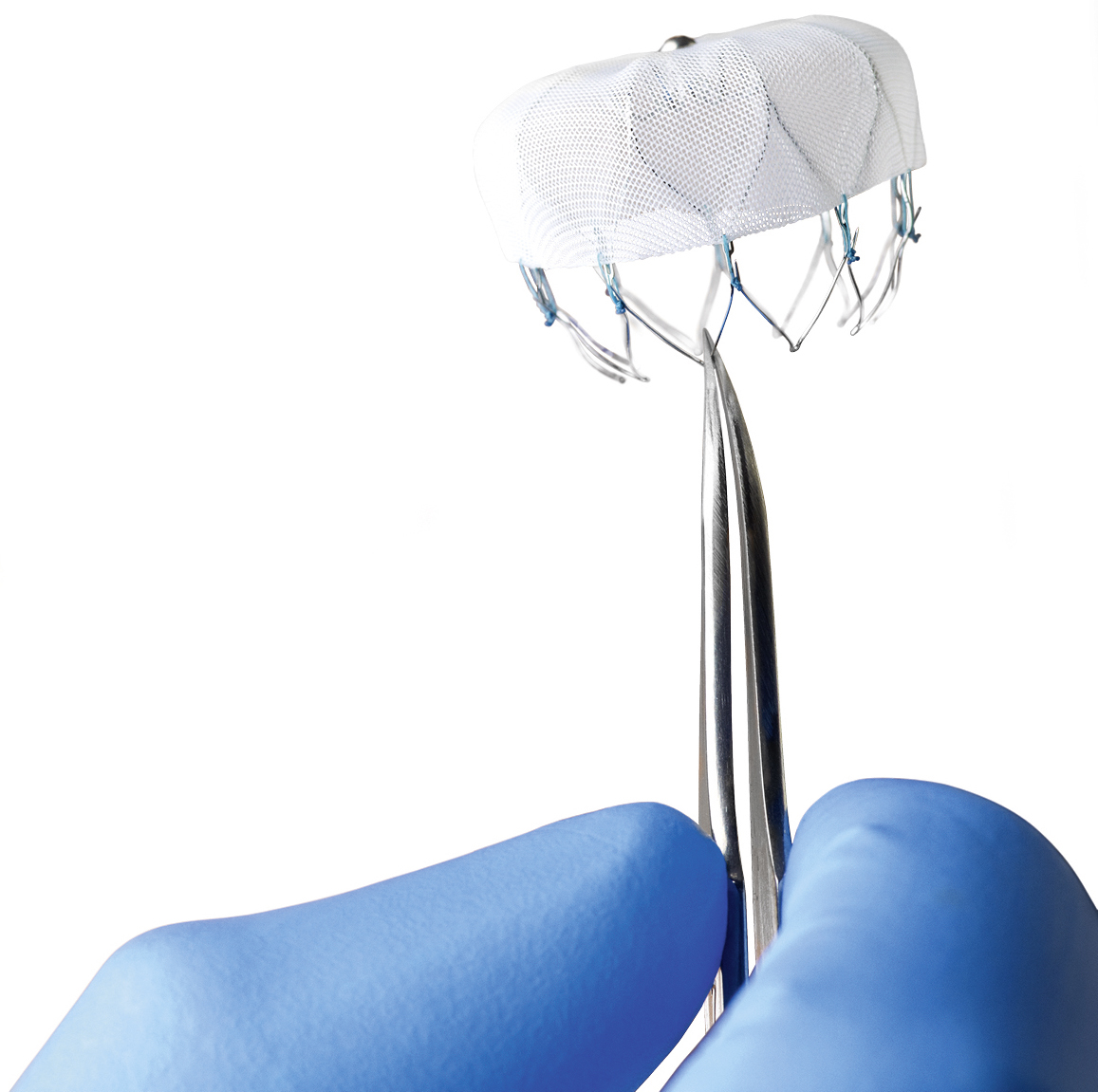
Finally – the FDA has not yet approved the Watchman left atrial appendage closure device by Boston Scientific – but it has given a “vote of confidence.” It appears that this gadget, which is implanted in the left atrium to prevent the formation of the clots that cause strokes, may be approved by the FDA for the US market late this year. The majority of the panel agreed that the Watchman was equivalent to standard treatment with warfarin, but it hasn’t been compared to the new novel anticoagulants (see above).

ryespur

Atrial Fibrillation Stroke Calculator

OLYMPUS DIGITAL CAMERA

Atrial Fibrillation Stroke Calculator

I saw this link today on Facebook and thought I would share it – it is an AF Stroke Risk Calculator, and was posted by the Atrial Fibrillation Association – a great resource for people with atrial fibrillation. As you probably know one of the greatest risks of being afflicted with atrial fibrillation is that it can lead to you having a stroke. Blood clots can form in the malfunctioning atrium, break loose, travel to the brain and – BOOM!!!! – you’ve had a stroke. Prevention is the best approach.

This calculator is basically a clever automated version of the CHADS2 score. I was delighted to find my risk is 0%.

But if course my risk is definitely higher than zero percent – even if my CHADS2 score is zero.

My heart is abnormal in more ways than the atrial fibrillation. I have hypertrophy of my left ventricle (from running – not a risk factor) but I also have “severe hypertrophy” of my left atrium (the top chamber of the heart) which my cardiologist assures me is a risk factor for stroke and although my CHADS2 remains zero I am on an anticoagulant (Pradaxa).

My question has been: Why not include left atrial hypertrophy in the CHADS2 calculation?

Answer: I dunno.

lillianandmargo
Lillian and Lolawanda ready for another trail run

My other question has been: What else can I do to reduce my risk of a stroke?

I understand my risk is NOT zero, regardless of what this calculator says.

Obviously one thing I know I can do is to remember to take my Pradaxa twice daily. Believe me, for somebody who is only taking one medication it isn’t as easy to remember as you might think. I have considered switching to Xarelto simply because of the once a day dosing.

pradaxasmall
My Pradaxa

But other than that what else can I do? One more thing (I think) – stay well hydrated.

As a large, slow, long distance runner (who is often on the trail for several hours at a time) I sweat more than smaller runners, and I have to be very careful not to become dehydrated. I spoke with a friend of mine who is an Internists/hospitalist and he agreed – don’t become dehydrated. Being dehydrated can literally thicken the blood and increase the chance on a clot, and therefore increase the chance of a stroke.

becareful
Be Careful Out There!

How much water should a person drink? I have no specific prescription but what I do is try to drink enough so that my urine is relatively clear once per day. Also there is such a thing as too much water and big, middle-aged distance runners are at relatively high risk of hyponatremia (too much water – not enough sodium) so be careful out there!

We talked about other risk factors are there? Risk factors for blood clots in the legs include being inactive, obesity, and smoking – probably less likely for the readers of this blog.

OLYMPUS DIGITAL CAMERA
Sedentary after a LONG RUN

What about alcohol? Does that increase the risk? He said probably not and in moderation might even decrease the risk – but remember – alcohol clearly increases your risk of atrial fibrillation – and if you drink enough alcohol you will become dehydrated – so there you go!

By the way – don’t expect this this risk calculator or this blog to advise you as to whether or not you should take your aspirin, your warfarin (Coumadin), your Xarelto, or your Pradaxa. It is important that you make this decision with your doctor.