I am honored to have had an article published in the December 2014 issue of EP Lab Digest, a monthly journal for electrophysiologists and allied health professionals who work in electrophysiology labs.
The managing editor, Jodie Elrod, had approached me about writing a “patient perspective” article as she was familiar with my afibrunner blog. The article is basically a synthesis of material already presented in this blog, particularly my article called Atrial Fibrillation – A Visit to the Electrophysiologist.
I am delighted to have this opportunity to communicate with the EP community and promote my plea for empathy with respect to the endurance athletes afflicted with atrial fibrillation.
Thanks EP Lab Digest!
Also interesting – my cousin Chuckie, (an electrophysiologist – I’m sure they don’t call him “Chuckie” at work), who I mention in my article, had an article published in the November 2014 issue of EP Lab Digest.
I haven’t blogged for a while because we’ve been on vacation in Croatia for two and a half weeks, and of course after being gone for that long I’ve been incredibly busy at work. I am working on along blog entry (actually it’ll be a separate blog) about Croatia, so stay tuned.
Me During a Brief Rest Stop
In my opinion bicycling around Crater Lake is one of the finest bike rides in the entire United States, and Crater Lake National Park will, from time to time, close of twenty-four of the thirty-three miles of the Rim Drive to allow bicyclists, hikers, and runners to have a relatively car free day. This year they had vehicle free days on two Saturdays: September 20 and 27, and I made time to be there for both days.
Since I live near Crater Lake N. P. I’ve had the opportunity to ride the rim several times, but this year was my first time doing it in permanent atrial fibrillation (and while on a beta blocker). Always a challenging ride under any circumstances, adding a fib and a beta blocker to mix changes things a bit.
Most riders start at the Steel Visitors Center (Park Headquarters) and ride clockwise. The first thing on the agenda is a three mile climb with 650 feet of elevation gain up to the Rim Village. This is actually the steepest hill along the route, but not the most difficult, in my opinion, mostly because the legs are still fresh. It is quite odd to pedal up a climb like that and find a lake at the top. There are several climbs and descents along the thirty-three mile route, and rarely is there any flat road, and the two toughest climbs, in my experience, are in the second half of the ride – the long easy climb to Cloud Cap (where most people stop to sigh and eat their Clif Bar) and the last grind up to Dutton Ridge. I might even say that you only need two gears to ride the rim – whatever you use as your easiest climbing gear and a big gear for coasting downhill.
Elevation varies from 6700 to 7700 above sea level. Personally I don’t have an issue with the elevation at Crater Lake because I’m used to living at higher elevation, but people coming from sea level might feel it.
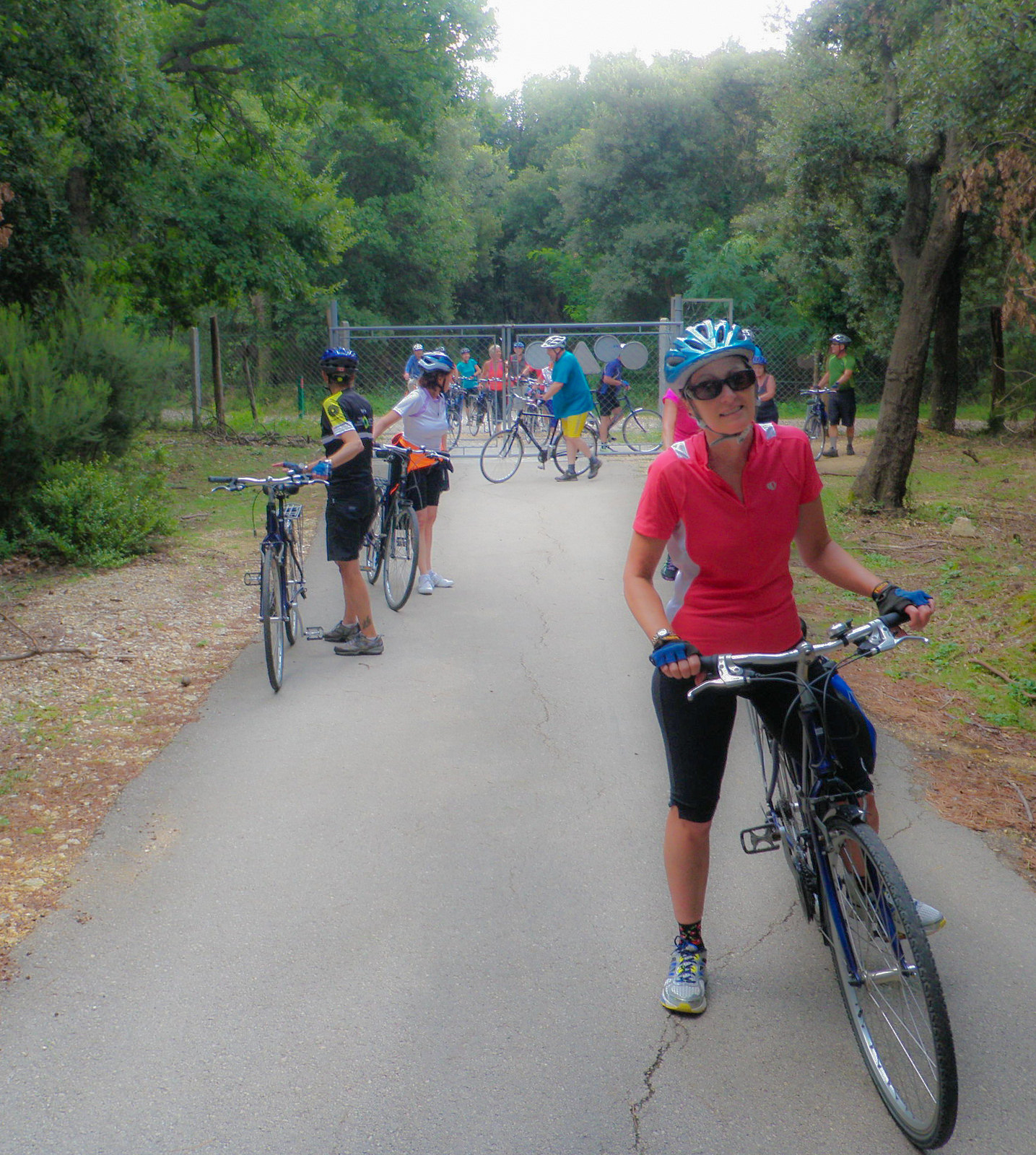
Bicycling in Croatia with Margo
To be honest, none of the climbs (going clockwise) are particularly steep, and there is only a total of about 3500 feet of climbing, but the climbs are so long and persistent that it seems like more. The descents can be fast and one could easily go 50 mph down the descent from Cloud Cap, but don’t. The speed limit is 35 mph and there are often surprising potholes encountered once you get up above 40 mph. The vehicle free days are great because you don’t have to worry about cars behind you. One day I was descending at 45 mph, a speed at which the wind in my ears prevents hearing anything, riding right down the middle of the lane, and was passed by a van. I thought, “What’s your hurry, bro? I’m already going 10 mph over the speed limit!”
The scenery is world class and seeing it slowly, up close on a bike, complete with the sounds and the smells is unimaginably beautiful. Being there on a vehicle free day with hundreds of bicyclists from all over Oregon is even better – there is an amazing energy in the air on the vehicle free days.
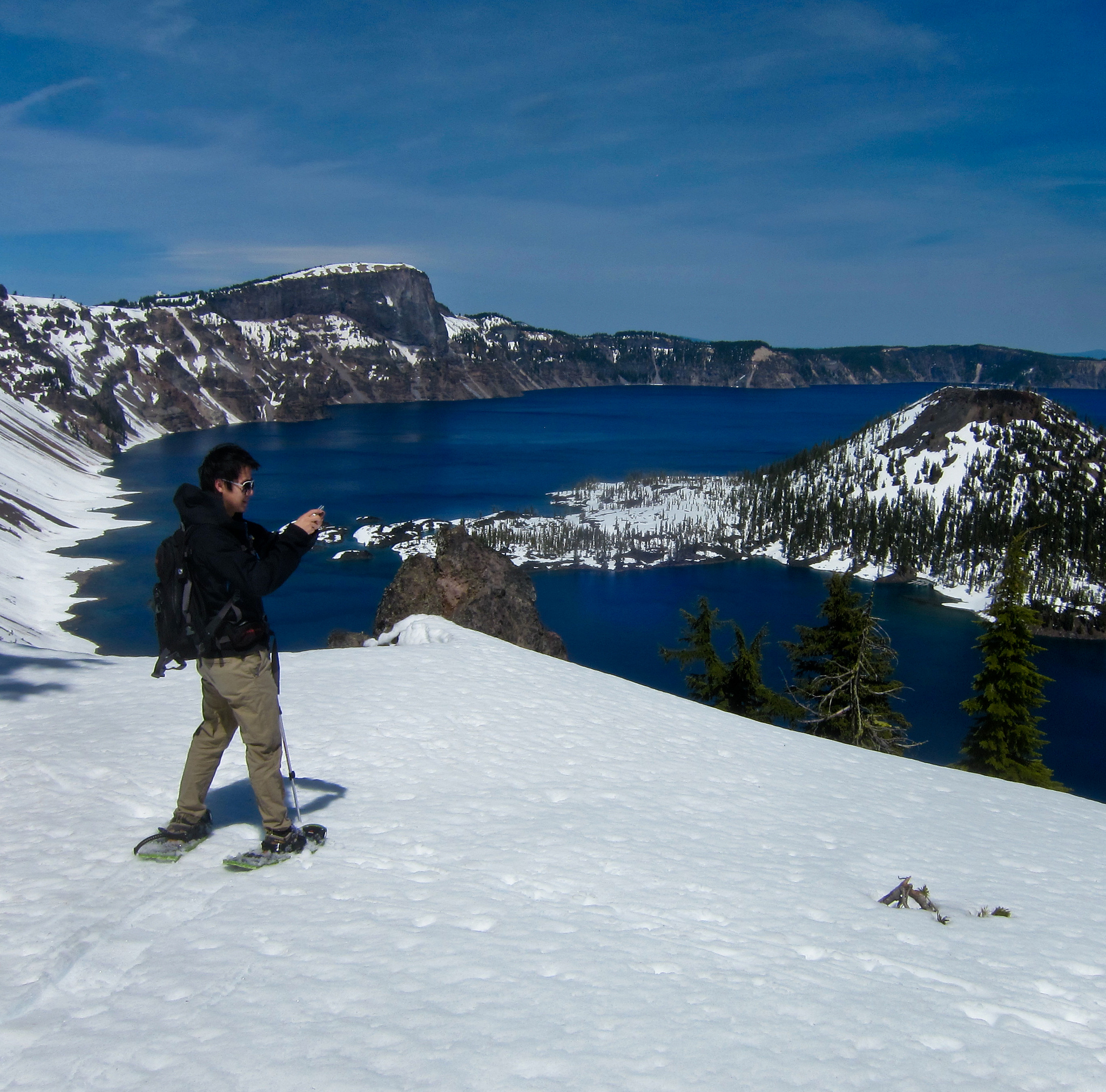
Snowshoeing with Libo April 2013
If you are going to ride the rim, especially on a vehicle free day, keep in mind that once you are past the Visitor Center and the Rim Village (basically once you are past the first three miles) there is no water. I’m a heavy sweater so I’ll take three liters on a hot day. Actually along the last big climb there are some little “waterfalls” right along the roadside and I have seen people filling their water bottles there and it is probably fine; but it is definitely not tested and designated as potable water. Also keep in mind that there will be no SAG wagon trailing you so make sure you have the proper gear and tools for changing flat tubes and minor repairs.
As far as riding the rim in a fib while on a beta blocker, well, it is much slower. I was able to ride it but it took me at least an extra hour. I had a triple chainring on my old road bike, and I used to be able to do the entire ride in the middle chainring (except for part of the first climb); but now I am using my easiest gear for most of the climbing (my new bike has compact double, but the gearing is similar). I think I need to be happy with being able to complete the ride without falling to pieces, and quit lamenting my slower speed.
Photo by Margo
My personal preference, now that I am in a fib, is to keep going and minimize rest stops. It seems every time I stop it’s like starting over again. On the first Saturday I was riding with a group of friends, including my wife Margo (her first time doing the rim ride) and I told them I wouldn’t be stopping much and that they could catch up to me. The last I saw them was at the top of the first climb, and I actually completed the ride a half hour or so ahead of them – they had fun, stopped at the many overlooks, stopped for lunch. I was the tortoise to their hare; slogging up the hills and only stopping a few times.
Another difference is that now that I am on an anticoagulant I brake a lot on the descents. I’m usually the biggest rider in whatever group I’m riding in and consequently the slowest climber that makes up for that by being the fastest descender. No more. Now I think about how descending slowly will help me keep my blood inside my body and I was passed by dozens of riders on each hill. As a matter of fact I kept getting passed by the same groups over and over. They’d pass me on the climb, then I’d pass them at the top of each hill where they’d stop to look at the stunning view of the lake, then they’d pass me on the descent and I’d pass them again at the bottom of the hill where they’d evidently stop to chat. Over and over – sort of fun.
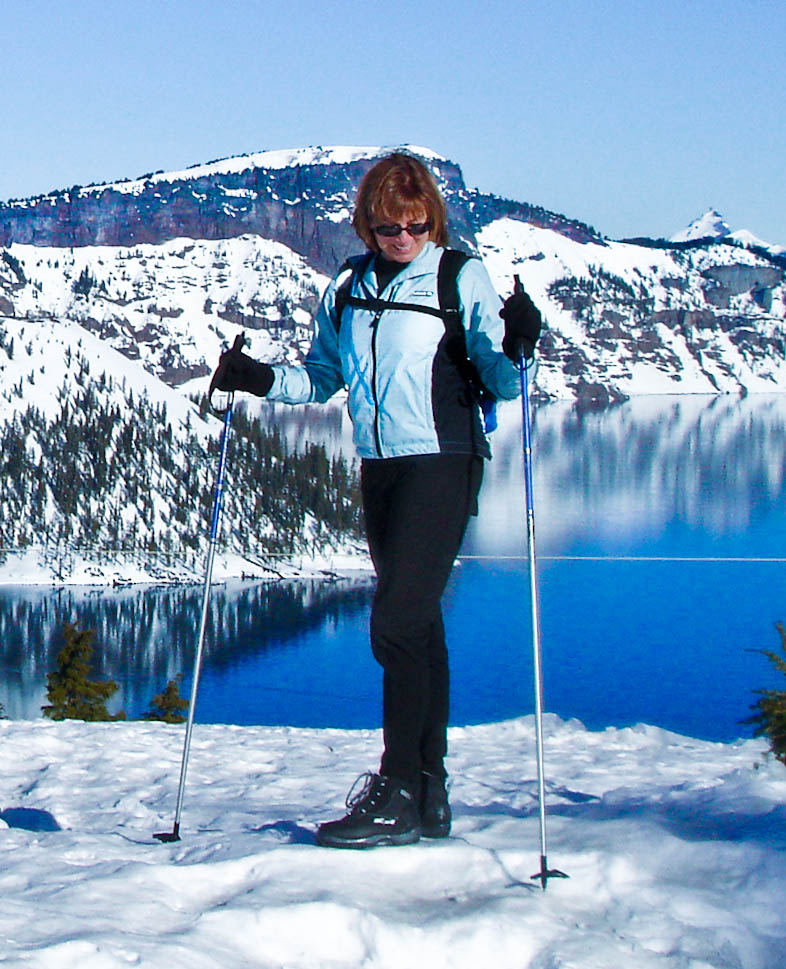
Skiing with Jan (evidently I’m relying on old photos because I only took one photo for two days of riding around Crater Lake – like I said I don’t stop enough!)
I returned and rode the Rim Drive again the following weekend as well but my friends didn’t accompany me. It was a much cooler, windier day and looked like rain, and they had other plans. I ended up doing the first half and deciding to make it an out and back. I was thinking about the big descent down the other side of Cloud Cap in the heavy wind and thought that might not be the best idea on account of my being anti-coagulated. I learned that riding the rim counter-clockwise is not as safe as riding clockwise. When riding clockwise the lake is to your right; but when riding counterclockwise there was quite often a steep drop off and no shoulder and no guard rail. The drop offs weren’t a thousand feet or anything like that but they were certainly much further than I wanted to go over on my bike so I did the long descents towards the middle of the lane although I pissed off a few drivers I will live to ride again. There is no way I will ever ride the entire rim counterclockwise. Keep in mind that most drivers are looking toward the lake (why wouldn’t they) and if you are between the driver and the lake they are likely to see you. But when riding the other direction there is more risk of being unseen.
Carter Lake Century 2011 (not my video)
Another good time to ride around Crater Lake in the Crater Lake Century. I have never ridden with the organized century (I’ve always been training for something at that time – it’s held in August) but I have been told it is a blast. As far as I know the Rim Drive isn’t closed during the century but there are about 300 riders up there that day. The number of applicants is limited so register early if you want to get in. The century, obviously, involves more than the thirty-three mile Rim Drive and in addition to more climbing from Fort Klamath up to the Park Headquarters, there is some routing around the local farmlands near Fort Klamath to make it an even one hundred miles.
I would love to hear from other bicyclists, especially cyclists dealing with atrial fibrillation. Please feel free to comment below.
This is Joe’s Story – a guest blog article based on Joe’s comment on this blog describing his fascinating experience with atrial fibrillation and subsequent heart failure. Joe has really demonstrated persistence and a positive attitude that, I think, a lot of athlete’s with atrial fibrillation possess. Joe is making a comeback from serious, life-threatening heart failure, and he has done a good job of accepting the new reality of his post a fib performance.
+++++++++++++++++++++++++++++++++++++++++++++
Joe Triumphant
Hi Everyone – I’ve had A-Fib for about three years now.
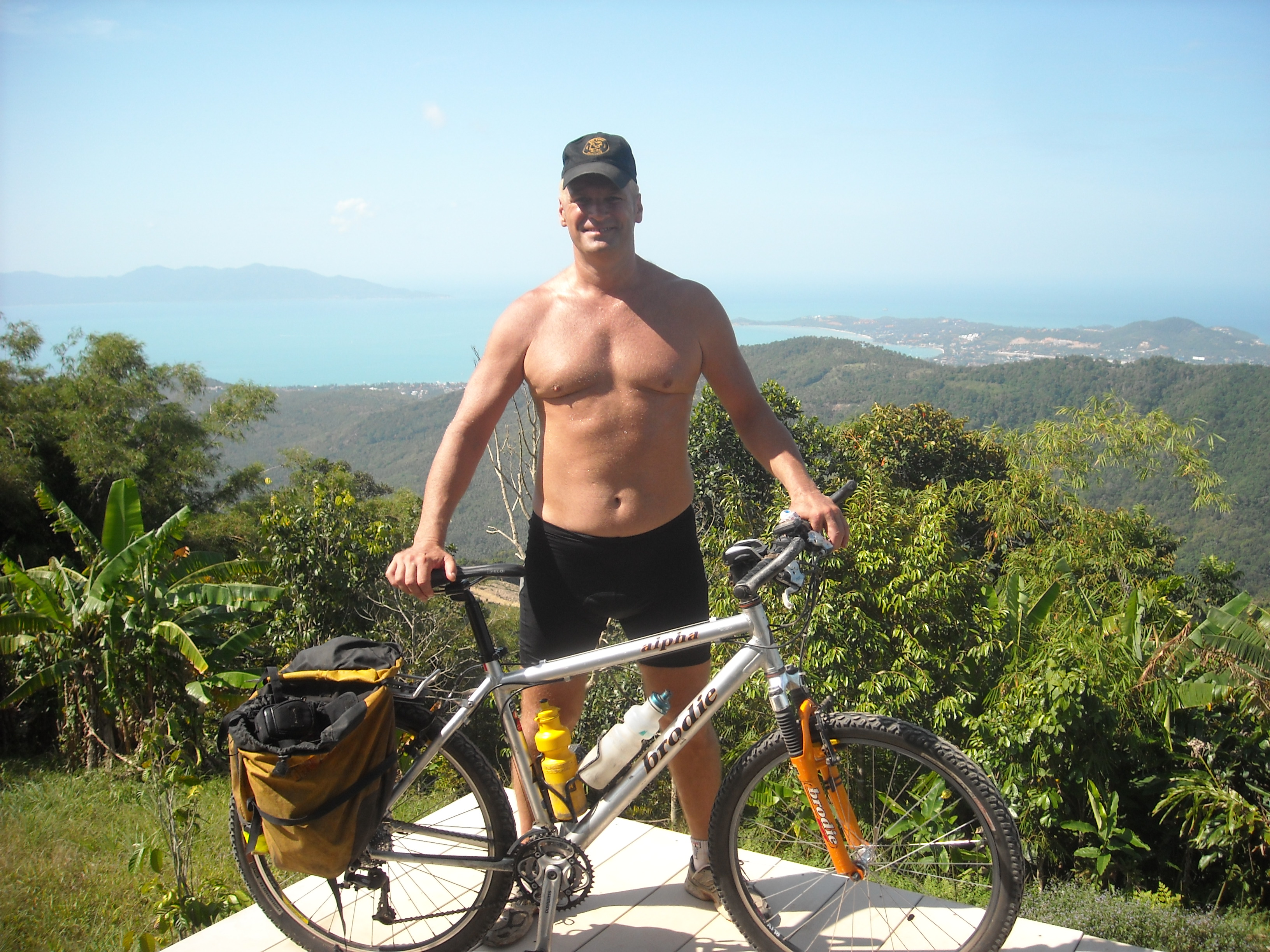
I live in the tropics and cycle, run, do weights. I train five days a week but not hard or too easy. I believe I got into this mess when I cycled up our small mountain here on the island I live on three times a week back then. I would only drink reverse osmosis cleaned water consuming about four liters just going up the mountain. I’d do weights in the morning and cycle in the afternoon and believe me it gets hot and humid. It’d take me about two hours to cycle up to the top of this very very steep course. (approximately 5K to the top)
In hindsight now I guess I’d been over-training terribly and not putting back potassium and minerals into my body at all. I happened by luck (or fate) to be given a heart monitor and thought it was cool to use it on my cycle ride up the mountain. I set the max at 185 and started off – as soon as I started up the steep hill after a five kilometer preamble the damn thing started beeping – it was at 205 and I just started up the hill! Like an idiot (ha ha) I kept going and it would not shut up. Did it the whole way up and for the next month it was like that. Can’t believe it now I did that but as I’m in constant A-Fib now the reality speaks for itself.
Been put on beta blockers and have to take warfarin. I suffered a sever influenza sickness last year and it really took a toll on my ticker. My left ventricular ejection fraction (LVEF) was only 17% when I finally went to see the Cardiologist here as the echo showed.
Fast forward now to a month and a half and I’m back up to 35%. The goal is to get back to 55%! I love running and exercise and like some of you wrote would rather plonk on the trail then sit on the couch, so be it. I used to run with the goal of just finishing the run and was happy about it.
This is Joe’s heart on heart failure
Then I got into times, was happy about that too. Before my illness last winter my times were at my all time best. Slow for a lot of runners but for me great. After all I run to please me so I accept what ever pace I come home at. Not a biggie. The doc was amazed at how fast my heart recovered and I even saw the difference on the screen of my heart’s movement. The echo I had before it looked like Jabba the Hutt sleeping. I think I attribute this to doing a LOT of research on the internet getting informed of what I was dealing with and trying it slowly with my Doctor always in the know. He was very skeptical of the supplements I was taking but has done an about face now. I also believe the coconut water I drink everyday now has helped in a big way. I noticed I don’t have an ammonia smell anymore when I sweat. I always had that smell when I drank the Osmosis water. I drink a mineral water now along with the Coconut water.
Anyways – I do prattle on. The thing is not to Panic and get informed!
I wear a Polar T-80 watch with GPS and follow the Zone rules. Yeah, I’m running about four minutes slower than normal but I feel great after a run now and do not dread the next one. Hoping my pace will kick up a notch as the info says it will as the body adapts.
This forum is great may I add and it sure is reassuring to read of Peep’s in their 80′s who’s lived with A-Fib for 20 or so years and keep running. Hopefully one day soon someone will find a cure for this curiously annoying ailment.
When I had 17% ejection rate it happened really fast. The time line is like this: on a Friday I ran a very fast 5K run for me. One of my best times. Later that day flew to spend three days with a friend, and after returning home I got ill and by Wednesday was full blown into whatever ailment I had (Influenza?). I tried running a week later but could not even go further than 50 yards! Then I stopped and decided to rest a week, do nothing and fight this illness. Well, it got worse and worse – my lungs started filling up with fluid and at night I could hear bubbling in my lungs. Fast forward a week of no sleep, etc, etc, and went to a doctor was put on antibiotics. I didn’t get better, still the same symptoms. (Turns out the heart, because of it not beating properly causes the fluid to back up and then it seeps into the lungs so any of you with these symptoms see a doc. You can do a thumb press on your shin and if the indentation stays and is deep you’ve got fluid retention and need a diuretic).
After a couple more weeks of this I decided because of previous symptoms I felt there was something wrong with my heart again. Seemed to be doing the same old symptoms of A-Fib. I thought I was free of it for almost two years or else it was Silent A-Fib and I did not know it!
My cardiologist gave me an echo and all he said was “What did you do?” Man, you don’t want to hear that from your doctor!
Like I said before I even could see my heart wasn’t doing anything. Just sort of sitting there: legs up – arms crossed!
He put me on meds again and the dreaded warfarin. They worked almost right away! I was on Codarone (amiodarone) for only a month and everyone should know that this is a dangerous drug! Long half life and it’s like shaking hands with the devil. Used a lot as a last resort. But! – for short periods it works miracles. Using it over six months or more can have repercussions.
Well, that day I came home from the doc’s I tuned up my mountain bike and went for a very short ride. I was out of breath the whole time. Did this for a couple of weeks and got stronger. Started weights again, and just started using the bars with no weights. Did this very very slowly and now after two months I’m almost back to benching 200. (ha ha – good for me anyways) The last check up the doc said my heart (Left ventricular ejection fraction) was up to 35% and I saw the difference in the video as well! Made me feel very very happy.
So now I’m trying something I never thought I’d do. I bought a Polar T-80 Heart monitor with GPS and run and cycle in the Zone. I exercise according to my heart rate. I’m finding I’m no longer exhausted during the rest of the day and overall feel better, stronger. It’s taking time to lose that competitive spirit though – ha ha ha – I’ve got friends who are in their 70′s running faster than me. My slowest times in years but I’ll stick to it and see if my times automatically come back up as the research suggests. This has to be done. I love being active but I hate being dead more so I have to accept and live accordingly. Don’t Panic!
A heart pumping at 33% efficiency feels a lot better than 17% I can tell you. I do more things than most of my friends. It still amazed me though how I can do weights for a hour, run for an hour then eat, chill and later in the day walking up a flight of stairs takes my breath away. It’s like a reminder – oh yeah I’ve got heart problems. A friend wisely told me that it could be like losing weight: fast in the beginning; then slower. I hope my ejection fraction % will keep increasing till 55%. Considered normal. Then I’ve got to deal with the A-Fib.
Joe still the life of the party – but no more beer for this guy!
A very important footnote: I used to drink beer everyday for years! Love the amber fluid. After my first A-Fib about five years ago I stopped for about three months. Then about two years ago I only drank on Friday and Saturday. For two years I did this. No exceptions. I’m 51 now and even this was taking it’s toll I believe. Now I’ve cut it out completely and will go the distance – sort of sucks but I’m close to the three month period now and will keep going. My next visit to the docs is in August so I’ll hopefully remember to post what transpires.
If anyone is interested in what I’ve been taking for supplements, eating, drinking, and exercising please leave a message on this blog and I’ll be most happy to share. One thing I’ve always found frustrating with most blogs is when I’ve read what someone has done and it worked there was no follow up. I’ll try and keep posting on this one. Great site! Peace out…………… don’t Panic : )
+++++++++++++++++++++++++++++++++
Update (from Joe)
Hi everyone. Went for my one month checkup at the cardiologist today and the results were better and improving. The Doctor said my heart has shrunk by a noticeable margin which is a good sign. (had an echo) It’s getting stronger. The ejection fraction went up a bit as well to around 37%. Getting nearer to 40% then in a few months hopefully 50 or 55%!! I was also able to wean off one med by half. I felt it in my run today – a really great run. Will continue on meds and supplements plus exercise and diet as is for another month. See ya then!
One of the nice things about endurance sports, from half marathon and up, is that most participants do not have this type of attitude. It is a live and let live culture. It seems like half marathons in particular are a plce where you generally see conspicuously non-athletic looking athletes – and good for them!
Half Marathon Participant – Right on!
As for me, I’m in permanent atrial fibrillation, which makes me slow, and now I have to take a beta blocker, which makes me even slower.
But I’m certainly not going to stay home, and I’m going to remain a trail runner, even if I’m slow, and I still plan on signing up for distance events. At my last half marathon I was very surprised to see almost the entire field, including people who would previously never had been in front of me, pass me, get smaller, and disappear from sight. In the first two miles. Not fun. I was thinking, “Whoa, where’d everybody go?”
Contrary to how it might appear to faster runners who are observing slower runners, it’s not always easy being slow. It might actually be more difficult. Yesterday on a four mile trail run, my first run on the beta blockers (more on that later), I rounded a corner and saw another runner behind me. He was an individual who I had seen at the trailhead, who appeared to be a bit older than me, and who was wearing jeans and a long sleeved shirt on a ninety degree day. I thought, “Oh man, I don’t want to get passed!” and I cranked up my speed. I don’t think I was running fast at all, maybe about a ten minute mile, but the burning in my lungs and legs felt like a fast 5K. “This is ridiculous!” I thought, saddened. This is “fast” for me now.
But that is my new reality.
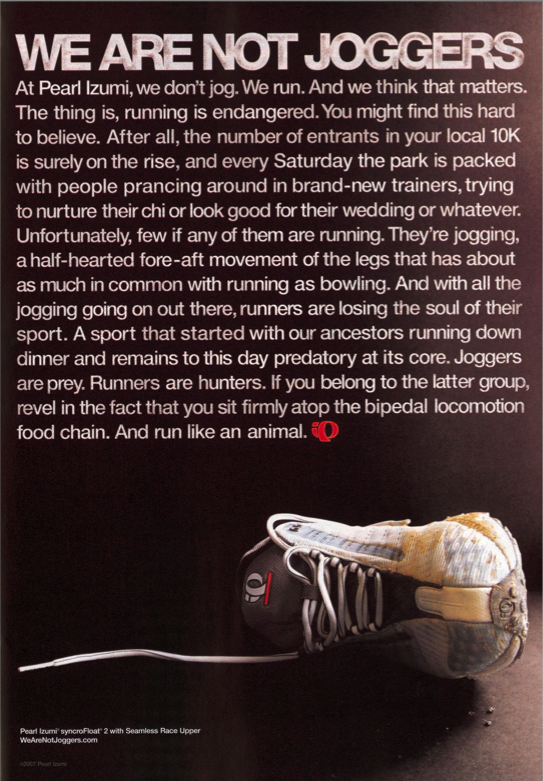
As far as Pearl Izumi is concerned they evidently think that being assholes, and creating some controversy, will make their ads stand out. They may be correct. There are a lot of competitors out there, they have an extremely small market share, and it is said there is no such thing as “bad publicity.” I knew that they made shirts, and jackets; but until now I didn’t even know they sold shoes.
Pearl Izumi Shoes – so fast you’ll kill your dog!
One of their ads last year, which featured a runner who ran so fast in his new Pearl Izumi shoes that he killed his dog, made quite an impression. Of course they apologized and had their (unfunny) ad featured in news stories and blogs for weeks.
By the way, my main nylon running jacket is made by Pearl Izumi. I like it, it’s a good jacket. I’m not going to boycott them or burn the jacket, or anything like that. I just want to say in this blog that slow runners are probably slow for a reason – and that reason isn’t necessarily poor character or laziness.
Me – Lazy jogger with atrial fibrillation after a twenty mile training run. I ran so slow that my dog survived!
Or even if the slow runner does have poor character, or is lazy, well, what’s it to you?
And guess what – Pearl Izumi got three of their ads posted in my little blog (and elsewhere) – for free!
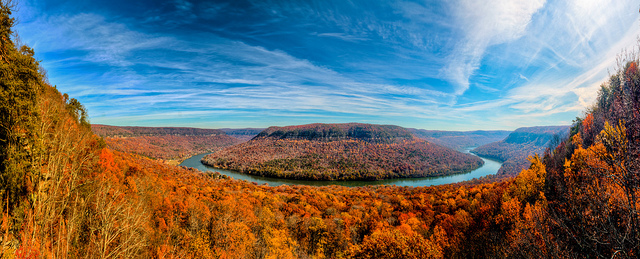
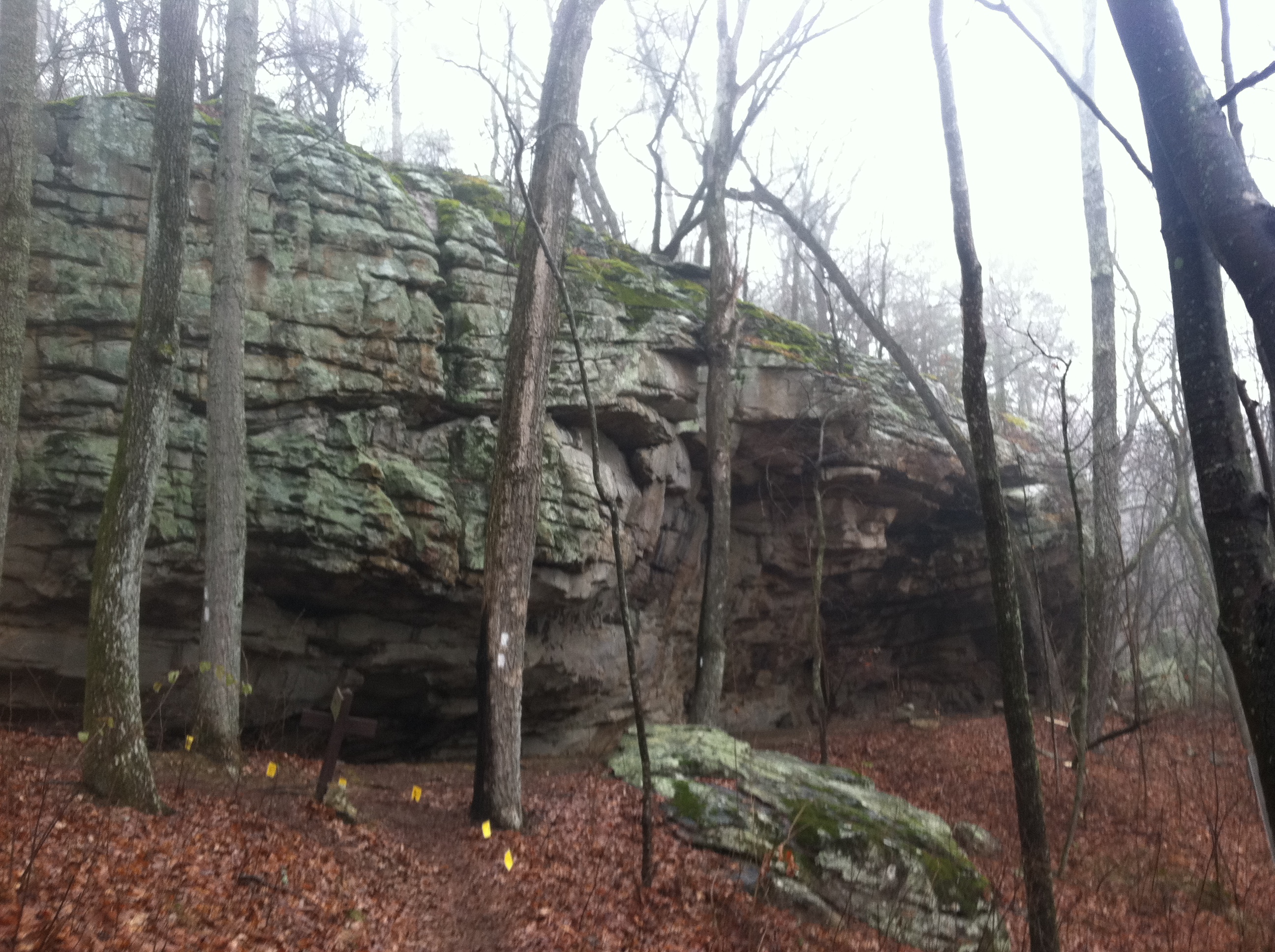
Once upon a time there was a girl that loved to run just for the fun of it. She woke up early one morning on a cold and rainy March morning, excited to run the Rock Creek River Gorge Trail Run at Prentice-Cooper State Forest, just outside Chattanooga, Tennessee. She had run this race before and was wowed by the gorgeous gorge views and challenging single track trails.
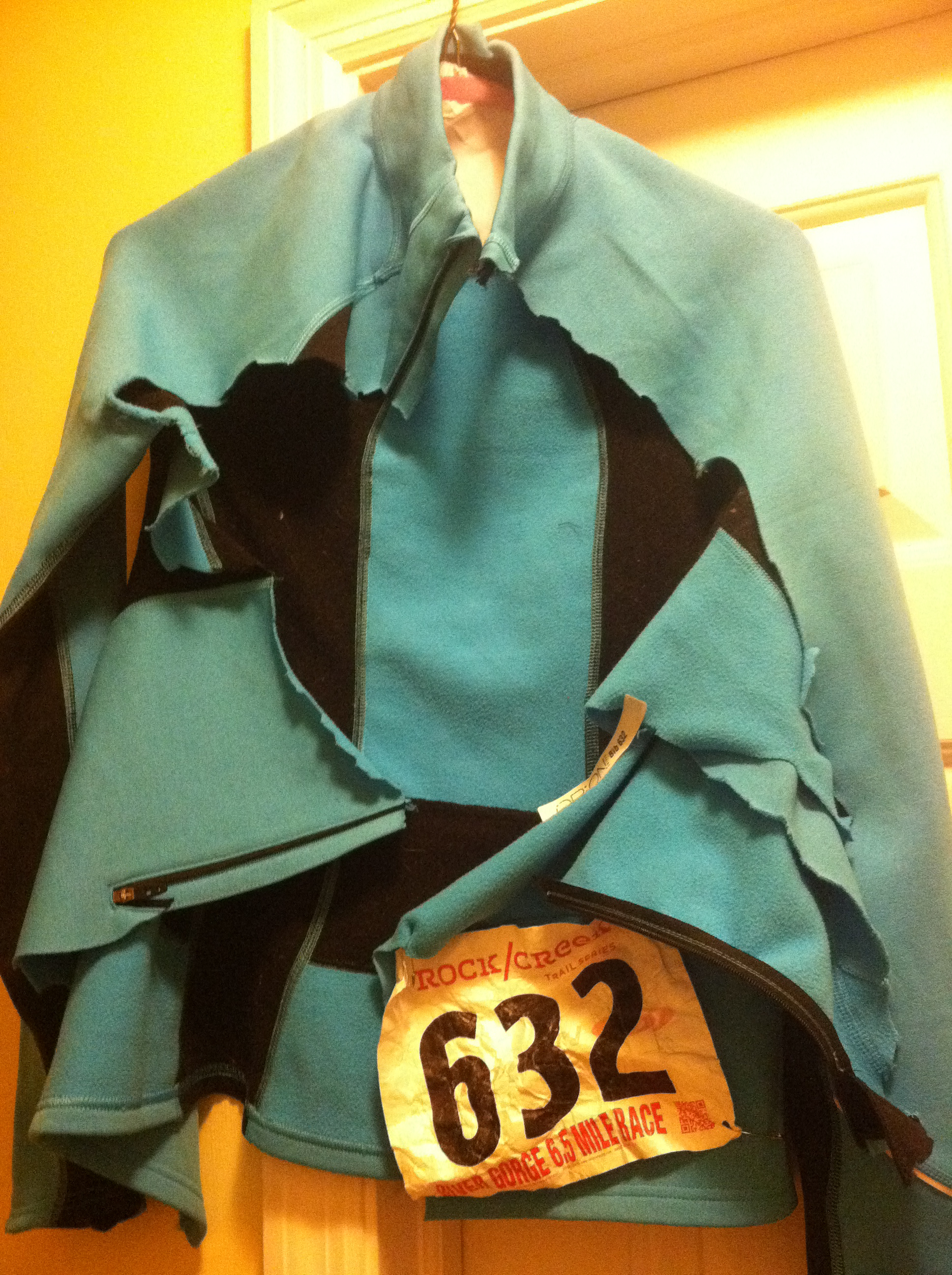
She signed up for the 10.2 mile run but wasn’t feeling exactly right that morning. She couldn’t put her finger on it. She was just a little off but that wasn’t going to stop her! She bounced out of bed and decided to do the 6.5 mile option instead of the 10.2—a decision that turned out to be one of the best she ever made.
The start was a little fast. Everyone was ready to get moving on the chilly and very wet morning. Soon the 158 runners headed into the woods and formed a single line, slowing the pace which was a good thing. The trails were incredibly slippery with tons of thick mud after much rain that winter. One runner took a face plant when crossing the creek and came up with a big gash on his forehead and blood dripping down his face.
“Are you OK said the girl?”
“Yes, I am just happy to be out here,” he responded.
“Me, too!” she replied. There were smiles on everyone’s faces as they headed up steep hills and carefully focused on the each step.
At the half way mark, she was feeling OK but a little more tired than usual. No problem she said to herself, just having an off day. It was time to focus on other things, talk to people, make some jokes and carry on. She found a guy wearing a shirt that said, “Idiot Runner’s Club – Run, Smile, Drink Water and Don’t Die.” This sounds like my kind of runner thought the girl! They chatted and laughed about how slow they were going but how happy they were to be there instead of sitting on a couch or still sleeping in bed. The mud was so thick that their shoes nearly got sucked off but happily they went up yet another hill.
Even though she wasn’t moving very quickly, her heart was starting to race quite fast. She slowed down and was walking more than running. She put her hands in the air a few times feeling like it was getting a little hard to breathe. Just focus on the gorgeous trails and it will be over soon, she told herself.
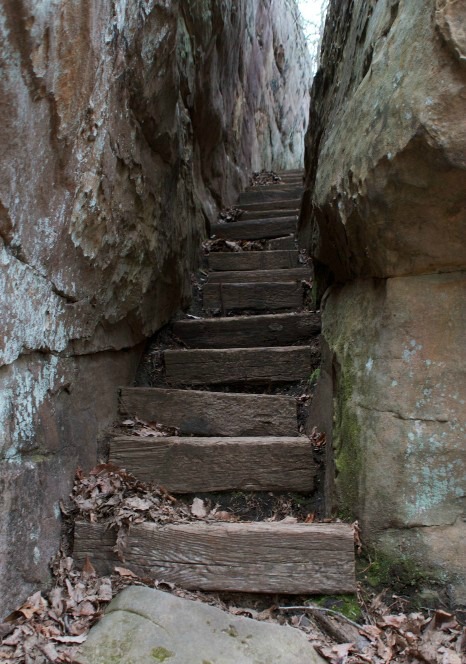
There is that Idiot Runner again. He caught up and they were passing each other back and forth. It was time for more chatting and laughter. Only a few more hills and it will be time to relax and enjoy the day. One final push, climbing up through the narrow Indian Rockhouse and the race is almost over.
It is only 6.5 miles, she thought why does this feel so hard? She had run 50Ks and didn’t feel this bad. There goes a female racer. She will have to see if she can catch her but just felt so tired and ready to stop. Then she heard the crowd and knew that the end was near. She pushed as hard as she could one final time to make it to the finish line—she did it! And then she decided to sit down for a minute, she really didn’t feel so good … and then there was darkness …
…what is that noise?
She was waking up and heard a loud noise – it was her heart pounding at an incredible rate and a bright light in the distance. Someone was saying something to her, if she could only get to the light. She woke and found herself inside the medic tent with two physicians by her side. Her legs were cramping with the worst pain she had ever felt. Where was she? What had just happened? What was her name? Which hospital did she want to go to? So many questions…
She was being placed in an ambulance and sent to the local hospital. She was in rapid rate Atrial Fibrillation and needed a Cardizem drip to get her rate down. They admitted her to the hospital and the nurse came by to explain what A Fib meant. She drew a nice picture for the girl.
She learned that A fib occurs when one or both of the upper chambers of the heart – called the atria – don’t beat the way they should. This can cause blood to pool in the left atrium, where a blood clot can form. If that clot breaks away, it can travel to the brain, where it can cause a type of stroke called an ischemic stroke.
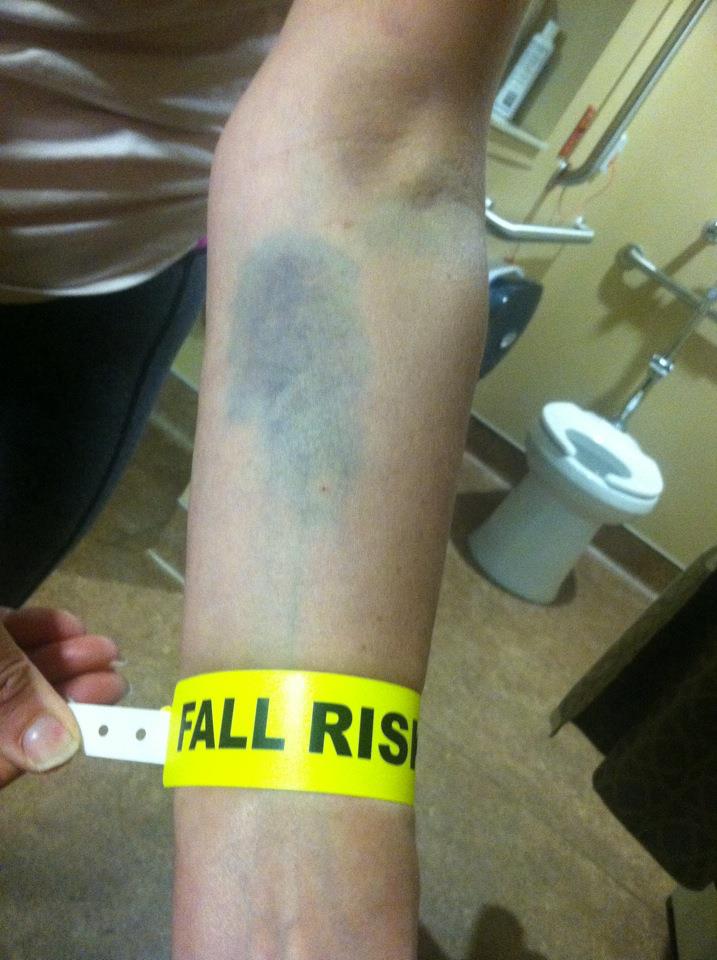
Two and half days in the hospital she waited for the meds to convert her heart back to normal sinus rhythm. They placed a band on her wrist that said “fall risk” – they had no idea.
The doctor decided the only way to get her heart back to normal rhythm was to cardioconvert using an electric shock. She was wheeled down to the operating area and what a surprise– she saw the two doctors that were at the race. One was a cardiologist and the other was an anesthesiologist for cardiology. They were chatting and laughing and encouraging her that it was all going to be OK. Her cardiologist was running late and it delayed the procedure. He was known for this as he always took time with his patients. Right as the doctor arrived; the nurse looked at the monitor and said wait—she converted on her own! We don’t need to shock her heart. The girl was happy and believed that it was actually going to be OK— maybe not happily ever after but OK. She smiled as she remembered the new friend she had just met on the trail…
“Run, Smile, Drink Water and Don’t Die.” Now those were words to live by.
The End.
JoAnna Brogdon, forty-three years old, went into a fib several times since the race and was hospitalized twice. She has no underlying chronic conditions and the doctors are unable to tell her why she has had a fib. She believes the worst part of the condition was the emotional stress and not being able to exercise as she had in the past. She underwent a cardiac ablation recently and her heart has been beating normally since. She is hopeful that she has put a fib behind her at least for now and looks forward to running, traveling and feeling normal again. JoAnna wants to support those that struggle with a fib and may be contacted at joannabrogdon@hotmail.com.
One big difference between running in persistent atrial fibrillation and normal sinus rhythm is that, for me anyway, there is a lot of apprehension about over-doing it. The days of charging up a hill may be behind me at this point, and I haven’t done anything resembling a speed work-out in well over a year.
Prior to atrial fibrillation I used to do interval work-outs once in a while. For certain marathons where I had a specific personal time goal I would do a work-out known as “Yasso 800s.” Although some expert dispute that this is actually the most effective speed work-out for marathon training, nobody would dispute that this is a difficult work-out. I would do them on Wednesday nights at a local college track and I always felt they were my most difficult work-out of the week – probably more challenging than my languorous week-end long runs. Certainly this was the work-out where most feared injury.
To be honest I don’t miss Yasso 800s. I never have been a fast runner and never enjoyed short fast races like 5Ks.
But even during LSD (long slow distance) work-outs there usually comes a point where I will feel that the run is becoming difficult and I have to push through that. People often say “push through the pain,” but it isn’t really “pain” per se; but whatever it is it now makes me nervous!
But now that I am in persistent atrial fibrillation I think twice about pushing beyond any thresholds, however they are described. I have a fear in the back of my mind that I am going to make the atrial fibrillation worse, or pass out, or die, or . . . well who knows? This is all new territory for me.
I think this is why I “bonked out” of the second and third (out of seven planned) twenty mile runs I did during my build-up to this Sunday’s Bizz Johnson 50K. I just wasn’t willing to risk it. But if I’m unwilling to risk it it is obvious that I will only get slower and slower each year.
RINGO SAYS RELAX
I’d love to hear from other endurance athletes about this topic whether you are in a fib or not, and whether you are risk averse or not. Please feel free to leave a comment.
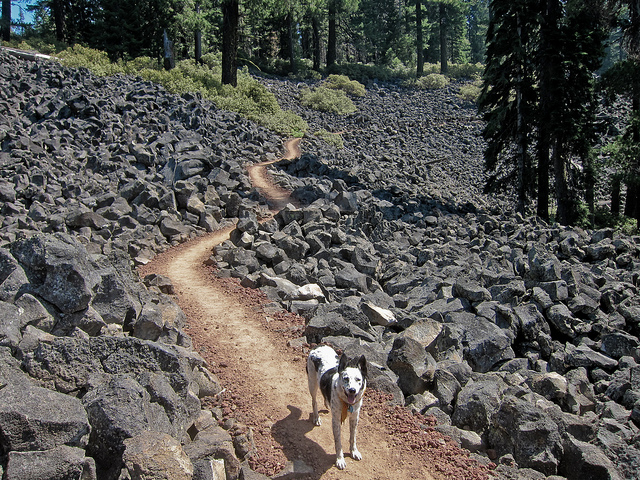
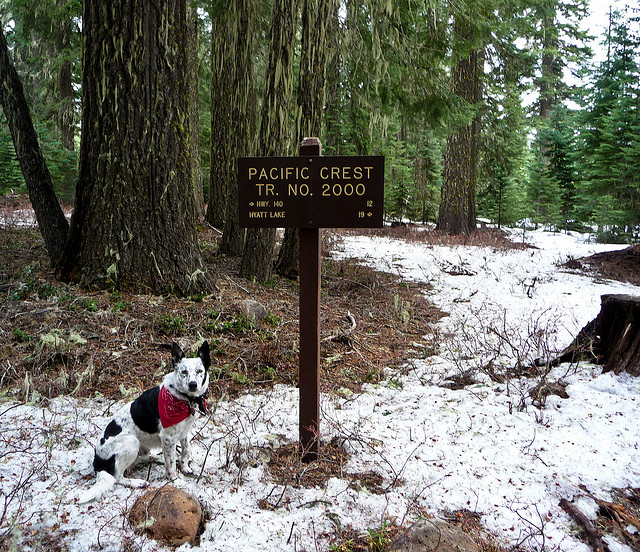
I live near the Pacific Crest Trail. The famous, fabled, fabulous PCT. Just about twenty-five miles away. You can look out our back window and stare lovingly at the mountains where it courses through the Sky Lakes Wilderness.
Heading out to run on the PCT
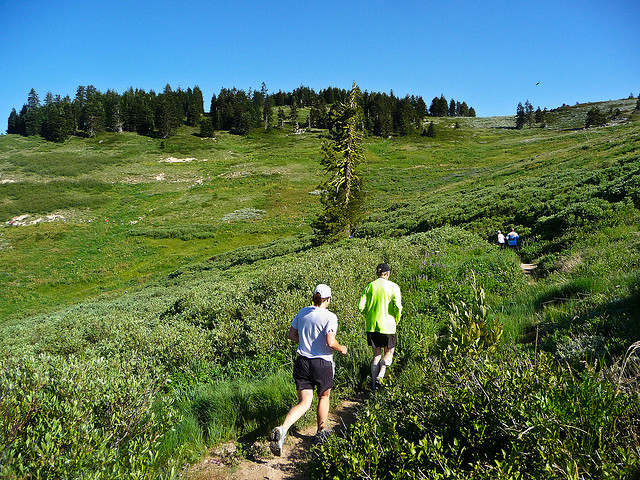
Although I come off in this blog as a marathoner, or an ultrarunner, what I really enjoy more than anything is trail running (and mountain biking – but mountain biking is forbidden on the PCT so forget about that). I simply love trail running and hiking, especially in the local Sky Lakes Wilderness and Mountain Lakes Wilderness; and the best part of being at my level of fitness and health is being able spend a weekend day doing a ten, fifteen, or even a twenty mile trail run. Although it is a slog now because of the atrial fibrillation I still love it – I love the movement through the wilderness and I love the trail itself.
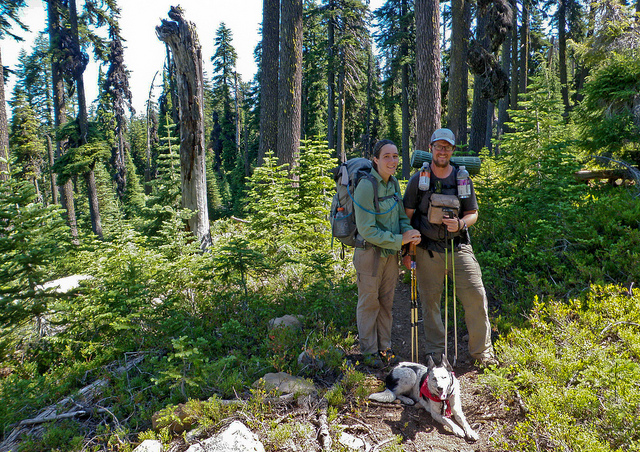
Usually the only one who goes with me is my little trail dog – Ringo.
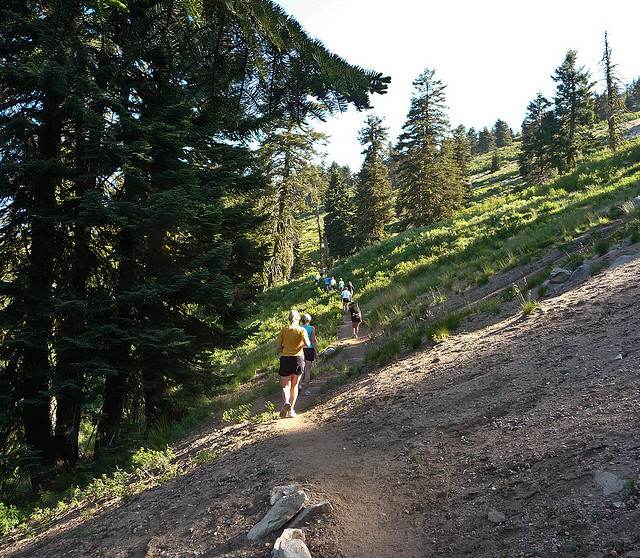
At this time of year – late Summer – all the thru-hikers, or I should say the small percentage that have made it this far, are coming through Southern Oregon. Most thru-hikers are traveling from South to North; they start at the Mexican border and hike through California, Oregon, and Washington with the goal of reaching the Canadian border. There are a lot of hazards along the way that can cause hikers to drop out and fail to finish – including blisters, running out of money, running out of time, deep snow, diarrhea, boredom, and forest fires.
I try to spend time on the PCT this time of year and will often photograph thru-hikers and post the photos on my flickr page.
In addition to trail running on the PCT I am also an “armchair traveler,” meaning I’ve read a bunch of books about thru-hiking the PCT, including:
Cactus Eaters by Dan White – probably the best written PCT book and my most recent read. Cascade Summer by Bob Welch – a middle aged Oregon newspaper writer hiked just the Oregon section. This might be more my speed.
Wild by Cheryl Strayed – the most well known and popular PCT book that will undoubtedly get more people on the trail. Also a well written and engaging read. A Blistered Kind of Love by Angela Ballard – fascinating dual journal by a couple thru-hiking the PCT. It was interesting how the different genders report their trail experience. The male writes about where they went and what they did, and the woman writes about how she feels. Skywalker – Highs and Lows on the Pacific Crest Trail by Bill Walker – the most endearing and charming PCT book ever.
Pacific Crest Trail Hiker’s Handbook by Ray Jardine – groundbreaking and controversial – Ray clearly changed the way people approach long distance hiking.
A Long Walk by Hap Vectorline – a whimsical journal of a partial through hike that started at the Canadian border and made it as far as Oregon.
In addition to the books I read various PCT blogs, and many of the youtube videos as well.
My dream is to someday thru-hike the PCT – but I don’t think it will ever happen for a number of reasons. I’m certainly in good enough shape, and strong enough, but at 53 am I too old? I don’t think so – I’ve met plenty of thru-hikers that were middle-aged. They tell me they are slower and have to leave earlier and hike longer to keep up – but that would be no problem. I think hiking for that long on anticoagulants might be an issue. On Pradaxa falling just isn’t what it used to be! The main problem is, of course, finding the time. I work full time and just don’t have the resources to take six months off from work.
Maybe some day I could just thru-hike the Oregon section. Or maybe just the Sky Lakes Wilderness (fifty-one miles) – that could be done in a weekend. Why not?
But I still love running in the Sky Lakes Wilderness. As far as falling out on the trail and bleeding out, or having a stroke out there, or being eaten by a bear, or whatever, I like to say that I’d rather die in the Sky Lakes Wilderness than in the Sky Lakes Medical Center.*
*Our local hospital, where I am on the surgical staff, is the Sky Lakes Medical Center. I like our hospital – I’m just saying that I’d prefer to die with my sneakers on, so to speak.
I’m signed up to run the 15K at SOB (Siskiyou Outback) Trail Run July 27, 2013. This is a terrific event and I have done it several times in the past – I’m not sure but I think I have maybe four T-shirts from the event. This will be my first time running it while in persistent atrial fibrillation. So far I have completed one 15K, one marathon, and one 50K while in (known) persistent atrial fibrillation – but of course I suspect that there have been other marathons when I was in a fib but didn’t know it.
The races begin at the parking lot of the Mount Ashland Ski Lodge and go up from there. In addition to the 15K there are also 50K and 50 mile events. There’s no way I’m in 50K shape right now.
The course for the 15K includes a portion of the Pacific Crest Trail.
This will be my first time running the SOB in atrial fibrillation – but I’m not too worried about the elevation – not after trekking in the Andes last week at 4600 meters (15,000 feet).
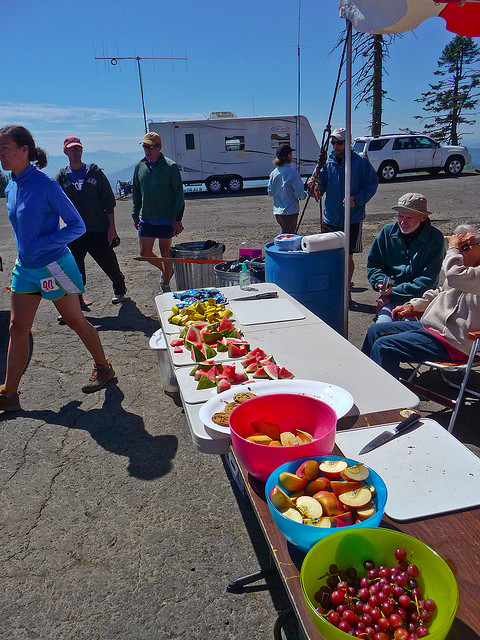
This event has always been very well managed, inexpensive, with great music and great food and plenty of raffle prizes. Wait for me at the finish line – I hope to see you there.
There are different types of atrial fibrillation. They’re all the same arrhythmia, the main difference is duration. Some people have intermittent (or paroxysmal) atrial fibrillation. This means that the individual goes into atrial fibrillation for a short period of time – maybe a couple minutes, maybe twenty-four hours, but less than one week. Most of the descriptions of atrial fibrillation I have found on the web describe paroxysmal atrial fibrillation.
Atrial fibrillation that lasts for longer than seven days is called persistent atrial fibrillation, and atrial fibrillation that lasts for over one year is referred to as long-standing persistent atrial fibrillation or permanent atrial fibrillation.
Regrettably that is the type of atrial fibrillation that I have. I have just “celebrated” my one year anniversary of persistent atrial fibrillation. I miss sinus rhythm.
People who are in sinus rhythm most of the time and go into atrial fibrillation only occasionally are fortunate because they get to be in sinus rhythm most of the time, which is basically the hot set up for any type of endurance sports. The disadvantage is that when these individuals to go into atrial fibrillation the effects are pretty devastating, and more often than not they find themselves on their hands and knees wondering what happened. The other bad news for people with intermittent atrial fibrillation is that it may very well progress into a persistent type atrial fibrillation, and of course there is a risk of having a stroke. So it is important to discuss this and formulate an appropriate treatment plan with your healthcare provider.
The disadvantage of being in persistent, but relatively asymptomatic, atrial fibrillation is that you have a performance penalty all the time; but the advantage is that you stabilize, at least I have, and are able to participate in your sport, albeit at a slower pace. It never gets much worse or much better.
Maybe there are some athletes out there who are in persistent atrial fibrillation who are unable to continue to participate in running, mountain biking, etc. if so I would encourage you to share your stories in the comments section.
All unable to discuss at this point in time is my own personal experience.
Atrial fibrillation is fairly common in athletes, particularly middle-aged endurance athletes. Endurance athletes have a two to three times greater chance of developing atrial fibrillation as compared to the normal couch potato population, and the chances of developing atrial fibrillation, of course, become greater as one ages – that goes for athletes as well as the general population. Many endurance athletes, like myself, continue to participate in endurance sports – perhaps a little slower than before atrial fibrillation.












 A Fib Runner - Distance Running and Mountain Biking With Atrial Fibrillation