Next Event – Vernonia Marathon Sunday, April 13, 2014

trainingOCE
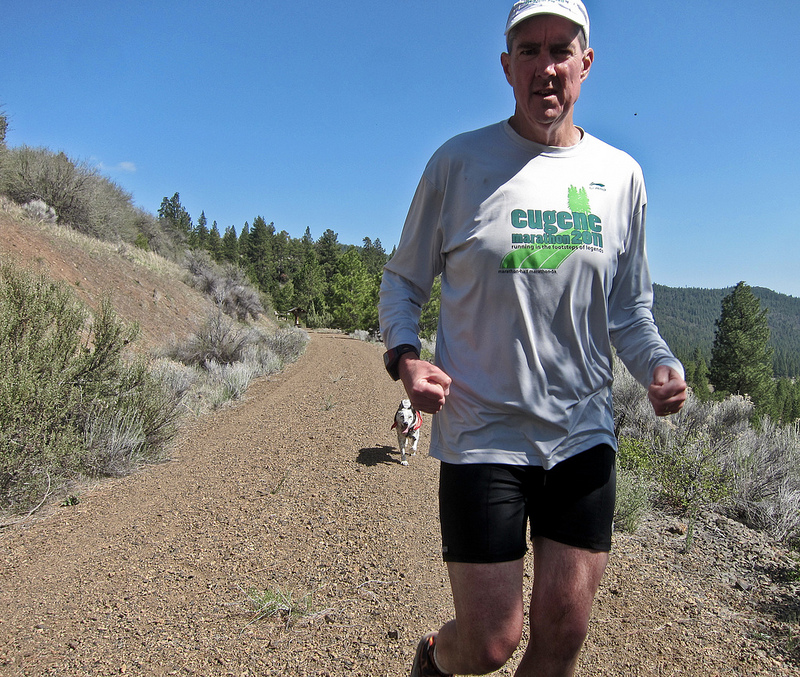
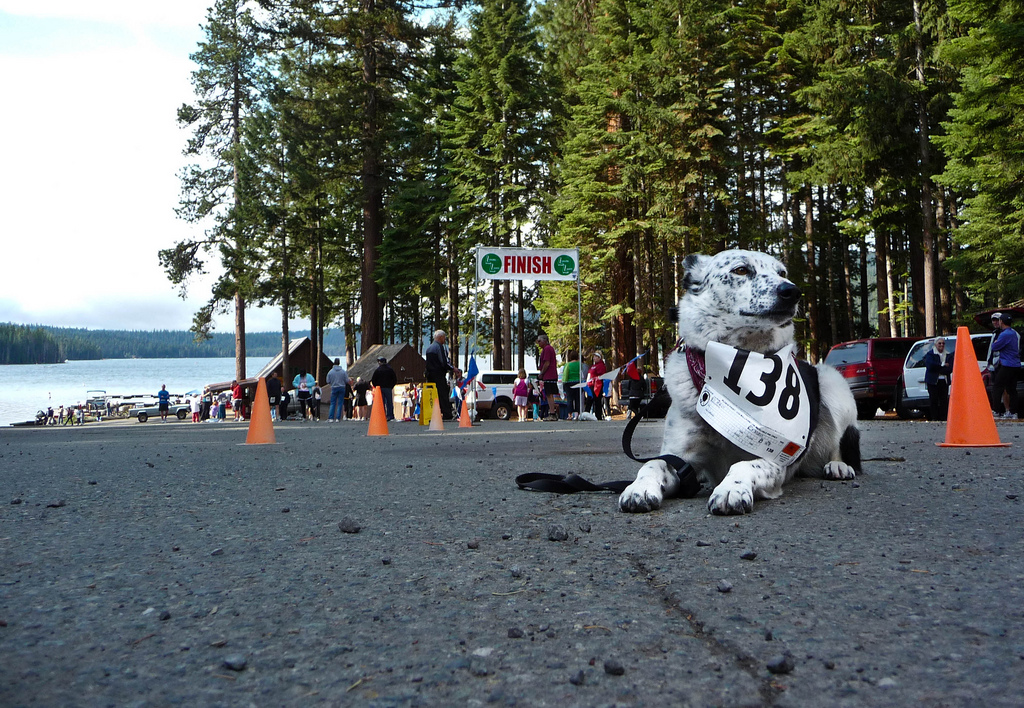
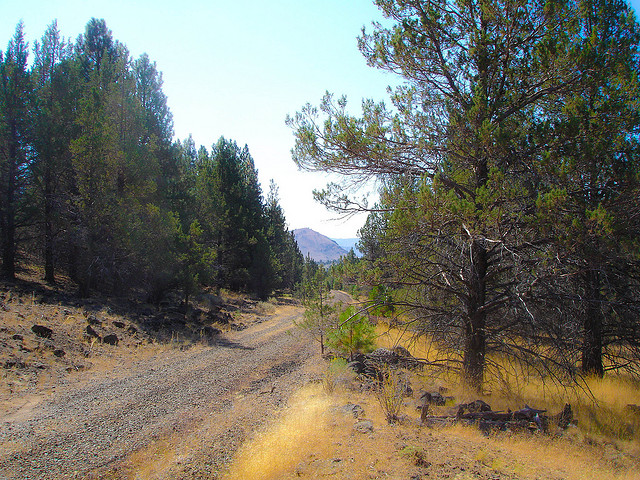
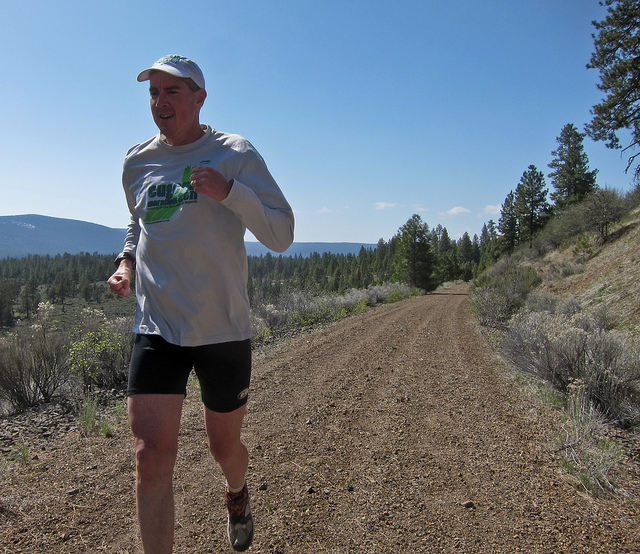
Training on the OC&E near Sprague River, Oregon

I’ve signed up for a Spring marathon – specifically the Vernonia Marathon. It is in Northern Oregon – North and West of Portland – a part of the state that I have never visited. I think this might be my 18th or 19th marathon but I’m not sure.

I just did my first true long run and I feel pretty good. I informally classify runs like this: two to six miles are shorter runs, like mid-week type runs. Medium long runs are nine to twelve miles. I’ll usually try to do a nine to twelve mile run every weekend even if I’m not training for anything. In fact, if I’m not training for anything at all sometimes that’s my only run of the week (with mountain biking or hiking on other days). I think of a true long run as being fourteen miles and up. There’s something about that distance that, for me, seems pretty serious. Anything over thirteen requires more fortitude.

I didn’t just start training for an April marathon this weekend – I’ve been training for weeks – but my weekend long runs have only been eleven to twelve miles.

As far as my atrial fibrillation is concerned nothing has changed – I remain in atrial fibrillation all the time, my running has slowed, and I need to make sure I drink enough water and eat something salty afterwards. After the fourteen miler I went through the drive through at Burger King and bought each of the dogs a cheap burger from the value menu (the dogs aren’t vegan), and just an order of fries (with salt) for me. This way I avoid the dizziness I sometimes get from standing up after a long run.

mywearinessamazesme
Sophie Tired After a Long Run

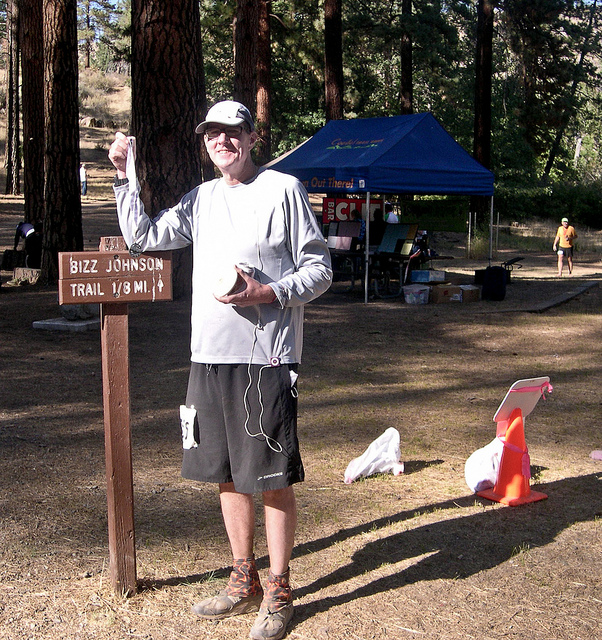
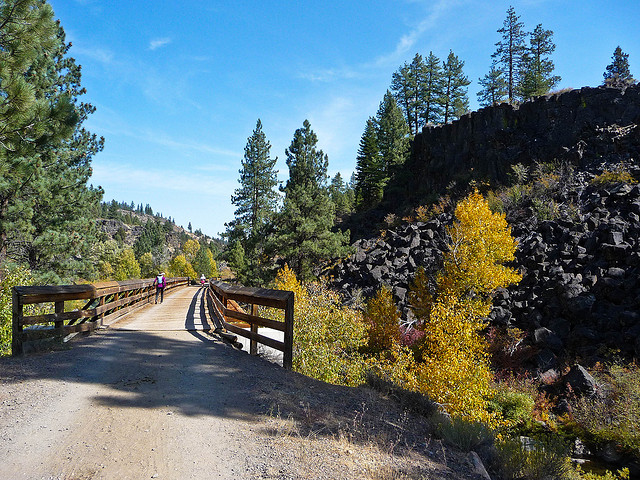
The Vernonia Marathon course is on a paved bike trail. This is the first Rails to Trails project in Oregon – the OC&E Woods Line State Trail being the second. I chose it because I like to train on the OC&E and have completed the Bizz Johnson Marathon (on an un-paved rail trail) seven times.

OLYMPUS DIGITAL CAMERA
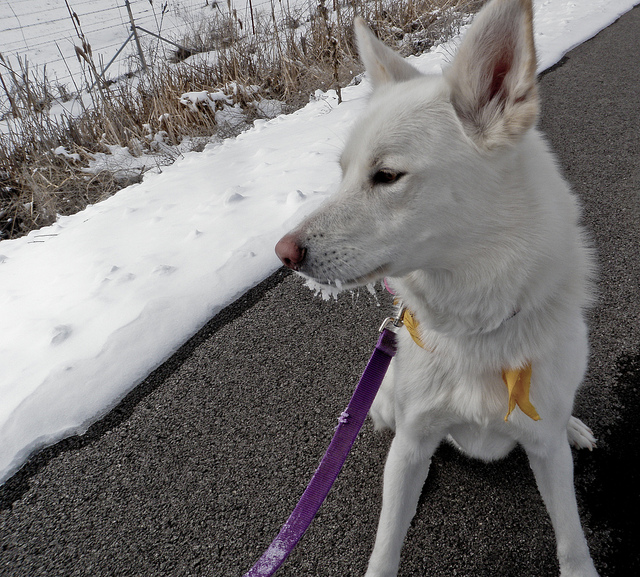
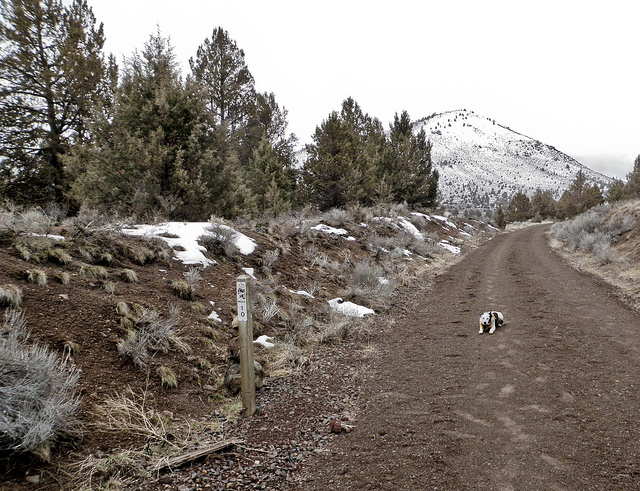
Sophie on Paved Portion of the OC&E Trail

I dislike running on pavement so hopefully there will be a dirt trail off to the side of the paved part. If not – well, a paved trail seems a lot softer because it is simply pavement on top of gravel as opposed to pavement on top of concrete (which is what our local streets are.)

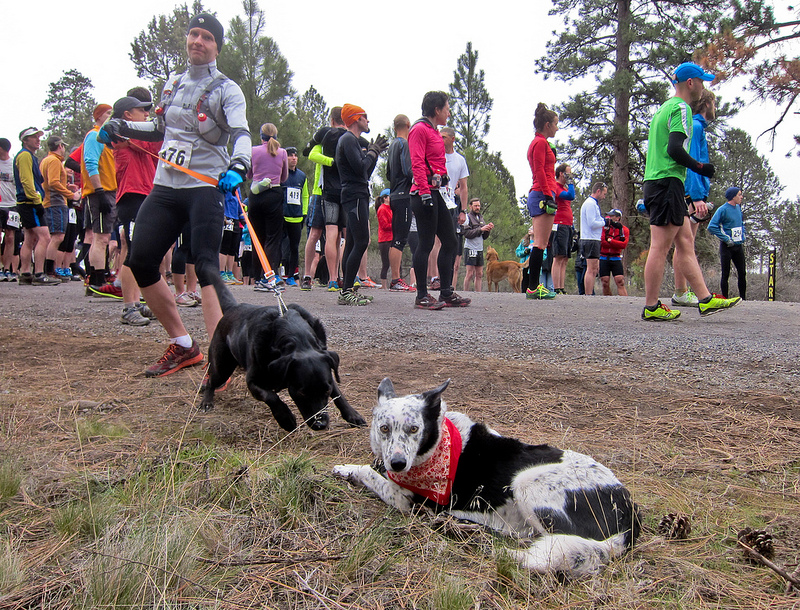
I expect the Vernonia Marathon should be a small, informal, fun race and I won’t know anybody there except for my friend Claude who is also going to run it.

OLYMPUS DIGITAL CAMERA
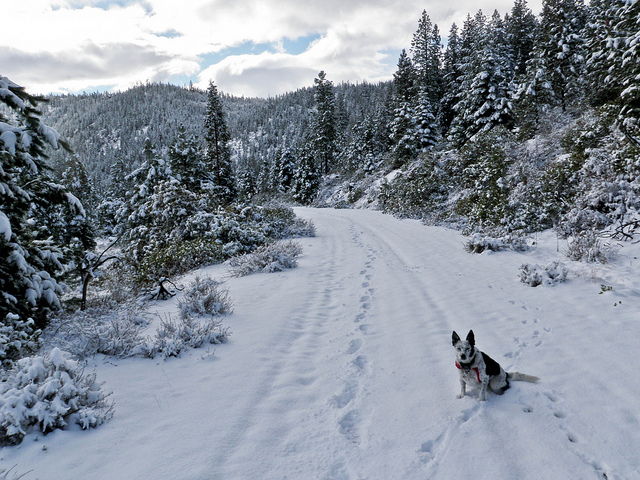
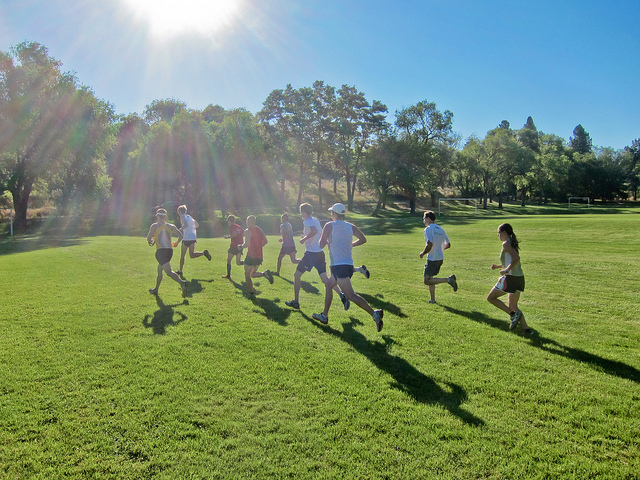
Winter Training

My race strategy is to start out slow and then take it easy. The course profile looks hilly – but how steep can a rail trail be? Trains can’t go up more than a one or two percent grade, right? I think the hills will be gradual – like the Bizz Johnson course.

Funny – I always enjoy the training much more than the actual races.

If anybody has any experience with this event please comment below. See you there.

Atrial Fibrillation News Update

Here are a few internet news stories related to atrial fibrillation. In the future I’ll try to update more frequently so I don’t end up with four topics in one blog entry.

OLYMPUS DIGITAL CAMERA

Overall, the increase in risk of heart attack was about 70% in AF patients, even after accounting for other cardiovascular disease risk factors, such as hypertension, high cholesterol, body mass index, and history of stroke and vascular disease. However, when the researchers looked at subgroups, they found that increased risk of heart attack was more than doubled in women and African Americans with AF—but less than 50% for men and whites with AF.

I’m not sure what to say about this – hopefully runners with atrial fibrillation (who hopefully also have other heart healthy lifestyle choices – like a healthy diet, not smoking, reasonable body weight) will do better than the general population. One bit of good news – the blood thinners a fib patients take to prevent stroke also seem to help prevent heart attacks.

pradaxasmall

“Novel” anticoagulants refers to the newer prescription anticoagulants that are used as an alternative to Coumadin (warfarin). Specifically: Pradaxa (which is the one I currently take), Xarelto, and Eliquis.

I can tell you that as a clinician there are not many things more frustrating than prescribing medications for people who are on Coumadin – it seems like it interacts with everything! One of the great things about the newer anticoagulants is that they have less drug interactions – but they still do have potential drug interactions.

Please click on the link to see tables for drug interactions involving Pradaxa (Dabigatran), Xarelto (Rivaroxaban), and Eliquis (Apixaban).

Obviously all of the novel anticoagulants can interact with any other drug that is *ALSO* an anticoagulant – like Plavix or aspirin. Keep in mind that this includes NSAIDs like Alleve (naproxen), Motrin (ibuprofen), etc.

Personally, I completely avoid taking ibuprofen and naproxen – but every once in a while (like after a brutal long run) I will take a Celebrex. Tylenol (Acetaminophen) is fine – no interactions with the anticoagulants (although it has its own issues).

By the way – if you read the article and see a possible drug interaction please don’t stop taking any of your meds – but contact your own doctor immediately for advice.

neautral milk

A recent study has shown that Coumadin (warfarin) actually increases the risk of stroke for people in atrial fibrillation during the FIRST THIRTY DAYS of warfarin therapy. That’s just the first thirty days – the idea is to prevent having a stroke, and that’s what taking Coumadin does.

This finding does not suggest that anything will change – doctors are still going to put people on warfarin to prevent stroke. They just have to get through the first thirty days!

If you are on warfarin and you read this article – please do not stop taking your medication.

Watchman_2

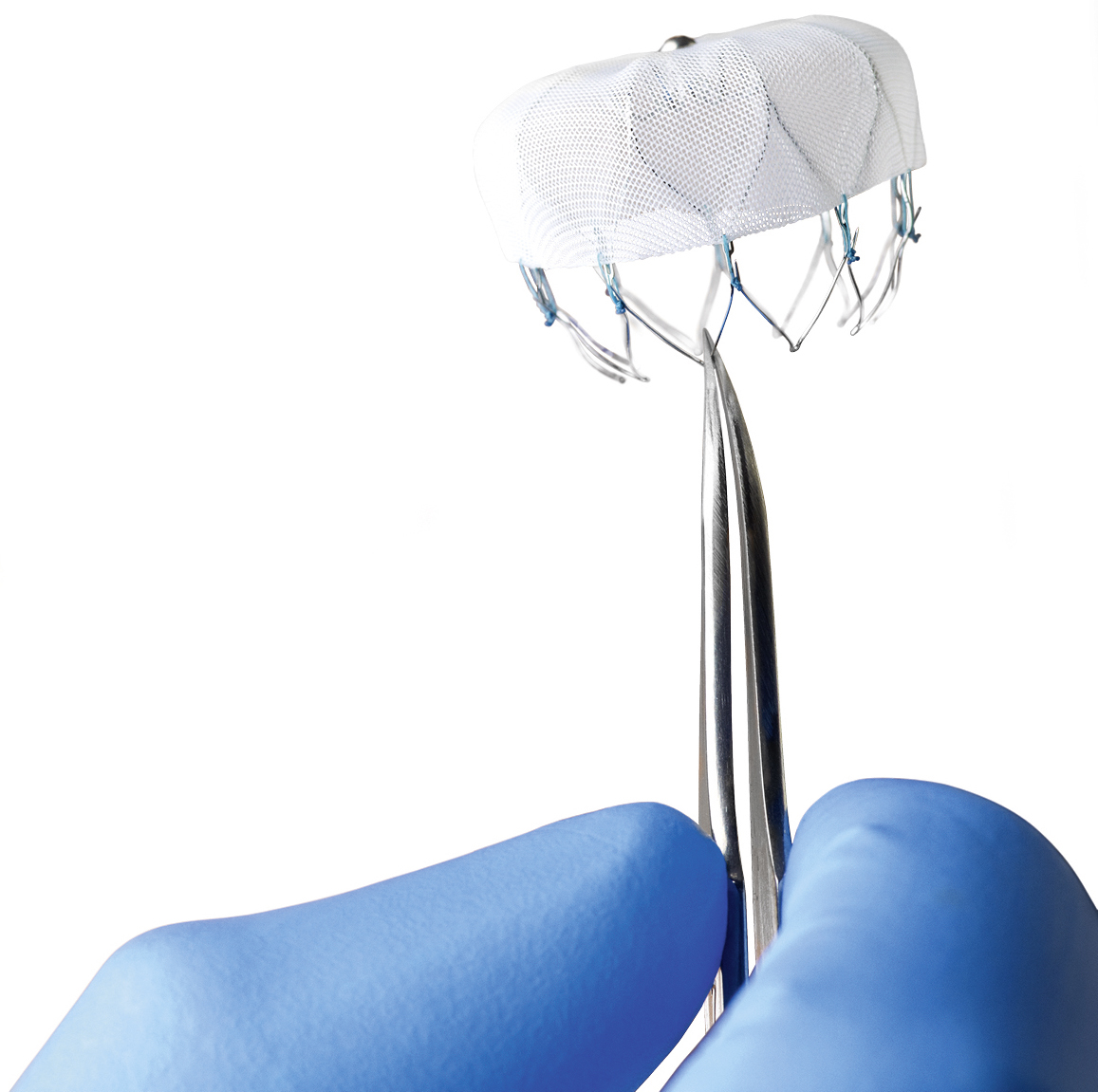
Finally – the FDA has not yet approved the Watchman left atrial appendage closure device by Boston Scientific – but it has given a “vote of confidence.” It appears that this gadget, which is implanted in the left atrium to prevent the formation of the clots that cause strokes, may be approved by the FDA for the US market late this year. The majority of the panel agreed that the Watchman was equivalent to standard treatment with warfarin, but it hasn’t been compared to the new novel anticoagulants (see above).

ryespur

Atrial Fibrillation Stroke Calculator

OLYMPUS DIGITAL CAMERA

Atrial Fibrillation Stroke Calculator

I saw this link today on Facebook and thought I would share it – it is an AF Stroke Risk Calculator, and was posted by the Atrial Fibrillation Association – a great resource for people with atrial fibrillation. As you probably know one of the greatest risks of being afflicted with atrial fibrillation is that it can lead to you having a stroke. Blood clots can form in the malfunctioning atrium, break loose, travel to the brain and – BOOM!!!! – you’ve had a stroke. Prevention is the best approach.

This calculator is basically a clever automated version of the CHADS2 score. I was delighted to find my risk is 0%.

But if course my risk is definitely higher than zero percent – even if my CHADS2 score is zero.

My heart is abnormal in more ways than the atrial fibrillation. I have hypertrophy of my left ventricle (from running – not a risk factor) but I also have “severe hypertrophy” of my left atrium (the top chamber of the heart) which my cardiologist assures me is a risk factor for stroke and although my CHADS2 remains zero I am on an anticoagulant (Pradaxa).

My question has been: Why not include left atrial hypertrophy in the CHADS2 calculation?

Answer: I dunno.

lillianandmargo
Lillian and Lolawanda ready for another trail run

My other question has been: What else can I do to reduce my risk of a stroke?

I understand my risk is NOT zero, regardless of what this calculator says.

Obviously one thing I know I can do is to remember to take my Pradaxa twice daily. Believe me, for somebody who is only taking one medication it isn’t as easy to remember as you might think. I have considered switching to Xarelto simply because of the once a day dosing.

pradaxasmall
My Pradaxa

But other than that what else can I do? One more thing (I think) – stay well hydrated.

As a large, slow, long distance runner (who is often on the trail for several hours at a time) I sweat more than smaller runners, and I have to be very careful not to become dehydrated. I spoke with a friend of mine who is an Internists/hospitalist and he agreed – don’t become dehydrated. Being dehydrated can literally thicken the blood and increase the chance on a clot, and therefore increase the chance of a stroke.

becareful
Be Careful Out There!

How much water should a person drink? I have no specific prescription but what I do is try to drink enough so that my urine is relatively clear once per day. Also there is such a thing as too much water and big, middle-aged distance runners are at relatively high risk of hyponatremia (too much water – not enough sodium) so be careful out there!

We talked about other risk factors are there? Risk factors for blood clots in the legs include being inactive, obesity, and smoking – probably less likely for the readers of this blog.

OLYMPUS DIGITAL CAMERA
Sedentary after a LONG RUN

What about alcohol? Does that increase the risk? He said probably not and in moderation might even decrease the risk – but remember – alcohol clearly increases your risk of atrial fibrillation – and if you drink enough alcohol you will become dehydrated – so there you go!

By the way – don’t expect this this risk calculator or this blog to advise you as to whether or not you should take your aspirin, your warfarin (Coumadin), your Xarelto, or your Pradaxa. It is important that you make this decision with your doctor.

Run, Smile, Drink Water and Don’t Die – A Guest Post by JoAnna Brogdon

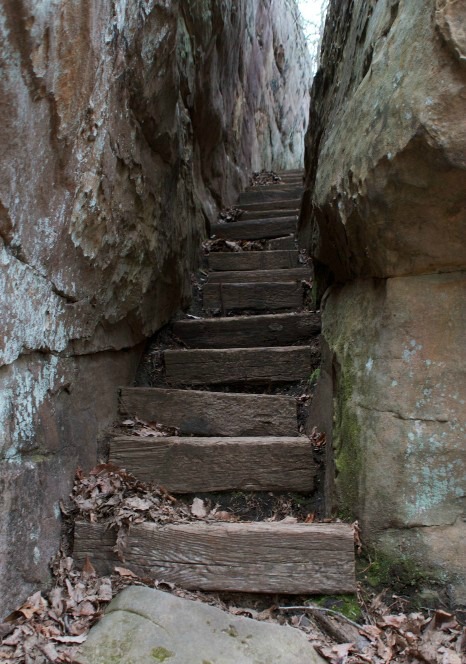
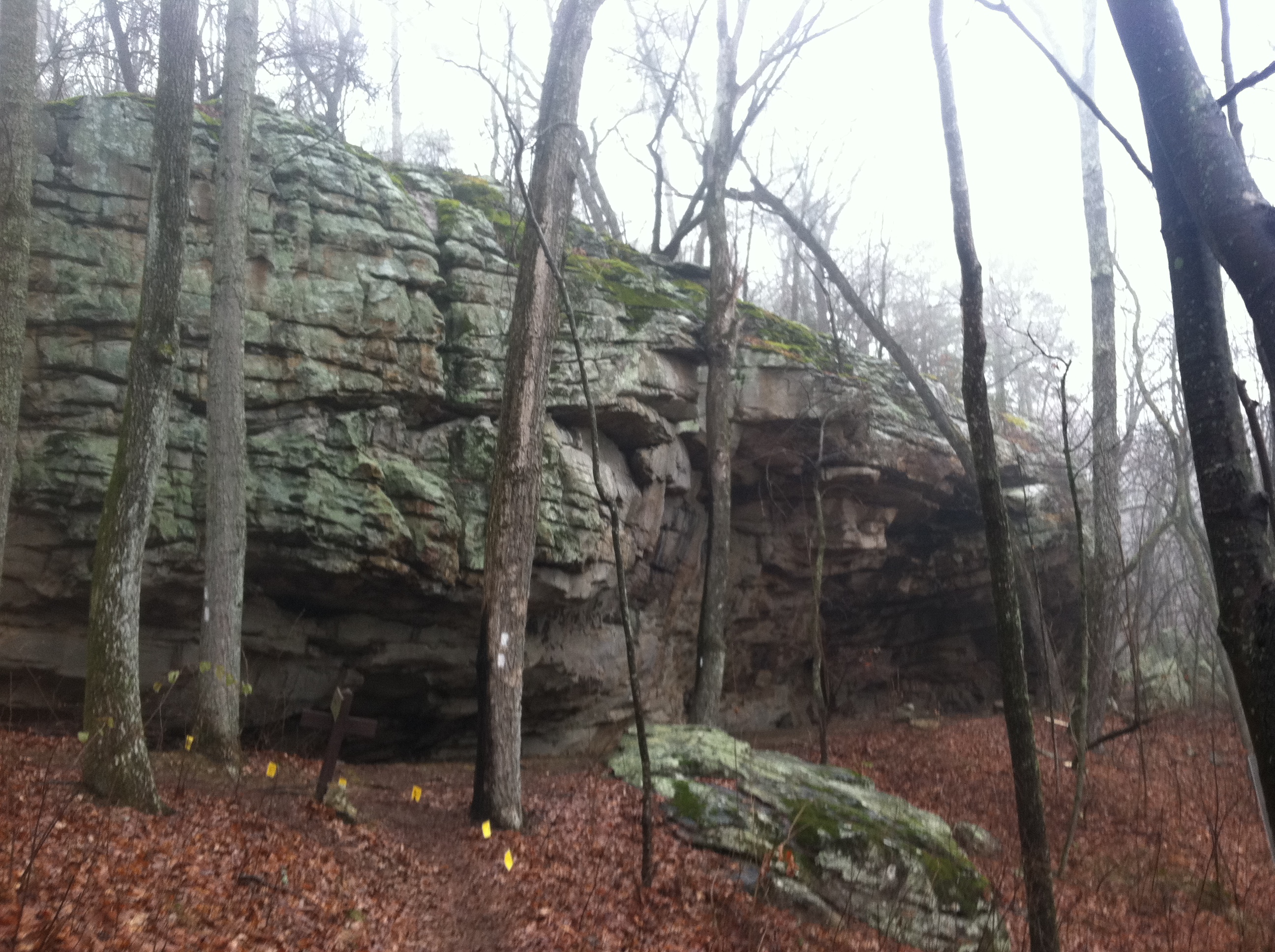
Once upon a time there was a girl that loved to run just for the fun of it. She woke up early one morning on a cold and rainy March morning, excited to run the Rock Creek River Gorge Trail Run at Prentice-Cooper State Forest, just outside Chattanooga, Tennessee. She had run this race before and was wowed by the gorgeous gorge views and challenging single track trails.

pic1

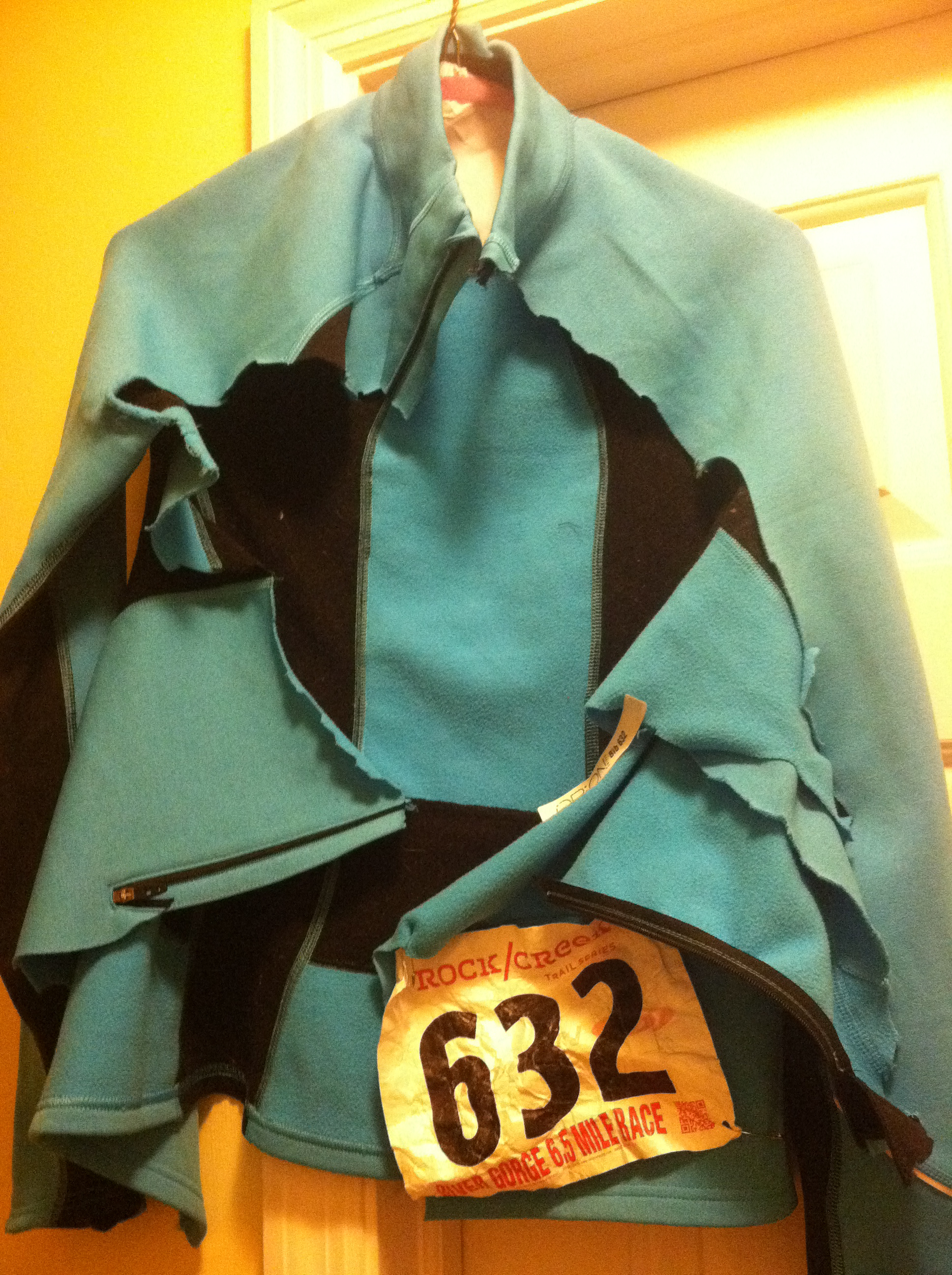
She signed up for the 10.2 mile run but wasn’t feeling exactly right that morning. She couldn’t put her finger on it. She was just a little off but that wasn’t going to stop her! She bounced out of bed and decided to do the 6.5 mile option instead of the 10.2—a decision that turned out to be one of the best she ever made.

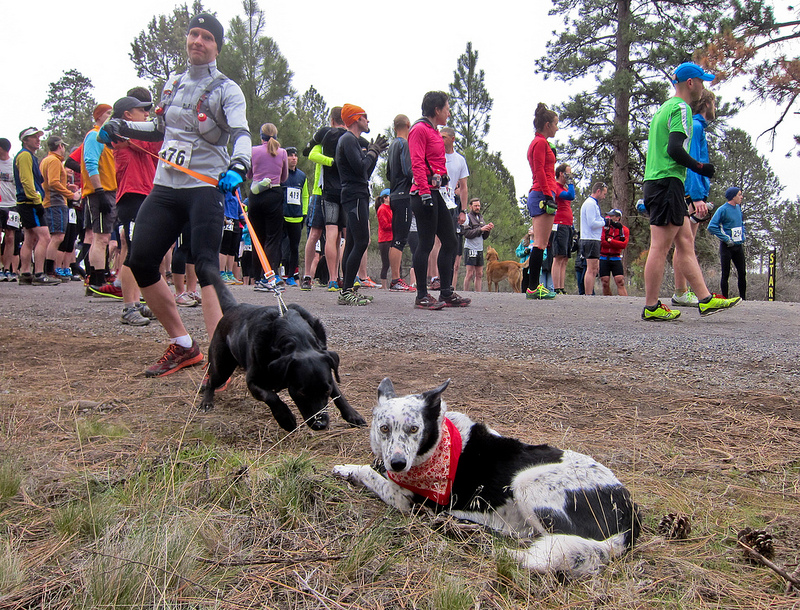
The start was a little fast. Everyone was ready to get moving on the chilly and very wet morning. Soon the 158 runners headed into the woods and formed a single line, slowing the pace which was a good thing. The trails were incredibly slippery with tons of thick mud after much rain that winter. One runner took a face plant when crossing the creek and came up with a big gash on his forehead and blood dripping down his face.

“Are you OK said the girl?”

“Yes, I am just happy to be out here,” he responded.

“Me, too!” she replied. There were smiles on everyone’s faces as they headed up steep hills and carefully focused on the each step.

pic2

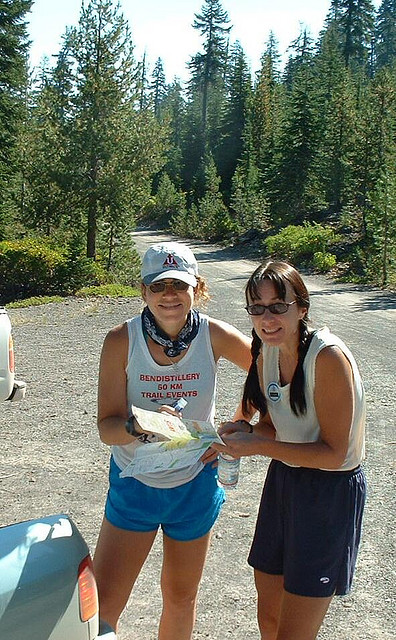
At the half way mark, she was feeling OK but a little more tired than usual. No problem she said to herself, just having an off day. It was time to focus on other things, talk to people, make some jokes and carry on. She found a guy wearing a shirt that said, “Idiot Runner’s Club – Run, Smile, Drink Water and Don’t Die.” This sounds like my kind of runner thought the girl! They chatted and laughed about how slow they were going but how happy they were to be there instead of sitting on a couch or still sleeping in bed. The mud was so thick that their shoes nearly got sucked off but happily they went up yet another hill.

pic4

Even though she wasn’t moving very quickly, her heart was starting to race quite fast. She slowed down and was walking more than running. She put her hands in the air a few times feeling like it was getting a little hard to breathe. Just focus on the gorgeous trails and it will be over soon, she told herself.

pic3

There is that Idiot Runner again. He caught up and they were passing each other back and forth. It was time for more chatting and laughter. Only a few more hills and it will be time to relax and enjoy the day. One final push, climbing up through the narrow Indian Rockhouse and the race is almost over.

It is only 6.5 miles, she thought why does this feel so hard? She had run 50Ks and didn’t feel this bad. There goes a female racer. She will have to see if she can catch her but just felt so tired and ready to stop. Then she heard the crowd and knew that the end was near. She pushed as hard as she could one final time to make it to the finish line—she did it! And then she decided to sit down for a minute, she really didn’t feel so good … and then there was darkness …

…what is that noise?

She was waking up and heard a loud noise – it was her heart pounding at an incredible rate and a bright light in the distance. Someone was saying something to her, if she could only get to the light. She woke and found herself inside the medic tent with two physicians by her side. Her legs were cramping with the worst pain she had ever felt. Where was she? What had just happened? What was her name? Which hospital did she want to go to? So many questions…

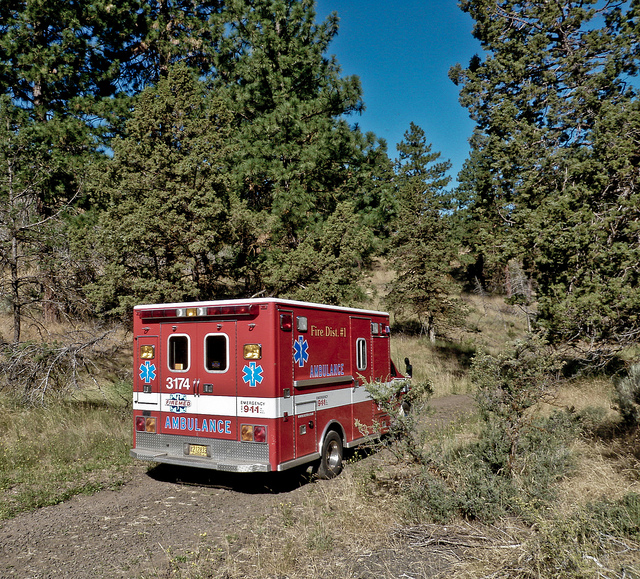
She was being placed in an ambulance and sent to the local hospital. She was in rapid rate Atrial Fibrillation and needed a Cardizem drip to get her rate down. They admitted her to the hospital and the nurse came by to explain what A Fib meant. She drew a nice picture for the girl.

untitled5

She learned that A fib occurs when one or both of the upper chambers of the heart – called the atria – don’t beat the way they should. This can cause blood to pool in the left atrium, where a blood clot can form. If that clot breaks away, it can travel to the brain, where it can cause a type of stroke called an ischemic stroke.

untitled7

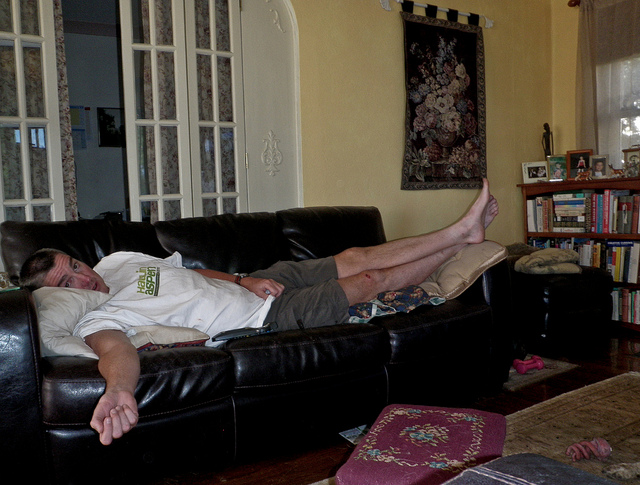
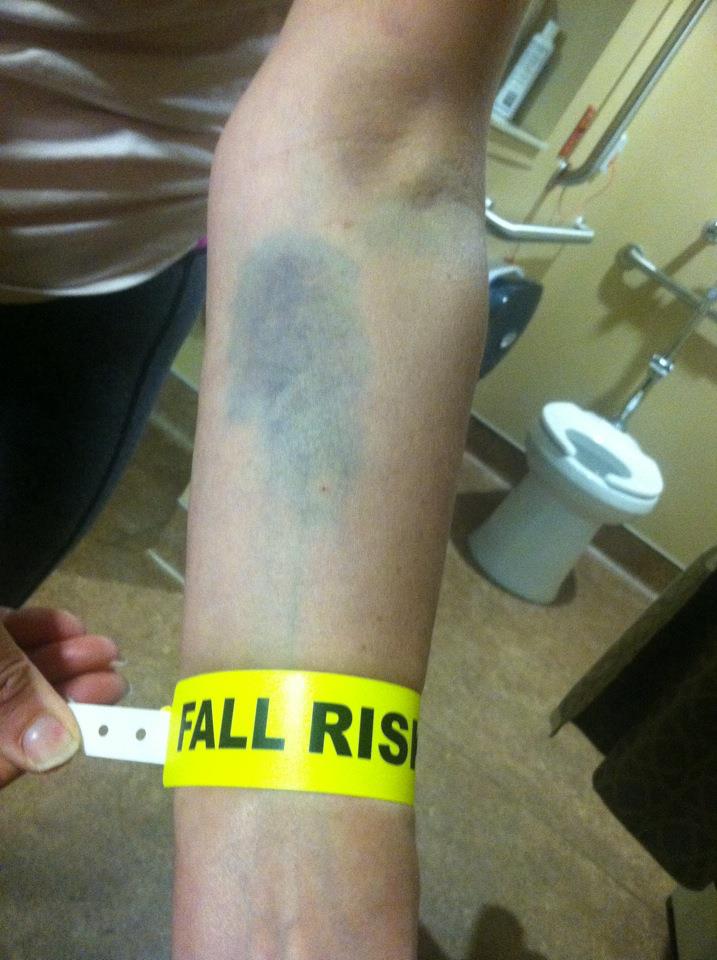
Two and half days in the hospital she waited for the meds to convert her heart back to normal sinus rhythm. They placed a band on her wrist that said “fall risk” – they had no idea.

pic6

The doctor decided the only way to get her heart back to normal rhythm was to cardioconvert using an electric shock. She was wheeled down to the operating area and what a surprise– she saw the two doctors that were at the race. One was a cardiologist and the other was an anesthesiologist for cardiology. They were chatting and laughing and encouraging her that it was all going to be OK. Her cardiologist was running late and it delayed the procedure. He was known for this as he always took time with his patients. Right as the doctor arrived; the nurse looked at the monitor and said wait—she converted on her own! We don’t need to shock her heart. The girl was happy and believed that it was actually going to be OK— maybe not happily ever after but OK. She smiled as she remembered the new friend she had just met on the trail…

“Run, Smile, Drink Water and Don’t Die.” Now those were words to live by.

The End.

pic8

JoAnna Brogdon, forty-three years old, went into a fib several times since the race and was hospitalized twice. She has no underlying chronic conditions and the doctors are unable to tell her why she has had a fib. She believes the worst part of the condition was the emotional stress and not being able to exercise as she had in the past. She underwent a cardiac ablation recently and her heart has been beating normally since. She is hopeful that she has put a fib behind her at least for now and looks forward to running, traveling and feeling normal again. JoAnna wants to support those that struggle with a fib and may be contacted at joannabrogdon@hotmail.com.

New Blog – Colombia Travel Journal

I have a new blog. It’s a single 16,000 word entry – my travel journal from our trip to Colombia during Spring of 2012. That was about two months before I went into persistent (permanent) atrial fibrillation. I was running nearly every day back then and reviewing the journal I realize how much I have slowed down since going into atrial fibrillation. Oh well.

Image

Here is the new blog: http://colombiajogging.wordpress.com/

For information on running and bicycling while in atrial fibrillation – just keep scrolling down.

Rejoice – Not All Runners in Atrial Fibrillation Are Slow

mooremtnhalfmarathon
Moore Mountain 1/2 Marathon

The thing I enjoy most about the afibrunner blog is comments from other athletes who are dealing with atrial fibrillation. A recent comment from a runner (we’ll call him “Lon”) really caught my attention – here is a runner who, while in atrial fibrillation, was able to race at six minute mile pace (or better).

Here are some excerpts from his comments:


Way to Go!!!
Since 1983 I’ve run/jogged 59 full marathons and have suffered with A-fib on and off for the last 12 years. I’ve finished the Boston (2001 in 3:23) and NY City (2005 in 4:15) marathons while in constant A-fib while carefully monitoring my heart rate. My cardiologists encouraged me to run marathons and also triathlons. One cardiologist told me that my heart is so strong that it laughs at A-fib and that I have the heart of an olympic cyclist. For the first 6 months of this year my heart was in constant A-fib that no drugs or multiple cardioversions could put it back into normal sinus rhythm. On July 9, 2013 I had the “Wolf Mini-Maze” (at the International A-fib Center of Excellence in Indianapolis) operation done on my heart. It was a great success and my heart has been in constant normal rhythm ever since (nearly 6 months now and I’m not taking any medications). In the Mini-Maze they removed my Left Atrial Appendage (LAA) so that if my heart ever goes back into constant A-fib I will NOT meed anticoagulant therapy. As you likely know life threatening blood clots tend to form in the LAA when your heart is in constant A-fib. The risk of stroke over the life time of an A-fib patient is huge. 3 out of 5 A-fib patients will suffer a stroke in their life even while taking anticoagulation meds like coumadin. That is a statistic that your doctor will not likely tell you about. Coumadin is over rated and is simply not very effective for some people which should be a terrifying realization to anyone dealing with A-fib. Anyway, as much as I love marathons, I’m laying off the long distance jogging for a while and am just jogging 10K’s (one per moth and 3 sprint triathlons this Summer) as well as several other physical activities.
Good health to you!
Lon

I have lamented that atrial fibrillation has made me slow, while openly admitting that I started out slow – I’ve only ran, as far as I know, one six minute mile in my entire life – and that was thirty years ago.

OLYMPUS DIGITAL CAMERA
Finish Line – Eugene Marathon

My understanding about atrial fibrillation is that the atria no longer preload the ventricles, and most people have a decrease of about 20% of their cardiac output. While sedentary people might not even notice this athletes certainly would. I do!

But I have heard that in some patients, certain athletes, there is little change in cardiac output and atrial fibrillation will not affect performance much. Lon seems like one of these fortunate people. Lon’s point about the increased risk of stroke (even if you take your Coumadin, Pradaxa, or Xarelto) is well taken – and I’m guessing that that is why he continued to pursue an effective treatment for his atrial fibrillation.

OLYMPUS DIGITAL CAMERA
Finish Line – Haulin’ Aspen Marathon

But after all those marathons Lon states he is no longer running endurance events – he goes on to elaborate:

Here’s a little more. I tried not to make a long story short above. I left out mentioning that I had a radio-frequency catheter ablation in June 2010 in Seattle that worked great in keeping my heart in normal rhythm until December 2012 when suddenly for no apparent reason went into persistent A-fib. (During that 2 1/2 year period I finished 9 full marathons and 8 sprint triathlons) My heart stayed in persistent A-fib even after 4 cardioversions and large doses of amiodarone. My cardiologists in Seattle told me that I should accept my persistent A-fib and they offered to ablate my hearts pace makers (AV and SA nodes) and give me an electronic pacemaker so that my heart rate can be controlled. That told me that I needed a second opinion so I started communications with Dr. Randall Wolf in Indianapolis about his Mini-Maze procedure. After consultations with an E.D. doctor (and a championship Iron Man triathlete) who had the Mini-maze operation and was very happy with the results, I decided to get the Wolf Mini-Maze and of course I informed my Seattle cardiologists of my intentions and they said to go for it. Absolutely the main reason that I went for the Wolf Mini-Maze is that it removes the left atrial appendage which brings my risk of stroke down to that of a healthy person with a normal healthy heart while not taking any anticoagulation drugs. The fact that I now enjoy a normal heart beat is just a huge plus factor.

From 1983 until December 2012 I completed 61 full marathons a most of which ran with all out efforts (I’ve averaged sub-6 minute pace all the way). I’m now finding out that long distance running is simply not good for the heart and most likely caused my A-fib problem.

Google Dr. John Mandrola’s 18 minute video called “Cycling Wed: I told you so…”. It is very illuminating and a must see for all endurance athletes. Please check that out.
Cordially,
Lon

I don’t know much about the Wolf Mini-Maze procedure and don’t necessarily advocate it for everybody, but clearly it worked in Lon’s specific situation. Here is some information regarding the Wolf Mini-Maze.

lakeofinish
Finish Line – Lake of the Woods 15K

No need to Google the video by Dr O’Keefe (posted on Dr Mandrola’s blog) I have the link right HERE.

Here’s the video:

If you don’t feel like watching the eighteen minute video I will summarize it for you – Exercise is good for you but in moderation. Too much or too intense exercise causes chronic inflammation of the heart and can ultimately harm the heart (atrial fibrillation, among other risks).

But if you are an endurance athlete dealing with atrial fibrillation you already know this – surely you have had a dozen or so friends and relatives, possibly sedentary and/or obese, kindly forward you information about the study he refers to – as if to justify their seemingly wise choice to avoid marathons and triathlons and replace it by watching other people play sports on television. Yes, this study was in all the newspapers and magazines last year.

avegiantsfinish
Finish Line – Avenue of the Giants Marathon

Please understand, and I paraphrase here, that Dr O’Keefe states that exercise is good for your heart, and being obese and sedentary is bad for your heart – but that overdoing it is a problem. He didn’t say people should avoid exercising.

My choice – I understand the concept of the “law of diminishing returns” as well as the next guy; but for me, well, I enjoy long, slow trail runs and mountain bike rides more than just about anything else I can think of – so I chose to continue.

8088969997_a13aa36c8c_z
Finish Line – Bizz Johnson 50K (I completed the 50K in atrial fibrillation)

Oregon Outback Bike Tour and the OC&E Woods Line State Trail

(Sorry about the lack of atrial fibrillation content in this post.)

OregonOutback_900X380

I am considering participating in the 2014 Oregon Outback bike tour. I love the concept of the Oregon Outback tour – it is a 360 mile unsupported bike tour, most of which is on remote dirt roads (and trails) in the barely populated Eastern part of Oregon (commonly referred to as Oregon’s Outback).

The best part is that the beginning of the ride, the first seventy five miles or so, is on the OC&E Woods Line State Trail – a 100 mile long Rails to Trails project that is a long, narrow Oregon State Park.

OCE1
OC&E Trail

I live near and use the OC&E trail a lot and have trained for about twenty (?) marathons on it, and frequently ride bikes on it as well.

I’ve logged thousands of miles on The OC&E – not really because of the scenery, but mostly because it is nearby, the ideal surface, the mile markers every 1/2 mile, and because it is a place where I can run with my well-trained dog off leash. Plus I’m totally used to it.

I have a ton of photos in my Flickr set.

The trail was originally a logging railroad, beginning in 1917, and was used by Weyerhaeuser to transport logs and lumber from Bly, Oregon (where they once had a sawmill) and areas East of Klamath Falls to their main mill and the main railways in Klamath Falls. As everybody know the logging industry isn’t what it used to be and the railroad was shut down and “rail banked” in 1992.

I can give a little background on the development of the trail – I was part of the original group that developed the trail back in 1992. There were about nine of us that were part of an organization supporting the trail and we had plenty of opposition. Most notably there was an opposing group consisting 150 well organized adjacent land-owners that fought the establishment of the trail. They gave a number of reasons for their opposition, including a lot of concerns for privacy, and worries about potential criminal activity on the trail; but I always felt the real reason was that if the land wasn’t rail-banked the adjacent land-owner would get all the land back for free – that’s a strip of land 100 feet wide and about a hundred miles long.

ringoroofoc&e
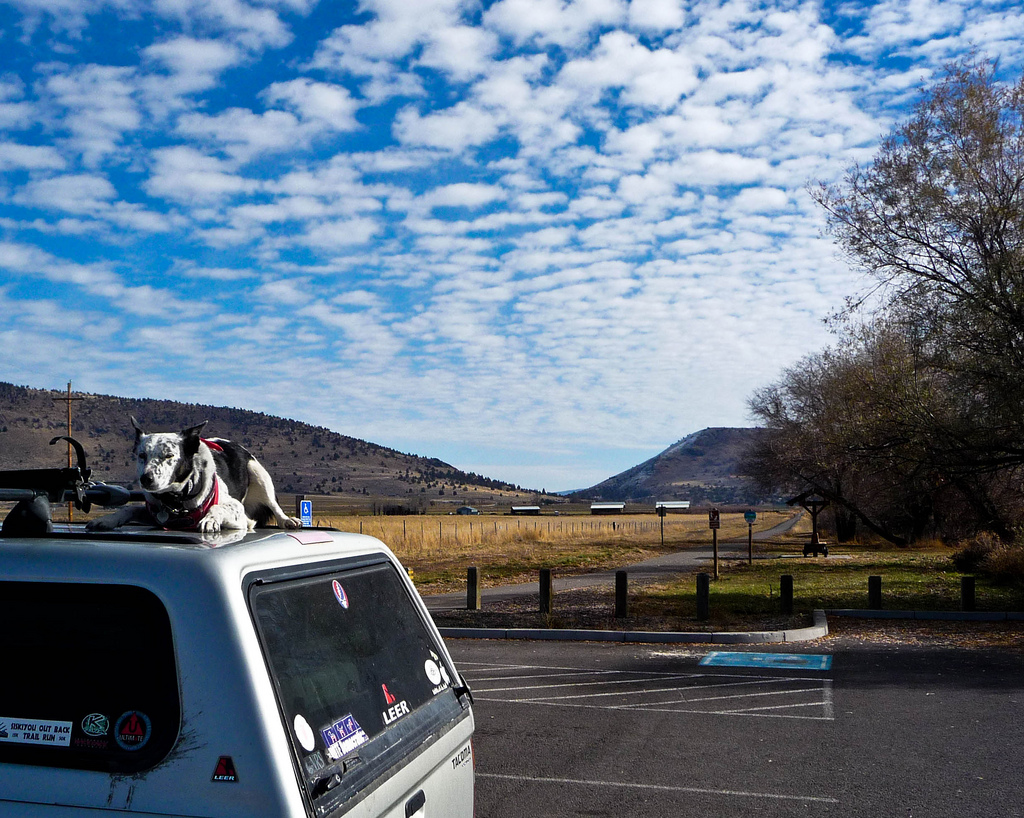
Ringo on the Roof

I never really thought the trail would happen. There were other groups opposing the trail including a group that wanted to leave the rails in place and build a recreational railway – train rides for tourists. We never even bothered opposing that idea because we knew that Weyerhaeuser had already sold the ties and the rails for the highest price ever to a salvage company – 4.5 million dollars (1992) and the excursion train people would have to buy them back from the salvage company. I don’t think they had anywhere near that kind of cash.

Probably the least pleasant group opposing the trail was the Nature Conservancy. They own a large portion of the Sycan Marsh where the Woods Line portion of the trail passes. This is the most remote and least used portion of the trail. The biologist’s concern was that the train tracks, which are on a raised ballast, divide the wetland into two distinct eco-systems with slightly different gene populations – certain creatures couldn’t cross from one side to the other. I never quite understood why that was a problem, but evidently it was. For some reason we thought the Nature Conservancy would be in favor of a recreational trail – after all they are a nature conservancy, and who doesn’t love nature, the great outdoors, hiking, etc. – but no – they wanted the entire rail ballast removed and NO TRAIL.

I have never actually been on the Woods Line section of the trail. To this day that section of the trail isn’t used as much as the sections near town.

When I saw the photos of the tour directors of the Oregon Outback wading through the water in the Sycan Marsh I immediately understood the purpose of those breaks in the trail – that must’ve been a compromise with the Nature Conservancy. Now the little creatures can frolic and canoodle with the little creatures from the other side of the tracks – brilliant!
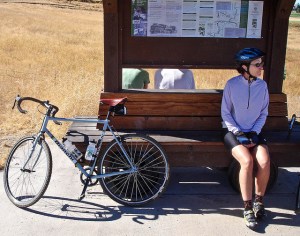
margo_bianchisanjose
Taking a Break

Anyway – given all the opposition to the trail I never really believed it would happen; but it turns out the trail became a reality in 1992. The way I see it the real powerful people in the world (like the railroads, the power company, telecommunication companies, etc.) liked preserving the right of way so they could rebuild railroads, or put up power lines, or communications cables, or whatever, without much problem. That’s the goal of rail banking – to preserve the right of way for projects like railroads, pipelines, telecommunications – and little community forums and debates are, I believe, just for show – big companies run the world. It makes sense – after seeing the level of opposition the adjacent landowners raised for the trail on existing right of way it would be unimaginably difficult to build, say, a pipeline through that property if they owned it – it would take years of lawsuits and expensive land purchases. One hold-out landowner could cancel an entire project. Rail banking makes it less complicated.

And in the case of rail banking outdoor enthusiasts benefit. And the community can benefit when folks like the Oregon Outback group or Cycle Oregon decide to use the trail.

I was fortunate enough to tour the trail via one of those trucks that rides on rails after the railroad was closed but before the rails and ties were salvaged. It was a wonderful day and a chance to see the entire route in one morning with a picnic lunch in Bly, Oregon to boot. Our group did a similar tour of the Woods line portion but for some reason I missed that one. I still want to get out there and see the large treacle that remains from the railway days.

jan
Jan and Her Sister-in-law

The trail has quite of variety of personalities. The first one and one half mile is unpaved (last time I was there) and passes through an industrial area, including some switching yards and some transient camps. This area is infrequently used by joggers, etc.

From the 1.5 mile marker to the 8.5 mile marker the trail is paved and first passes through a commercial area of Klamath Falls and then the “South Suburban” area. This is the most densely used portion of the trail and local people walk their dogs, roller blade, ride bikes, jog, walk – you name it. On a nice day I’ll encounter dozens of people on this section; I frequently ride my road bike on this section but generally don’t run there because I prefer to run off pavement plus I like to run with my little cow dog, Ringo, off leash.

My favorite and (personally) most frequently used sections are the section from Reeder Road (6 mile marker) to about the 13 mile marker (past Olene,Oregon) and of course the Switchback Mountain section near Sprague River, OR.

OLYMPUS DIGITAL CAMERA
Ten Mile Marker

Olene is a “town” that has about three or four houses and one store. There is a nice parking area there that I use as a headquarters for long runs (like the twenty mile runs that are part of a marathon training program). I will do a number of “out and backs” starting in Olene and use my truck as a resupply depot to refill my hydration pack after ten miles or so, and also restock things like carbohydrate gels and electrolyte supplements.

Horse riders often like to park their trailers here and start their trail rides in Olene, including people with tiny miniature horses they use to pull little carts.
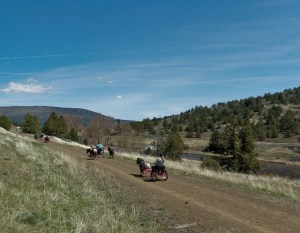
OLYMPUS DIGITAL CAMERA
Little Horses

Another good starting point is the picnic area at Switchback Mountain near Sprague River, Oregon. This is a unique section of rail trail – the train would do a “double Y” switchback in order to get over the mountain – as far as I know it was the only railroad in the United States that did so. This is the only hilly section of the trail and for that reason is a great place to train if a hilly race is in my future. Plus it is adjacent to “Devil’s Garden” which as one might imagine is an area of spooky lava rock formations – a fun place to explore. Switchback Mountain is thirty-five miles from Klamath Falls so it only works as a starting point if I have enough time to drive that far.

The actual quality of the trail surface is quite variable and runs the gamut from exquisitely paved to extremely overgrown and rocky. The highly used areas are generally very peasant to run on – but once the trail gets past Sprague River, Oregon there are a lot of hazards including large clunky chunks of ballast rocks, overgrown weeds and sagebrush, and of course cows.

I have been chased, once, by a young bull out there. Mostly I encounter herds of cattle that just stare and refuse to move, or else they follow me after I pass. In general they don’t mind me, but it’s my cow dog they could do without.
7721373304_aaf0a61149_c
After Work Ride Near Olene

Other animals along the trail include the usual suspects for our area – jack rabbits, coyotes, badgers, deer, antelope, mountain lions, bears, turkeys – but primarily cows and horses.

A friend of mine recently ran (in sections) the entire OC&E including the Woods Line. It was an all Summer project for him. He said he met quite a few cows out there. I have ran or ridden most of the OC&E excluding the Woods Line.

I’m attracted to the Oregon Outback ride because I’m intrigued to keep going, to break past the limited area that I’ve been running and explore the entire state beyond the OC&E trail – all the way to the Washington border – wow. Sounds like a great adventure.

spraguerun

Race Report – Bizz Johnson Trail Marathon, October 13, 2013

bizzstart2013a
Runners at the starting line 2013
 
This year, October 13, 2013, was my seventh time running the Bizz Johnson Trail Marathon. My first time was in 2007 and I have ran the event every year since then. Last year I ran the 50K (31 miles), but it is pretty much the same course, just 5 miles longer.
 
Has anybody reading this blog knows I have been in persistent atrial fibrillation for the last two years. For the 50K last year, and the marathon this year, I was in known atrial fibrillation. I am pretty sure that I went into atrial fibrillation about two thirds of the way through the 2011 marathon. At least (in retrospect) it felt that way, but that was before I knew I was afflicted with this dysrhythmia.

OLYMPUS DIGITAL CAMERA
It took a long time to get to the finish line this year
 
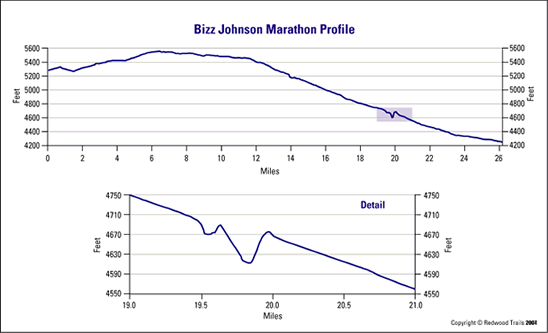
The course of the Bizz Johnson Trail Marathon is well known to me and I enjoy it a great deal. The Bizz Johnson Trail is a rails to trails project, and is about 24 ½ miles long. For that reason the race begins with an out and back on a Forest Service fire road in order to make the marathon and official 26.2 mile run. Once the runners get on the actual rail trail the course is a gentle uphill until about the 6 mile marker at which point there is a 20 mile downhill section. This might sound like it’s easy, but remember, it’s a run not a bike ride. This is the only race where afterward I typically have a lot of quadriceps and heel pain from all the downhill.

bizz_elevation_profile_marathon_small
 
Except for the portion where the trail crosses the Susan River Canyon the grade is very gradual. Trains evidently are unable to go up or down anything that is too steep, and the average grade is below 1%, and at its steepest probably about 2%. This is an estimate, I’m really not sure of the exact grade. One thing I can say, though, is that the steepest downhill is the last 6 miles down the Susan River Canyon. This is also where the course is the most scenic (including two tunnels) and often this section is quite warm.
 
This year the deciduous trees were changing and it was quite beautiful.

bizzcoursec
Along the course (No deciduous trees here – sorry)
 
Some people worry about the elevation at Bizz Johnson, but to me that isn’t even a factor. I live and train at the exact same elevation as the Bizz Johnson Trail. As a matter of fact I do almost all my training on mountain biking and hiking trails which are much steeper and more technical than the Bizz Johnson Trail.
 
I have to admit I had a bad time this year. I don’t think it had anything to do with the atrial fibrillation per se, I think I worked myself into a bad attitude, or bad mental state this year – ruminating over certain past events on the two and a half hour drive to Susanville the day before the race. Also I had trained for the 50K, but I really didn’t feel up to it and the day before the race I switched to the regular marathon. This probably was a good move, but I felt somehow depressed over that choice.
 
I’m not sure how many marathons I have ran, but it’s somewhere between seventeen and twenty races. There comes a time in every marathon where I start to feel poorly, but usually I don’t start to feel that way until somewhere around mile twenty-two or twenty-three. For some reason at this year’s Bizz Johnson I started to feel that way about mile six. “It’s going to be a long day,” I told myself.

 
Ultimately I completed it, I suffered like an animal, but I lived to fight another day. It’s interesting that I finished it at almost the same time that I finished the 50K last year, that is taking into consideration that the 50K starts an hour before the regular marathon. My recollection of the 50K last year is that I felt much better, surprisingly, throughout the entire race than I have during any previous marathons. Maybe I should stick with 50Ks.
 
My friend Stephen, who ran the race this year as well, said he suffered like an animal as well, and that “it seemed like every mile hurt.” But then again he finished several hours ahead of me, came in seventh place overall, and won his age group. It was probably worth it.
 
Sometimes I wonder – am I good at marathons? Maybe. Maybe not. I’m certainly not fast. Seems like I did a good job, the night before, sitting in a motel room watching sitcoms. Maybe I’m better at something like that. Well, I guess I’ll have to keep trying marathons until I get one right.
 
bizzwasp
Finishing the 50K last year

Being a veteran trail runner who has to be self-reliant, except during a race, I carry my own water. I use an Ultimate Design WASP hydration vest, with NUUN tablets added for electrolytes. I refill it at the water stops if necessary. This year, for some reason, I figured I should probably drink some of the electrolyte drink that they offered at the water stops in addition to my own concoction. I should have known better. It was a pink drink that is evidently marketed by the Power Bar company. I have never tasted a urinal cookie before, but I imagine that this pink sports drink is pretty close. Every time I drank a Dixie cup of it at a water stop I had to walk a little bit and try to hold it down. In other words I was having a lot of nausea. Being nauseous will not prevent me from drinking because I figure I can always drink more water if I vomit, but it sure does keep me from eating, so I was a little deficient as far as carbo gels were concerned. I think I only had two all day (and had planned on five).
 
During last Sunday’s race I decided that the mile between mile marker twenty-three and mile marker twenty-four is definitely the cruelest mile. Suffering is maximized, and you’re close but not really close enough to the finish. If I tell myself, “it’s only three more miles!” I then start to think that three miles sounds like a terribly long distance.

OLYMPUS DIGITAL CAMERA
 
I enjoy listening to music on my iPod shuffle while I run and when I arrived at the last quarter mile of the race a terrific song came on my iPod. It was Oh Comely by Neutral Milk Hotel. Unfortunately I was feeling remarkably emotionally labile at that point in time that I knew that if I listened to the song I would start crying. I already knew I was suffering and wasn’t going to appear well coming across the finish line, but I really didn’t want to finish crying like a little kid – so I fast forwarded it. I clicked until I found a song that was a little bit more emotionally bland.

neautral milk
 
When the finish line mercifully appeared I was glad to be done. I strolled over to the feed section and as usual there were a lot of great things to eat, but I was feeling so nauseous – there was not one thing there that I could’ve eaten. Claude, who also ran the race that day, was waiting for me and we took the shuttle back to the parking area. I had some food in my truck for post race meal, but as soon as I walked over there I became quite sick and expelled a large quantity of pink water. It must have just sat there in my stomach – there was a lot of it! I felt much better, changed into my dry clothes, and ate my post race meal. I started to wonder – emotionally labile, tearful, and nauseous – was I pregnant? (Ha ha)

frontrunners

The Fear of Going Too Hard – Atrial Fibrillation Running

One big difference between running in persistent atrial fibrillation and normal sinus rhythm is that, for me anyway, there is a lot of apprehension about over-doing it. The days of charging up a hill may be behind me at this point, and I haven’t done anything resembling a speed work-out in well over a year.

trainingrun

Prior to atrial fibrillation I used to do interval work-outs once in a while. For certain marathons where I had a specific personal time goal I would do a work-out known as “Yasso 800s.” Although some expert dispute that this is actually the most effective speed work-out for marathon training, nobody would dispute that this is a difficult work-out. I would do them on Wednesday nights at a local college track and I always felt they were my most difficult work-out of the week – probably more challenging than my languorous week-end long runs. Certainly this was the work-out where most feared injury.

moorerace

To be honest I don’t miss Yasso 800s. I never have been a fast runner and never enjoyed short fast races like 5Ks.

But even during LSD (long slow distance) work-outs there usually comes a point where I will feel that the run is becoming difficult and I have to push through that. People often say “push through the pain,” but it isn’t really “pain” per se; but whatever it is it now makes me nervous!

But now that I am in persistent atrial fibrillation I think twice about pushing beyond any thresholds, however they are described. I have a fear in the back of my mind that I am going to make the atrial fibrillation worse, or pass out, or die, or . . . well who knows? This is all new territory for me.

I think this is why I “bonked out” of the second and third (out of seven planned) twenty mile runs I did during my build-up to this Sunday’s Bizz Johnson 50K. I just wasn’t willing to risk it. But if I’m unwilling to risk it it is obvious that I will only get slower and slower each year.

relax
RINGO SAYS RELAX

I’d love to hear from other endurance athletes about this topic whether you are in a fib or not, and whether you are risk averse or not. Please feel free to leave a comment.

Next Event: Bizz Johnson 50K – October 13, 2013, Susanville, California

OLYMPUS DIGITAL CAMERA
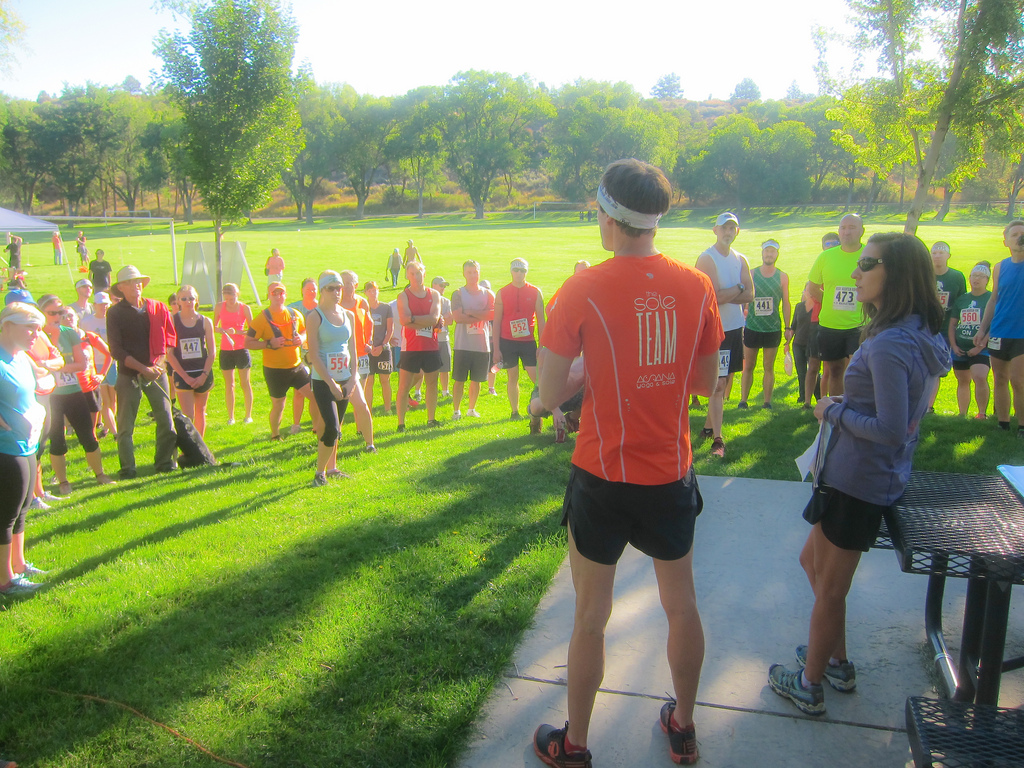
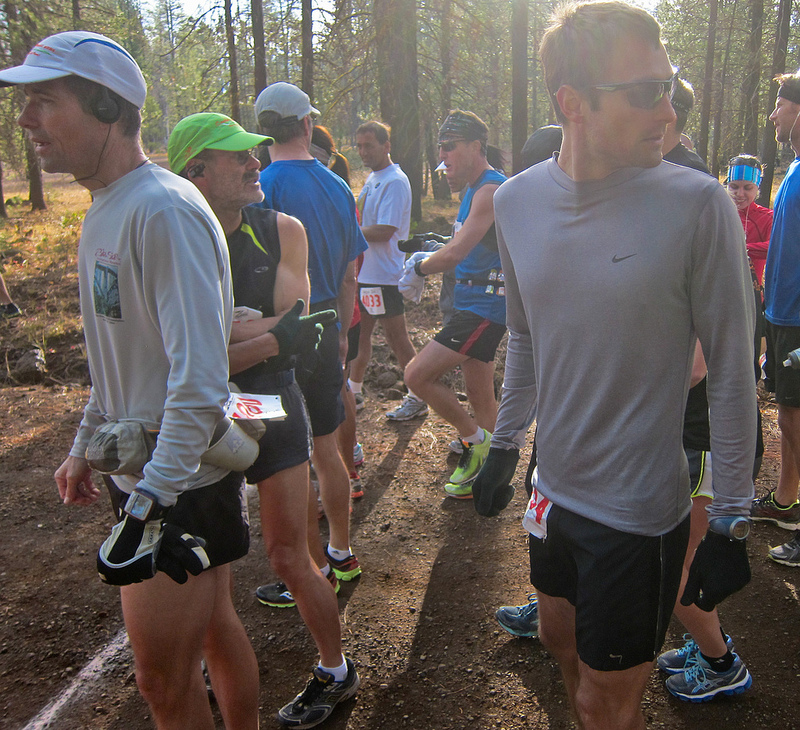
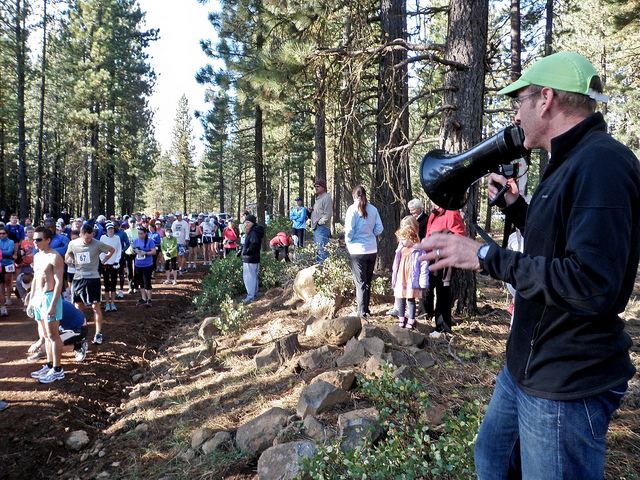
Race Director Wendel Doman gives pre-race instructions

My next event in the Bizz Johnson 50K – October 13, 2013 in Susanville, California – although at this point I am considering bagging it and just running one of the shorter events – maybe the marathon. Bizz Johnson has something for everybody – a 10K, two half marathons, a marathon, and a 50K.

As far as trail 50Ks in the West are concerned this is probably the easiest course. Bizz Johnson is organized by Coastal Trail Runs, an organization that is headquartered in the San Francisco Bay Area, and it takes place primarily on a rail trail (Rails to Trails). That’s why the course is easy – trains are, I think, unable to go up or down any more than a one or two percent grade. Plus the trail is as wide as the railroad tracks it once was, and as smooth as a dirt road. Most 50Ks in Oregon and far Northern California are on technical single track that go up and down mountains and canyons.

bizzcourse
Along the course

This will be my seventh year running the Bizz Johnson – I’ve ran the marathon five times and the 50K just once – last year was the first year they even had a 50K. I even came in second place in my age group – but then again there were only two of us in that age group.

The entire rail trail is only about twenty-five miles so both the marathon and the 50K start with an appropriately measured “out and back” on an adjacent fire road to make the races end up being the proper distances. Last year this worked perfectly for me because the 50K started an hour before the marathon, so I ended up running into the back of the pack runners, who had just started. It was sort of like running a normal marathon . . . after going for a one hour morning jog.

bizzstart
Last Minute Preparation

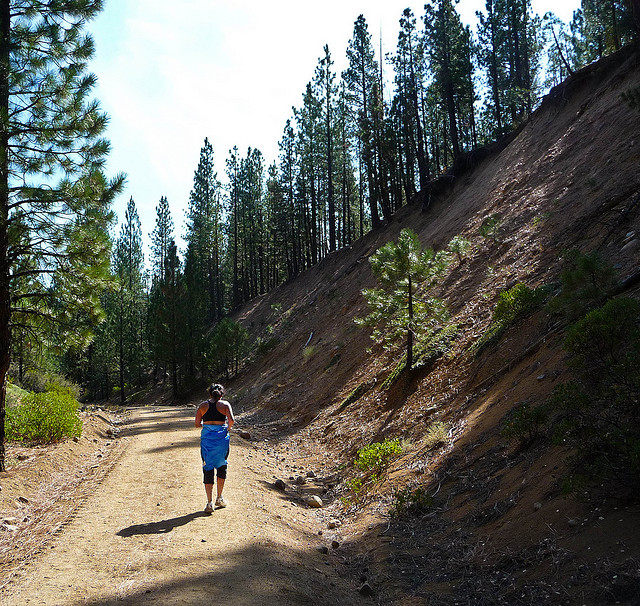
The race begins with a six mile out and back (three miles up and three miles down) on a non-technical fire road; then it joins the Bizz Johnson Trail. The first couple of miles on the Bizz Johnson are uphill and then there are essentially twenty miles of gentle downhill running. The trail is smooth and a delight to run and goes through a pine forest at first with final six miles going down the Susan River canyon ending in Susanville.

There is one canyon crossing at about the twenty-five mile marker (the twenty mile marker for the marathon) that looks easy on the course map but is in reality quite brutal – probably my perception is based on the fact that this is the point where the course often becomes pretty warm (lower elevation in a deeper canyon).

Also there are two tunnels late in the race that are fun, but freak some people out – very dark and cold in the tunnels!

Sorry if I seem to be about to die – this tunnel is at 24 miles in the marathon (29 miles in the 50K)

The race is a small, well-organized point-to-point event with no expo, and bus transport from Susanville to the starting line. There are aid stations every two miles along the marathon course. For me the altitude in no problem (5600 ‘ to 4200’) because I live and train at the same altitude – some folks from sea level complain about it, however.

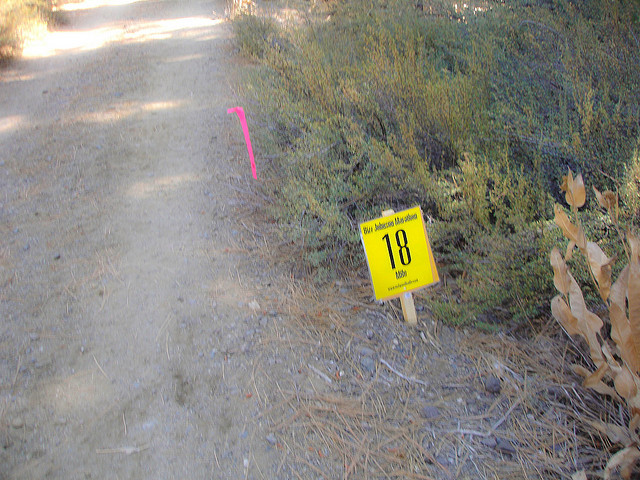
The cool thing, at least as far as last year was concerned, is the mile markers were all based on the marathon distance so psychologically it was easier. For example – when I pass the eighteen mile marker while running the 50K I am actually at about twenty-three miles – but psychologically it seems like I am only at eighteen. It might have something to do with my being so familiar with the course.

18mile
Twenty-three miles – but it only “seems like eighteen”

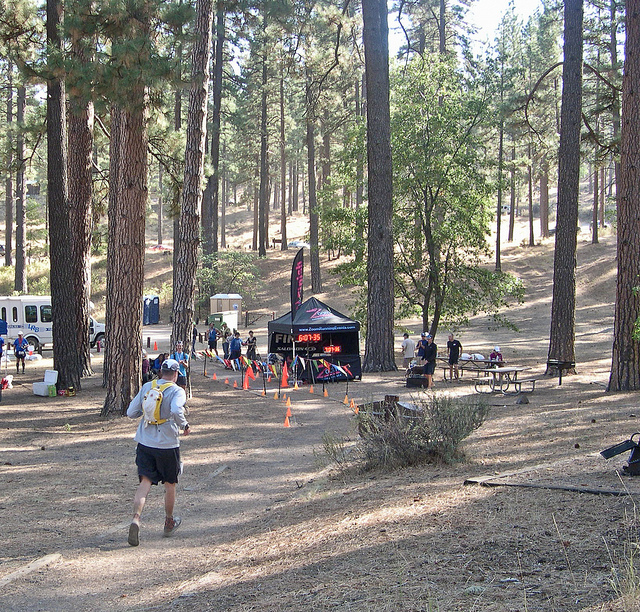
The race ends in a picnic area in a grove of tall pines and there is transport back where all the cars are parked.

The reason I am thinking about bagging it is that my training doesn’t seem as good this year as it was last year. I was in persistent atrial fibrillation last year, as I am this year – but my mileage was much higher last year. I was running fifty to sixty miles per week with one seventy-five mile week (my all time highest mileage week).

8088969997_a13aa36c8c_z
Age Group – Second Place in my first 50K – but only two runners in my age group.

This year I bonked out on my first two long runs (I’d planned on two twenties and ended up only running sixteen and thirteen – that was five and six weeks ago). Over the past three weeks I have completed three twenty or twenty-one mile trail runs in the Sky Lakes Wilderness.

The reason I bonked out on those long runs may not have anything to do with my atrial fibrillation – I think it is more related to my intolerance to heat. Both of those days were too hot, especially later in the runs. For the past few weeks I have moved my long runs to high altitude mountain trails that are actually much more technical and hilly than the course of my upcoming race – in other words much more difficult training runs than the ones I bonked on – but I am able to complete them because it is shady and cool up there. I have one more long run scheduled this weekend (twenty-four miles?) and then I start my three week taper prior to the race. It’s supposed to be cold and rainy this weekend so I will probably do fine.

twentysix
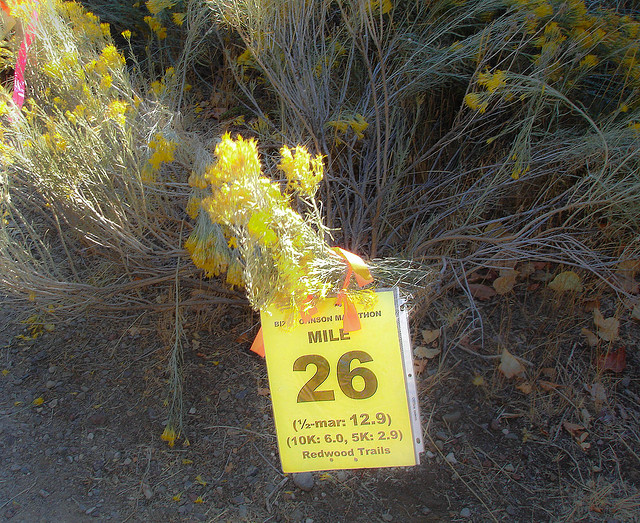
Almost Done

finish line
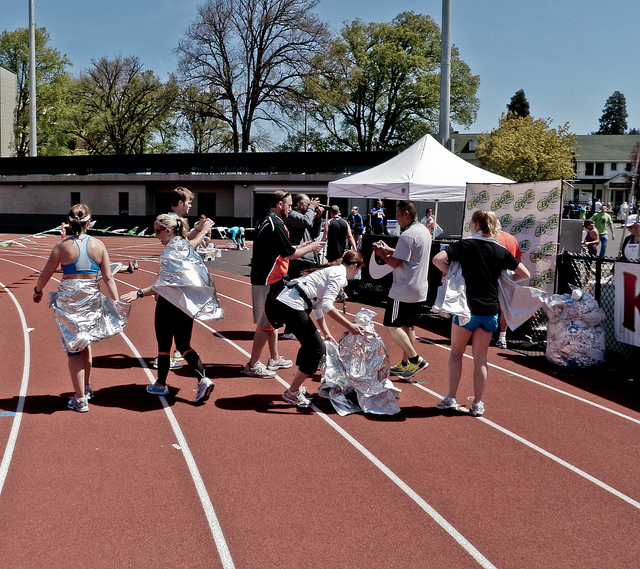
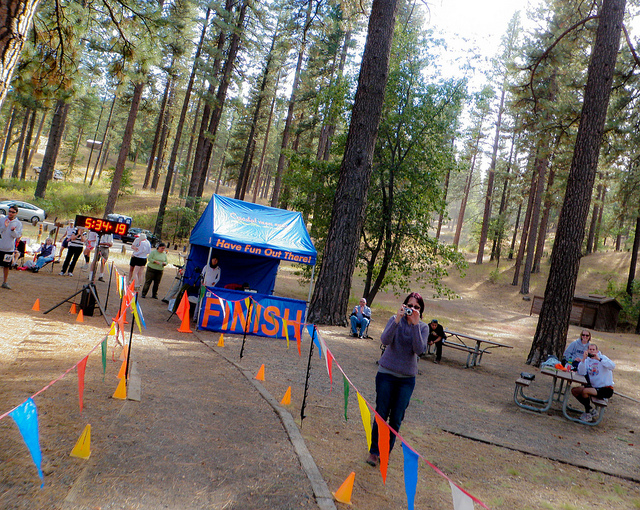
Finish Line

My biggest problem occurs when it is hot on race day. I should clarify that for me temperatures in the seventies qualify as hot. I think this is what I am going to do: If my last long run goes well I will go to the race and check the weather report. If it looks like it is going to be cool I will run the 50K, but if it looks like hot weather I’ll run one of the shorter events – either the marathon or the half marathon.

My Bizz Johnson Photos (from the past several years) on Flickr 143 photos and two videos (including a tunnel video)

UPDATE: My final twenty went fine – I started getting sort of tired at mile thirteen but pushed through. I reviewed my training log and discovered that I had actually ran a twenty miler the week prior to the first of my failed twenties – so I have ran a total of five twenty mile training runs (three of which were more like twenty-one milers in the Sky Lakes Wilderness). I still haven’t decided whether to run the 50K or the 26.2. I’m going to see how I do during the taper (I always cheat and run too much) and also keep an eye on the race day weather.