Running My First Marathon While In Persistent Atrial Fibrillation

Not my first marathon, of course, I think it was my fourteenth marathon, and maybe not even my first marathon in a fib.

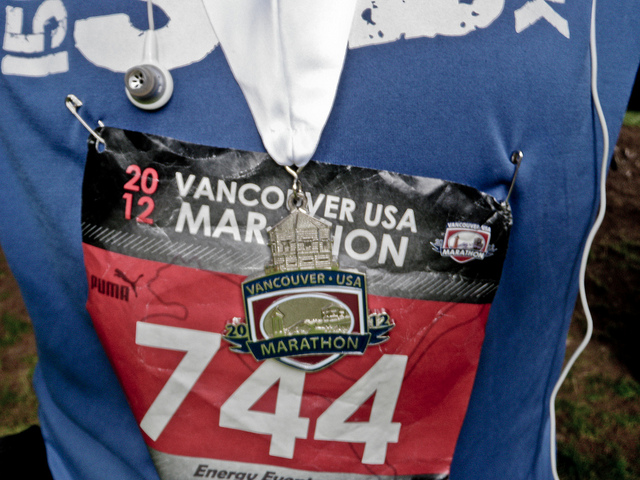
vancusabefore
Pre-Race

I should really re-title this as something about running my first marathon when I KNEW I was in atrial fibrillation. I recall one particular marathon, a couple of years ago, where I started out great and after twenty miles I totally fell to pieces. I would have quit if it hadn’t been a trail marathon with no easy way to DNF – I still had to get to the finish line. In retrospect I realize this was not “hitting the wall,” which I don’t generally tend to do, but I’m pretty sure I went into atrial fibrillation at that point. I don’t mind suffering but that was absurd. It was like eating your favorite food and inexplicably finding it tastes like $&!T.

That was before I even knew I was going into a fib, and I was probably still going in and out of a fib – but ever since May 12, 2012 I have been in persistent atrial fibrillation (meaning that I am always in a fib and have no expectation of NOT being in a fib).

vancusastart
Lining Up At The Back For This One

In May of 2012 I was actually training for my first 50K (31 mile) race (Bighorn Mountain Wild and Scenic Trail Run, Buffalo, Wyoming) and I had been doing a lot of long runs – looking at my training log I see that I had already done six twenty-milers during my training for that race.

I asked my electrophysiologist, who I hadn’t yet seen for my appointment, if I could run the 50K and he said I shouldn’t; so I was effectively grounded as far as the 50K was concerned.

But being the incorrigible distance runner that I am I rationalized, “Well I didn’t specifically ask about running a regular marathon. I‘ve been running 50-60 miles per week for a couple of months – I sure wouldn’t want to waste all that training, would I?”

I looked at the online marathon calendars and discovered that there was a regular marathon (26.2 miles) that same weekend, and only a five hour drive – the Vancouver USA Marathon in Vancouver, Washington – just across the river from Portland, Oregon.

I admit that I was scared – this was unknown territory – running a marathon while in atrial fibrillation. Would I be able to complete it? Would I drop dead? Would I suffer like an animal, I mean, would I suffer even more than running a regular marathon?
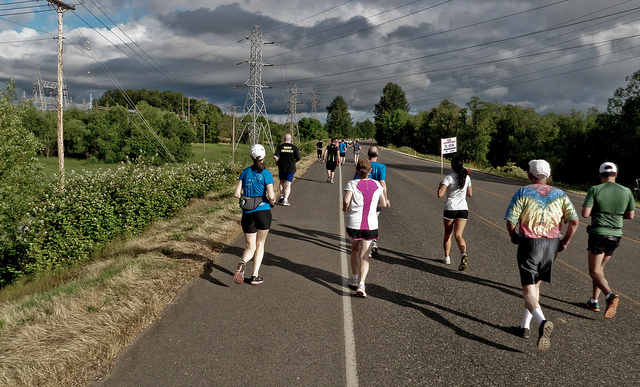
vancusacourse
Along The Course

In a lot of ways the course for the Vancouver event was a lot safer than the Wyoming event. The Bighorn was up and down remote canyons in the Rocky Mountains whereas the Vancouver USA was a flat course through the suburbs of Portland. If I needed to drop out of the race, or if I needed medical assistance, that would be simple – go ring a doorbell.

But naturally I was still nervous when I started out. My plan was just to get through it. I decided not to try to beat anybody, to keep it slow and steady, and to walk up the few little hills that were part of the course.
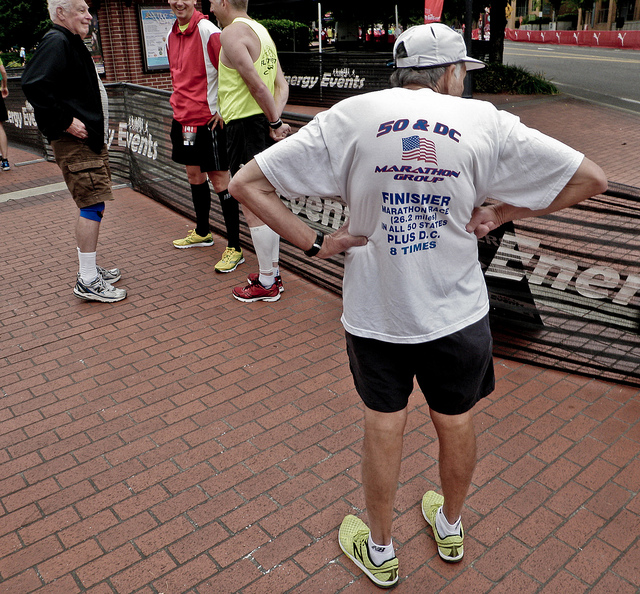
vancusa50states8
Marathons In All 50 States – EIGHT TIMES!!!!!

As stated previously the experience of being in persistent atrial fibrillation is different than that of going in and out of a fib. Persistent a fib isn’t as bad. I’m slower but stable. People who suddenly go into a fib in the middle of a race often find themselves unable to continue – it can be devastating. I know – I think it has happened to me (see above).

At any rate – I started running with the eleven minute mile pace group and hung out with them for most of the race. Eventually I realized that running this race in atrial fibrillation wasn’t that much different than any other marathon that I have done – except for being a bit slower. When I was into the final miles I was surprised that I felt fine – clearly much better than the race described above. I think my plan of keeping it slow and walking the one or two hills worked out – I had very little suffering.

Crossing the finish line was an emotional experience and even though I was there all alone I broke out in sobbing tears. Tears of joy, I guess, because I had finished the marathon and I hadn’t died! It really was just about like normal and I started wondering – just how many of these things had I done in fib?

vancusamedal
Large Man Crying At Finish Line

If you’re a runner in atrial fibrillation and you are reading this I want to make sure that you realize that I am NOT saying, “Go run a marathon in atrial fibrillation.” I am simply relating my personal experience. I am just one individual and, naturally, your experience is different. I stress that it is important that you agree with your cardiologist regarding running and atrial fibrillation. This blog is just my personal story – it isn’t peer reviewed and I am not a cardiologist.

By the way when I finally saw my electrophysiologist he cleared me to continue running and did go on to complete my first 50K four months after the Vancouver USA Marathon. At this point I am comfortable with distance running in atrial fibrillation and am not (too) afraid of dying out there – but that first marathon in (known) atrial fibrillation – well – that was huge.

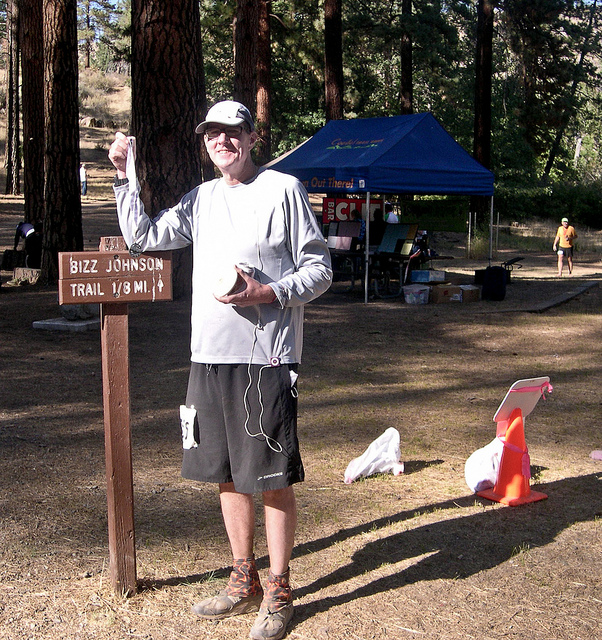
My next event, incidentally, is the Bizz Johnson 50K in October.
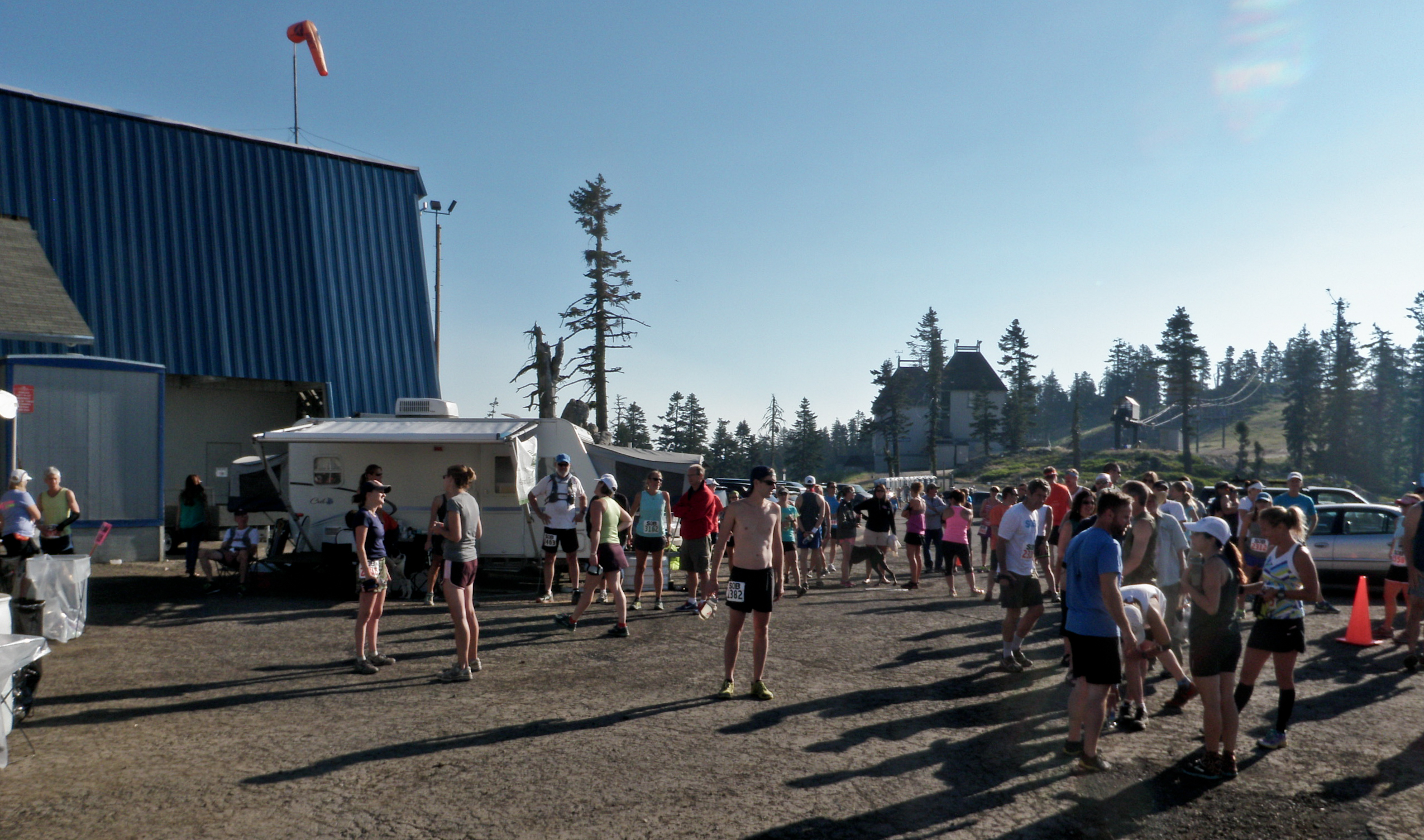
Race Report – SOB Trail Run July 27, 2013 (Siskiyou Outback Trail Run)

The SOB Trail Run has been one of my favorite runs and I think I have five T-shirts from the past ten years.

OLYMPUS DIGITAL CAMERA
Pre Race

Today was my first time running it in persistent atrial fibrillation.

I’ve always been impressed with how well organized the race is, the quality of the course, and the low price. The 15K is still only $25 (that includes a finisher medal but no T-shirt – a T-shirt is extra). There are three events – a 15K, a 50K, and 50 mile race. I’ve only ever done the 15K but several of my local running friends did either the 50K or 50 mile today. The 50 mile has 7000 feet (2133 meters) of elevation change – that’s crazy!

OLYMPUS DIGITAL CAMERA
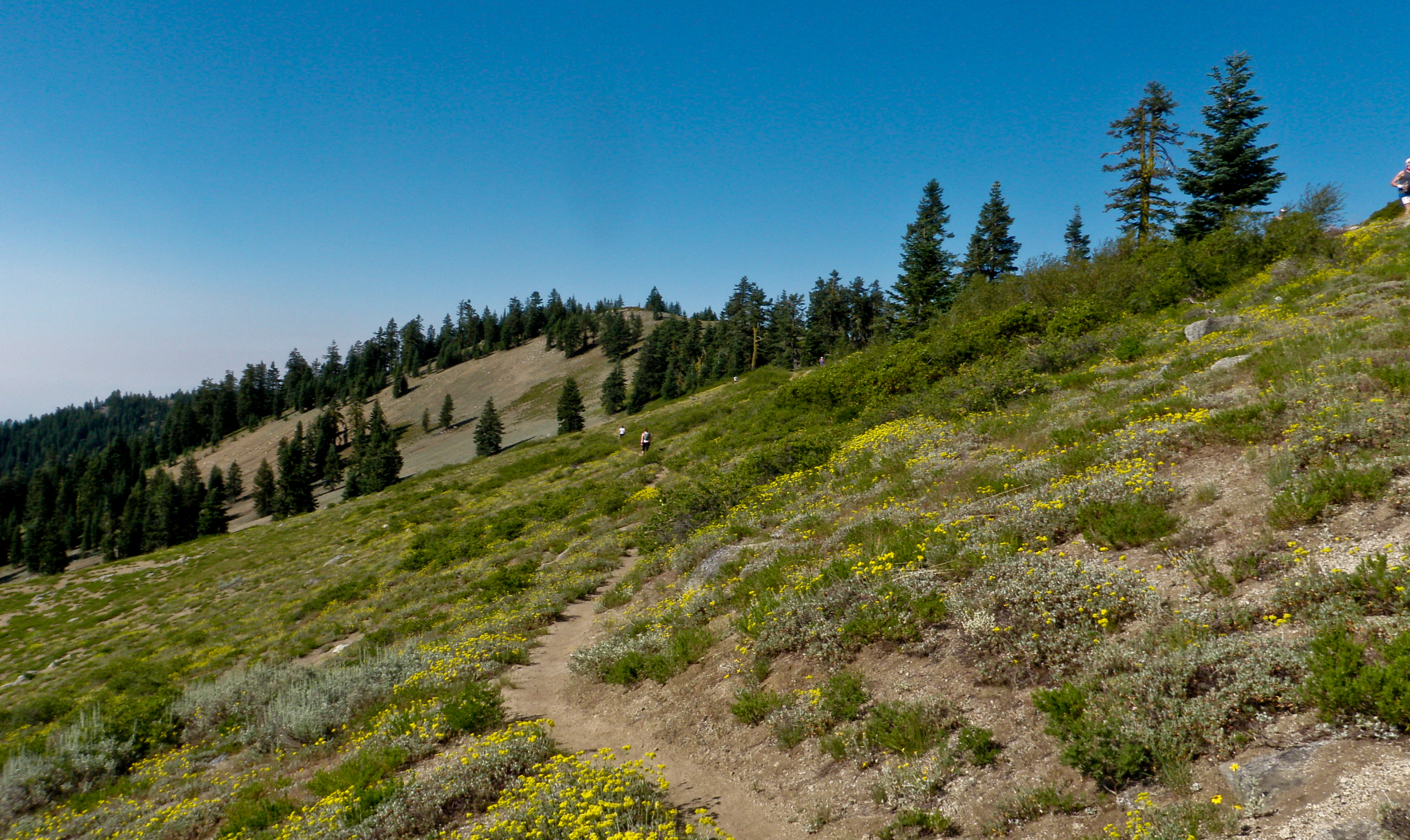
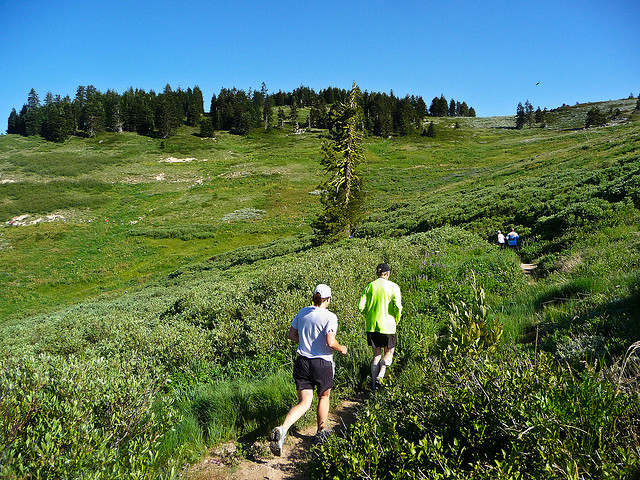
Along the course on the PCT

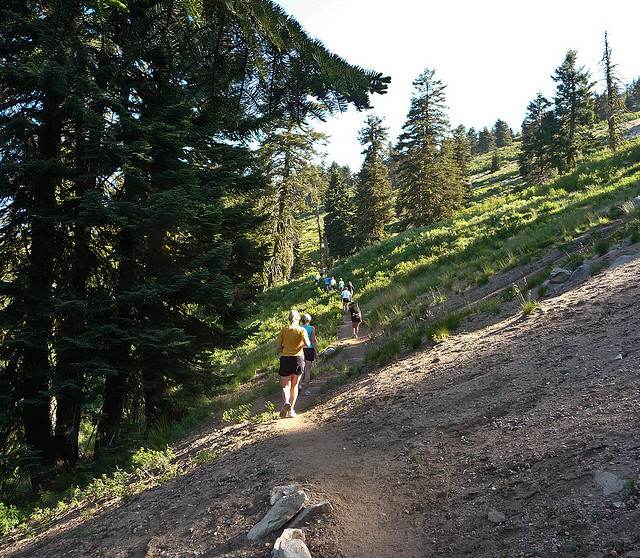
I think all the races start with the same nice 1/2 mile or so on a road that allows everybody to get sorted out as far as pace is concerned before getting on the narrow singletrack of the fabled Pacific Crest Trail. This is a good idea – races that start right off the bat on singletrack, like Haulin’ Aspen Marathon and 1/2 Marathon in Bend, Oregon – tend to develop bottlenecks because passing is so difficult. The truth is that passing is a problem on the SOB – I tend to be faster going uphill (as compared to the slow people I run with) and end up passing people who walk up the hills – but I’m relatively slower going downhill, especially on technical terrain like the PCT, and most of the people I passed going up want to pass me going down; and the 15K course is up / down / up / down.

After several miles of this the race transitions to a fire road and then re-enters the PCT for the last few miles.

afterrace
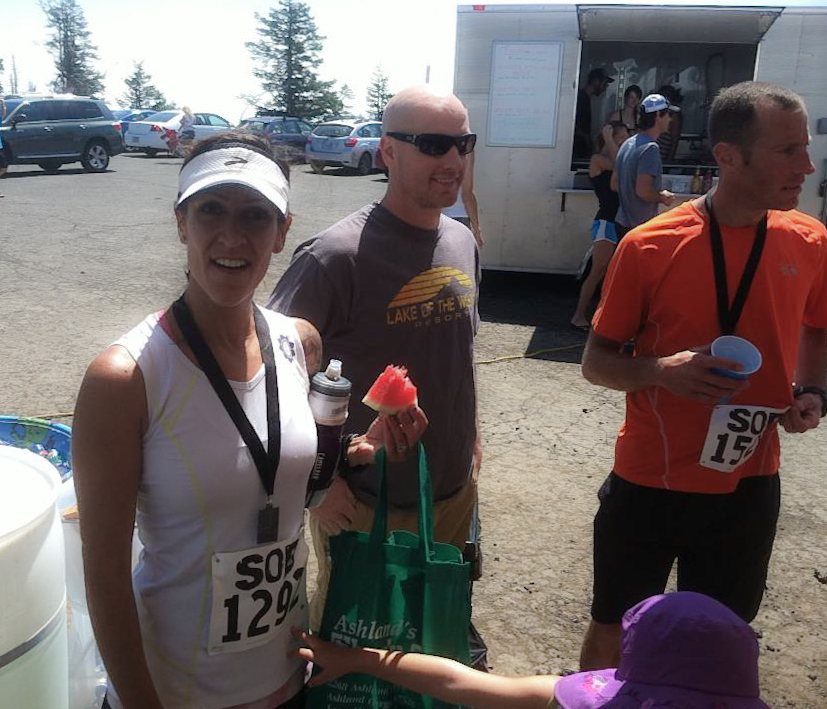
Amber and Nathan after the 50K

The race is fairly high elevation – starting at 6500 feet and climbing to about 7000 feet (??). I don’t notice it much because I live at 4200 feet and regularly run at similar elevations, but people coming from coastal cities will definitely notice the rarefied air.

As far as running it in atrial fibrillation was concerned I had the typical slow start – it takes me a mile or two to warm up now, and then I felt my normal self again. I didn’t even look at my time and I didn’t wear my Garmin 305 – why? I walked only a few particularly steep sections and other wise (slow) ran the entire race.

3715530332_39abc60639_b
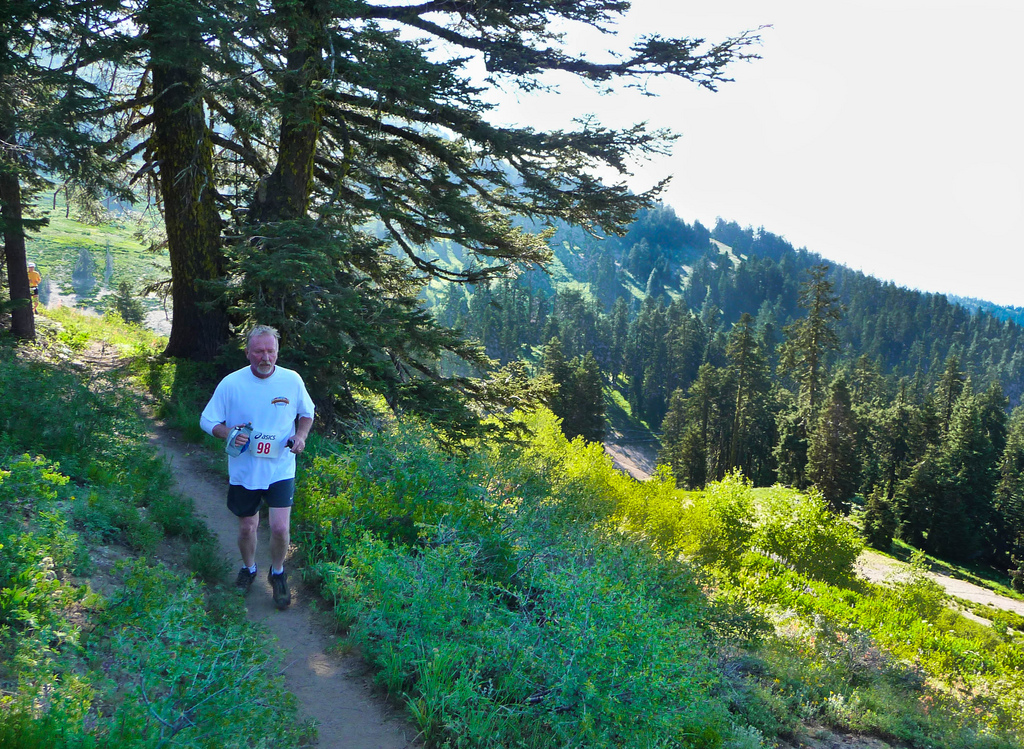
Along the Course

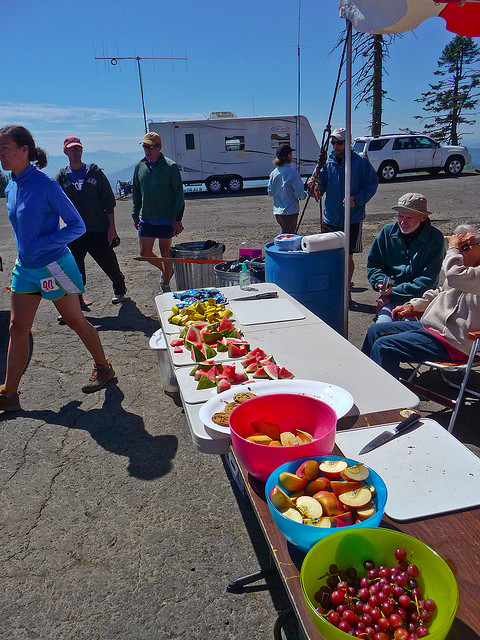
As usual the start/finish line was great – nice people, good music, lots of post race food. I forgot to pick up my post-race swag bag so I don’t know what I missed there. I wish I would have checked the start time for today’s race because I ended up arriving about an hour and a half early – but I can’t think of a better place to hang out that Mount Ashland on race day.

OLYMPUS DIGITAL CAMERA
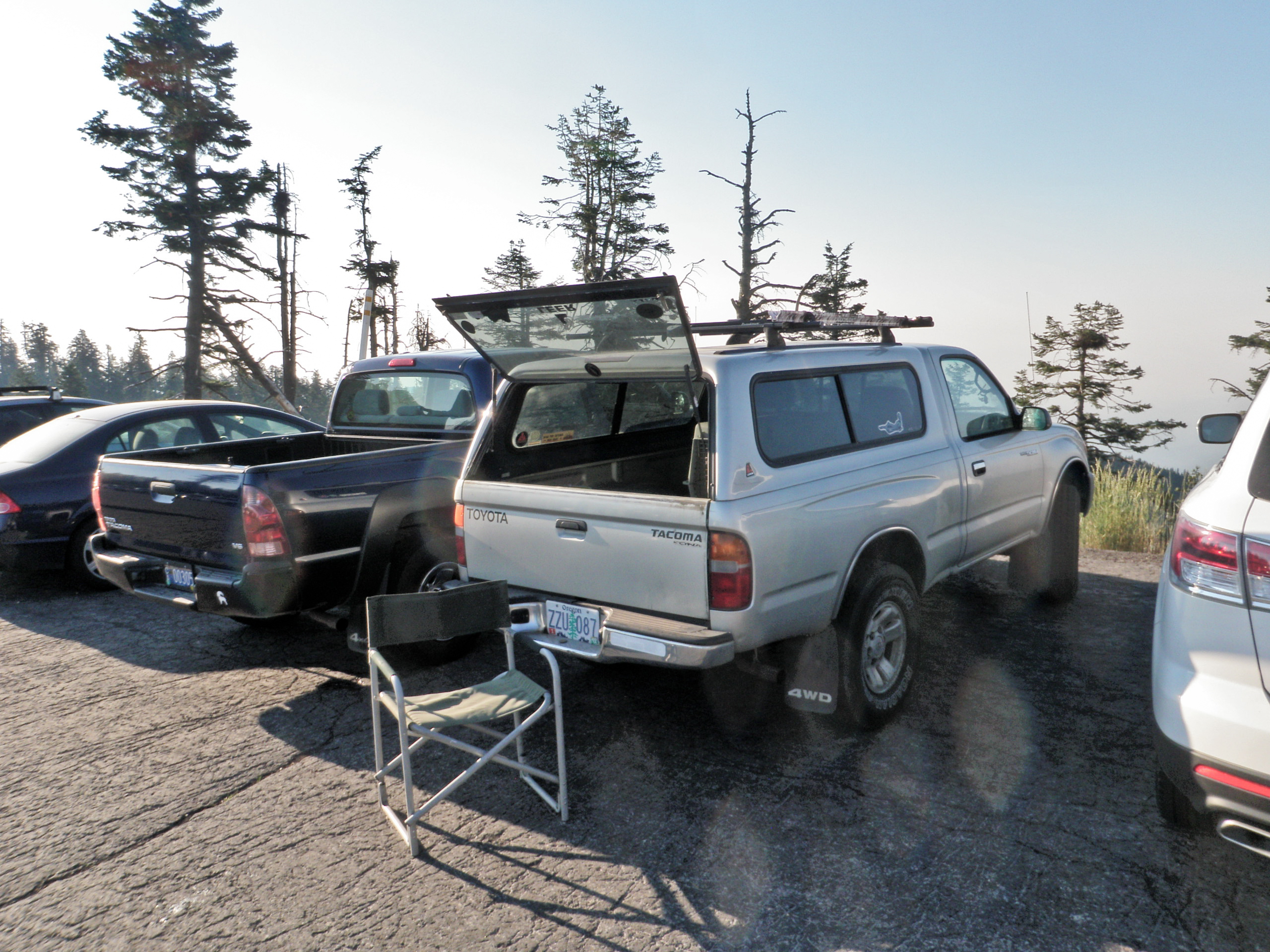
Race Hang Out Headquarters

Running and Mountain Biking with Atrial Fibrillation? Get a Road I.D.

I used the see the Road I.D. commercials while watching the Tour de France and think, “Why would anybody buy a thing like that?” That was before I went into persistent atrial fibrillation and started taking a potent anticoagulant (Pradaxa).

Now something as ordinary and routine as falling down on a trail run or crashing on a mountain bike can become a big deal – maybe even a life and death situation.

roadID

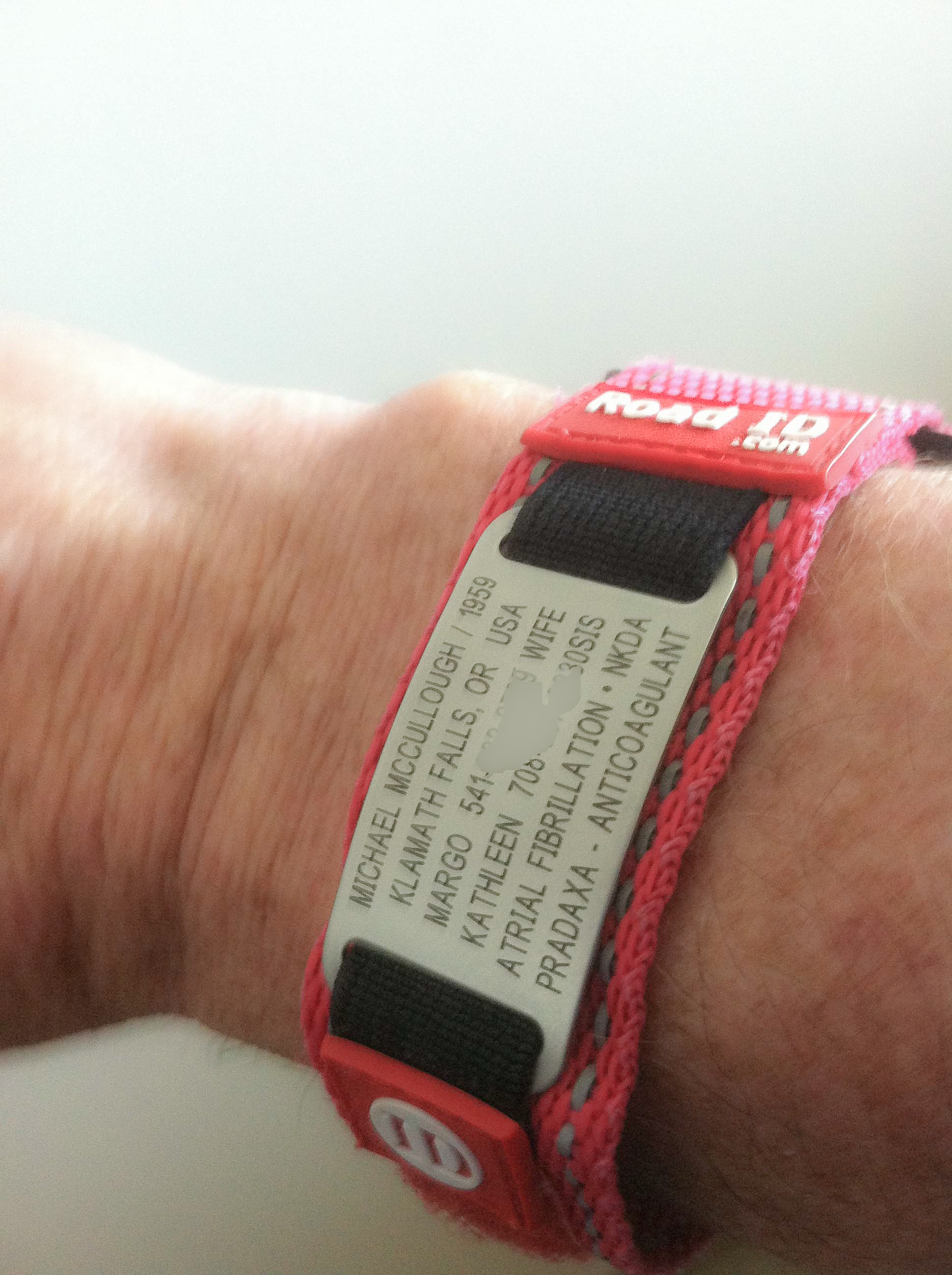
My Road I.D. has my name, year of birth, hometown, my wife’s number and my sister’s number. Also it indicates that I am in Atrial Fibrillation, have no drug allergies, and am taking Pradaxa – an anticoagulant.

This way if I am found dead they know who I am and who to call to come pick up the bike and the body. If I’m still alive they will know about the atrial fibrillation and the anticoagulant. Pradaxa doesn’t have a reversal agent but any medical personnel will know to watch for bleeding and start an IV to push fluids. It certainly couldn’t hurt.

road__id
Wearing my Road I.D. at a pizza parlor

I wear mine whenever I ride or run, and also whenever I drive. I take it off at work.

I was half joking when I said “if I’m found dead” but somebody (I can’t recall who) recently noticed my Road I.D. and said he wished his friend (brother-in-law?) had had one. Evidently he had gone out for a run and died out there (for whatever reason) and had no identification. Nobody knew who he was so they put the body in the morgue for the weekend. I seem to recall that the wife was out of town and they had a hard time figuring out who he was. Eventually when they started to figure out who he was and one of his children had to come from out of town to identify the body. I wish I could remember the details more clearly – but at any rate a Road I.D. wristband would simplify a situation like that.

There’s nothing special or unique about a Road I.D. – any medical alert bracelet would be fine; but a Road I.D. just seems cooler. It’s durable, comes in cool colors, and is highly customizable, it cleans up well when worn in the post work out shower, and goes on and off easily.

Atrial Fibrillation at Altitude – High Elevation Hiking on the Lares Trek

We’ve just returned from a trip to Peru which included quite a bit of time at higher elevations – most notably hiking on the Lares Trail at 4600 meters (15,000 feet) above sea level. The highest thing we have around here is the conspicuous, glacier topped Mount Shasta (4,322 meters = 14,179 feet) and I’ve never even been up to the top of it. I’ve been up Mount McLoughlin (2,894 meters = 9,495 ft) sixteen times and even back when I was in sinus rhythm I would take one breath per step near the top.

passllamas
Llamas Schlepping Our Gear

I have to admit I was worried prior to going on this trip.

I had no idea how the high elevation combined with my persistent atrial fibrillation would affect me. My wife Margo, who is a travel agent, arranged a terrific trip and we had a total of sixteen friends in our group. It was all bought and paid for and I was determined to go no matter what, so I didn’t even research how high elevation might effect my atrial fibrillation before leaving. That’s right – I didn’t even Google it!

I knew that our outfitter – G Adventures – had a mechanism by which people who had problems with altitude sickness could quickly return to Cusco – so I knew that I had an opportunity to bail out if need be.

saxa1
Saksaywaman

We had two or three days in Cusco, Peru, which is 3,400 meters (11,200 ft) above sea level, so I was able to acclimatize. I felt no different in Cusco than I did at home in Klamath Falls, Oregon (4200 ft) and I even went for a run up to Saksaywaman (3701 meters = 12,142 ft) and it went well – although frankly, because of endless steep hills, it did involve a lot of walking!

saxa2

The Lares Trek is a nice alternative to the extremely popular Inca Trail. It is shorter (only twenty-one miles) and higher elevation (4600 meters = 15,000 feet) but most importantly it was not nearly as crowded. There were sixteen in our group (plus porters and guides) and there was one other G Adventures group of ten who we would see once or twice per day – and that was it.

pass2
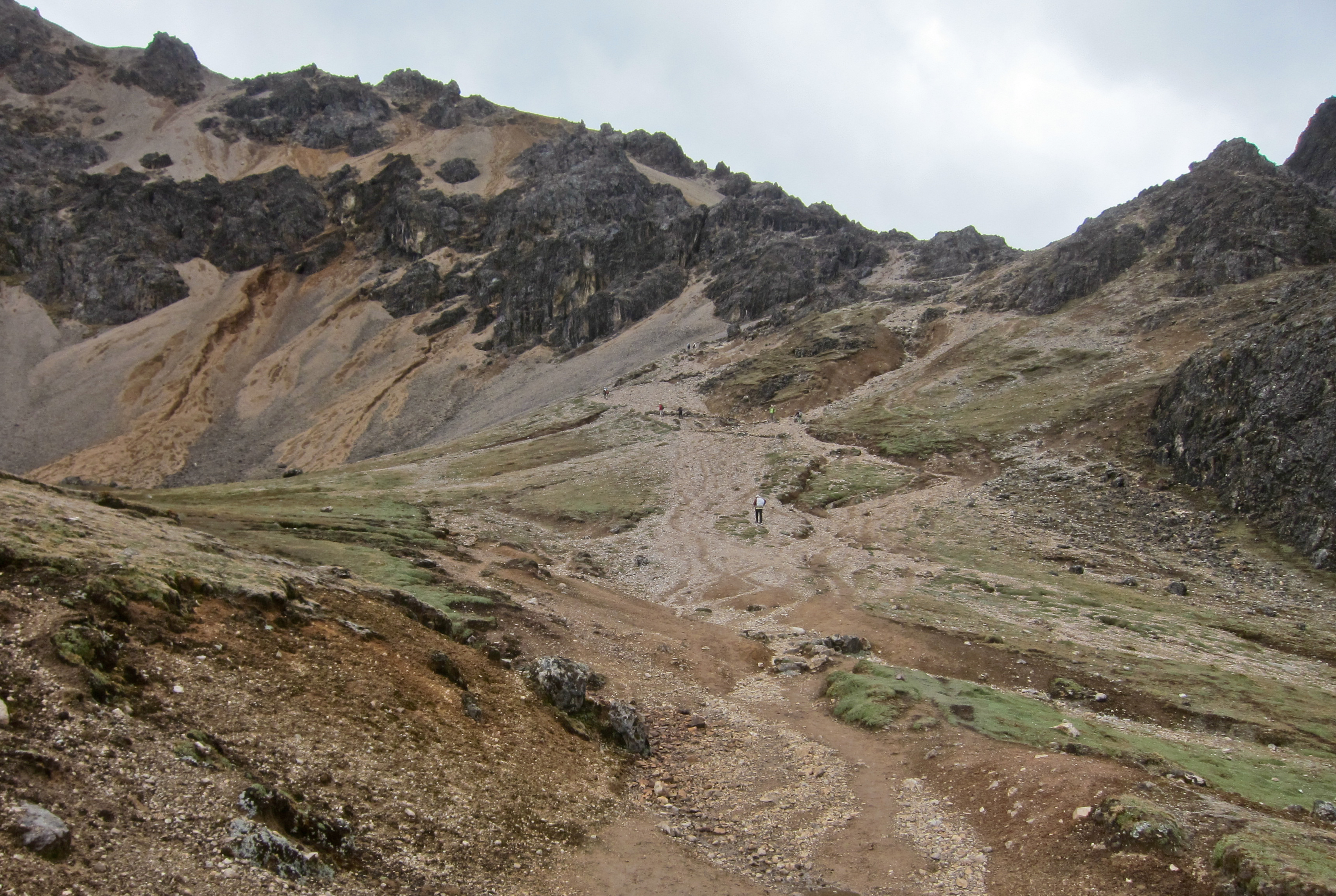
Ipasayqocha Pass

In contrast, the Inca Trail hikers we spoke to at Machu Picchu told us there were 200 people camped at a single, large camp outside Machu Picchu who all entered Machu Picchu before dawn on the same morning causing quite a line for the checking of tickets and passports at the small Inca Trail entrance to the site.

OLYMPUS DIGITAL CAMERA
Machu Picchu at Sunrise

At any rate nobody in our group had serious trouble with the elevation, although everybody was gasping a bit. Margo was a little sick on the day we went up Ipasayqocha Pass but that was related to the usual traveler’s intestinal distress rather than altitude sickness. We were fortunate – the guides said that typically in a group our size they would expect three or four people to have trouble with some degree of altitude sickness.

pass1
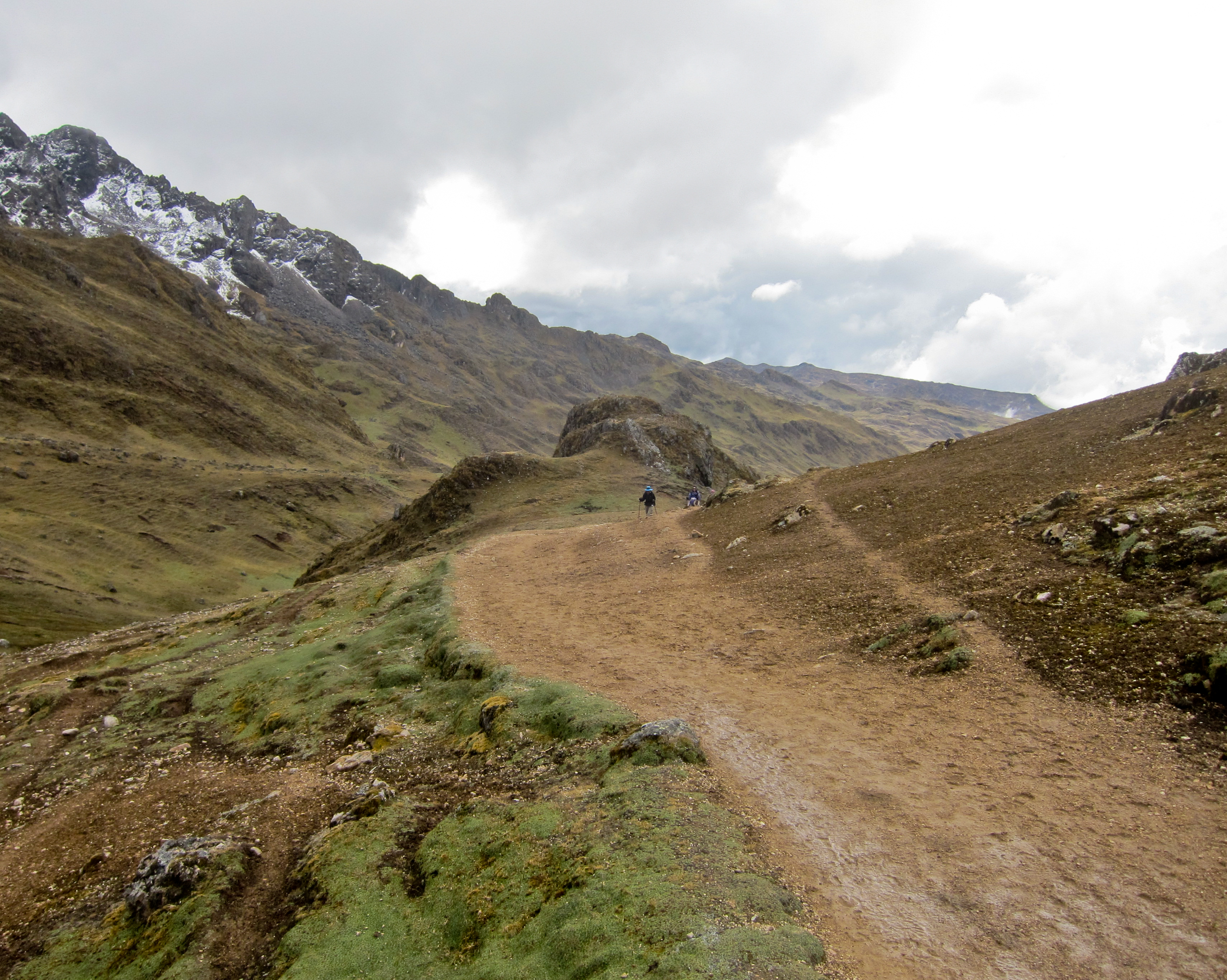
Hiking Over the Ipasayqocha Pass

Our group was older but fit – but I have been told that being fit or being a couch potato has no bearing on predicting who will develop altitude sickness. Some people get it and others do not. Like I said we were lucky.

As for me I had the same atrial fibrillation symptoms I have at home, perhaps a little worse. I was out of breath when I started out but after several minutes I was in no distress. It takes me a while to warm up. Even in Lima, at sea level, I would huff and puff if I picked up a couple of backpacks and marched up the stairs to our room – that’s just the way it is for me now.

The first 200 meters of the Lares Trail is, I think, the toughest, because it goes up a long section of steep stairs. I was breathing so hard at first that I thought for a bit that I would be turning back – but ten minutes later I felt no different than a normal hike here in Oregon.

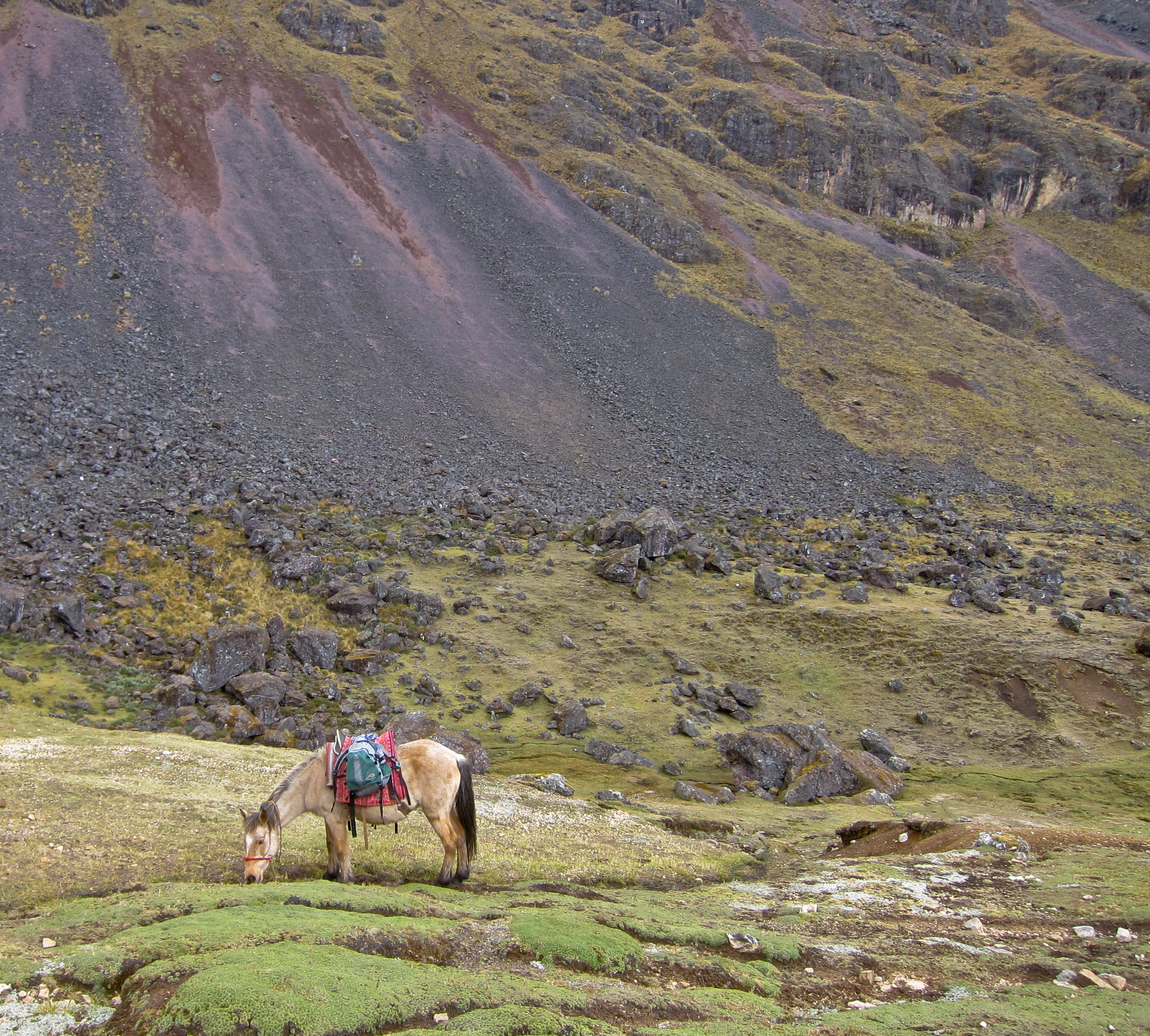
The porters had an extra horse in case anybody became sick during the trek they could ride that horse. Nobody rode it but during Margo’s bad day they put her daypack on the “sick horse.”

sickhorse
Margo’s Pack on the Extra Horse

So to sum it up my personal experience with hiking and running at significantly high elevation while in atrial fibrillation was unremarkable. Your experience may be different, of course. As far as I can tell nobody knows until they get there whether or not they will have issues with altitude sickness – so don’t get discouraged – give it a try.

OLYMPUS DIGITAL CAMERA
Machu Picchu at Sunrise

Next Event – SOB Trail Run – Ashland, Oregon July 27, 2013

Here is my Race Report SOB Trail Run July 27, 2013

I’m signed up to run the 15K at SOB (Siskiyou Outback) Trail Run July 27, 2013. This is a terrific event and I have done it several times in the past – I’m not sure but I think I have maybe four T-shirts from the event. This will be my first time running it while in persistent atrial fibrillation. So far I have completed one 15K, one marathon, and one 50K while in (known) persistent atrial fibrillation – but of course I suspect that there have been other marathons when I was in a fib but didn’t know it.

sob1

SOB Trail Run

The races begin at the parking lot of the Mount Ashland Ski Lodge and go up from there. In addition to the 15K there are also 50K and 50 mile events. There’s no way I’m in 50K shape right now.

The course for the 15K includes a portion of the Pacific Crest Trail.

sob2

Running on the PCT

This will be my first time running the SOB in atrial fibrillation – but I’m not too worried about the elevation – not after trekking in the Andes last week at 4600 meters (15,000 feet).

This event has always been very well managed, inexpensive, with great music and great food and plenty of raffle prizes. Wait for me at the finish line – I hope to see you there.

sob3

Post Race

Atrial Fibrillation and Weight Loss or How To Lose Forty Pounds

As I stated previously, when I first discovered that I was in persistent atrial fibrillation I decided that I needed to lose about 40 pounds, and I did.

It just makes sense that if my cardiac output is reduced by atrial fibrillation then I needed to jettison some excess weight.

My days of being a 235 pound marathon runner were over. My way range over the last twelve years has actually been between 220 and 250 pounds. People were so used to see me that my “normal” weight that when I started to get under 200 pounds they would ask me if I was ill, or even if I had cancer.

vancouverprerace

Pre-race

Losing weight is easier than one would think. There are a lot of methods that work, but the most important thing is to make up your mind. It’s like quitting smoking cigarettes – it’s extremely difficult if your heart isn’t in it, but if you have truly make the decision there’s no stopping you.

I have loved drinking beer for my entire adult (and teenage) life, but three years ago I decided to completely quit drinking any form of alcohol. As a matter of fact I try not to take in any calories via liquid. Just quitting drinking beer was good for a ten or fifteen pound weight loss. But even as a teetotaler I could find myself drifting up into the 230s.

beer

Beer Drinking

Over the years I’ve used various methods to lose weight and I’d like to briefly discuss them, and then discuss what I’m doing now, which seems to work the best.

Before I actually tried it I had always thought that a low-carb/Atkins diet was a sort of parlor trick. People on it just deplete their glycogen stores (glycogen also holds a lot of water in the muscles) and have a weight loss that wasn’t really true fat loss. But I started seeing patients who were losing a hundred pounds and more on a low-carb diet – eating a lot of meat and high-fat foods like coffee drinks loaded with heavy cream.

As a person who has been reading Bicycling magazine and Runner’s World for the last several decades I was stuck on the fact that athletes need a lot of carbohydrates in order to train properly. But I decided to try the Atkins diet for two weeks, using my body as an experimental laboratory, fully expecting that it would affect my training and that I would quit after two weeks.

That particular Summer I wasn’t running very much but had been training for some centuries (100 mile bicycle rides) in the Fall. I doubted I would be able to get up any of our mountains without carbohydrates. I was wrong. I found I was able to train normally on a low-carb diet and the sheer amount of weight loss was astounding. Different people, obviously, have different metabolisms – but I found I was able to lose about 30 pounds in six weeks utilizing a low-carb diet.

But there were definitely problems with a low-carb diet for me personally. Intuitively I could tell it was not healthy. You can eat bacon for lunch and think “this is great,” but you can’t honestly believe “this is healthy.” It changes, in an unpleasant way, the smell of your breath, the smell of your sweat, and the smell of your bowel movements.

Another big problem was that I was never able to stay on an low-carb diet for more than six weeks at a time. I didn’t crave carbohydrates – I just got bored. I grew so weary of eating steak that I would sometimes just skip meals.

I also found that while I could train for long-distance bicycling on a low-carb diet, running on a low-carb diet was definitely different. I could still go out and complete long training runs, up to 20 miles, but I was totally wrecked afterwards. My recovery was terrible and sometimes I would come home from a long run, take a shower, and just go to bed.

These are the things I discovered by using my body as an experimental lab.

After abandoning low-carb diet once and for all, I tried the guidelines outlined in Racing Weight by Matt Fitzgerald. This is great if you are already at a good weight, or just need to lose a couple of pounds – but it really isn’t calorie restrictive. It’s all about the quality of the food you eat. That book was interesting because it had a long section of a day in the (diet) life of quite a number of endurance athletes.

I made my own modifications to his points system and printed up little daily tally sheets to keep in my pocket and keep track of my points each day. I would try for thirty points per day. The main problem with this diet is that you can actually eat a lot of good, healthy food, but still can eat a lot of calories.

OLYMPUS DIGITAL CAMERA

Trail Lunch

A couple of years ago I discovered, for me, absolutely the best way to actually lose weight. I used an iPhone/Internet app called Lose it! There are several similar applications including My Fitness Pal, Weight Watchers Mobile, etc.

With these applications you simply enter your age, gender, and weight – and then you enter how much weight you want to lose per week. The app then tells you exactly how many calories you can eat per day, and efficiently helps you keep track. It doesn’t matter what you eat, you just need to log everything, and nearly every type of food seems to be pre-entered into the application (including foods from specific restaurants). If you eat or drink something that has a barcode on it, like a Clif Bar for example, just scan it. If you log your exercise the program adds more calories to your day.

I think just utilizing an application like Lose it! makes it worthwhile getting a smart phone.

Some pitfalls, obviously, include miscalculating how much food you actually ate. At first I wasn’t very good at figuring out what one tablespoon actually means. For example – a tablespoon of peanut butter doesn’t mean actually scooping out as much peanut butter as possible with a tablespoon. That’s more like four tablespoons.

8653327432_9fc8d5df1a_z

Peterson Ridge Rumble

The exercise aspect of it, I felt, was extremely good. But calories for running are based on your weight, time spent running, and your pace. It really does not take into account whether or not the run was hilly, however. As a big, slow endurance athlete I was able to burn up a lot of calories just by being out there for several hours on any given work out.

Although I attribute my 40 pound weight loss to this iPhone app, I no longer log anything I eat with Lose it! but I still use it to log calories burned during workouts, as a rough guide.

Ultimately I discovered the documentary Forks Over Knives. The scientist in me found the data very compelling. I then read Eat to Live Joel Furhman – and between the documentary and this book I completely changed the way I eat. Both of these are manifestos, of course, and are manipulative to a certain extent, but I think they are correct.

At this point in time I would call myself a lackadaisical vegan. I say lackadaisical because I really don’t read the ingredients for things such as bread, which I know will contain some dairy or eggs, but for the most part I am a vegan.

Oh, and I also have trouble avoiding pizza or ice cream which I will have about once per week. So I’m really no vegan, but I guess I’m a vegetarian. We make our own pizza and it’s good stuff – kale, onions, mushrooms, broccoli, and green peppers. At this point in time I can maintain my weight with the semi-vegan diet, and no longer need to log food or count calories. If I started gaining weight again I would definitely utilize the Lose it! app in order to get back down to target weight.

So that’s how I did it.

8653336448_2a62412e17_z

Peterson Ridge Rumble

Any restrictive diet is effective, no matter which diet, because you end up eating less. For me personally I have found that the low-carb diet clearly allows incredibly fast, significant weight loss – but I didn’t feel that it was healthy. I know that my nearly vegan diet is healthy – I never had high cholesterol to begin with but the last time I checked my LDL cholesterol (a.k.a. bad cholesterol) it was sixty-one. I don’t take any medications except for Pradaxa. I didn’t know LDL cholesterol could even go that low!

I would be interested in hearing from other endurance athletes with atrial fibrillation, especially about changes in diet. Please feel free to leave comments.

Atrial Fibrillation – A Visit to the Electrophysiologist

While at my previous job, at Klamath Family Practice Center, I always had easy access to an EKG. Just for the record, remember that I am a podiatrist, not a family practice physician, but if I wanted to have an EKG done I would just have a tech do one on me. I have had a fairly long history of arrhythmias, including PACs, PVCs, and even runs of paroxysmal supraventricular tachycardia. But one day when I returned from a 20 mile trail run I was in a particularly persistent arrhythmia and I wondered if it was atrial fibrillation. I had the tech do an EKG and my suspicions were confirmed.

At that point I walked down the hall and went to see my primary care doctor, who is also one of my coworkers, and she recommended Pradaxa, gave me some samples, and made an appointment for me to see my local cardiologist, Dr. Dale McDowell.

martinmiro

At Dr Martin’s Office

Dr. McDowell, with whom I have been a patient for the past twenty years, then examined me, did a stress EKG, told me to continue with the Pradaxa, and advised that I should see an electrophysiologist for consultation.

We have several cardiologists in Klamath Falls, all of whom are excellent, but we don’t have any electrophysiologists. An electrophysiologist is a subspecialty cardiologist who focuses on arrhythmias, and are the ones who performed the ablations, install pacemakers and defibrillators, and so on. I think their most common patient is probably people like me who have atrial fibrillation.

I had an appointment with David Martin, MD of Southern Oregon Cardiology and I will admit that I was extremely nervous about this appointment, because I was afraid that he would tell me I had to quit running and quit mountain biking. Or at the very least he would tell me to quit running marathons and start running 5Ks. I was also afraid that he was going to put me on a performance killing medication such as a beta blocker, or worse, recommend and ablation procedure which could be quite an ordeal.

Like other endurance athletes I often have to deal with people that really don’t understand what it is that we do, and why we do it. That’s one thing if it’s a relative, friend, or an acquaintance – but when it is somebody who is going to formulate a treatment plan that is going to affect the rest of your life, it can be a scary proposition.

lakeo

High Lakes Trail

So when I did a Google search on Dr. Martin I honestly wasn’t very interested in where he graduated from, or what he did during his fellowship – I just wanted to try to figure out if he was a runner, bicyclists, or a triathlete. The little blurb about him and the Southern Oregon Cardiology website didn’t mention anything one way or the other, but in his photograph he appeared to be a thin man, and I found that to be encouraging.

I think I even searched local race results looking for his name to no avail.

When I called to make an appointment I asked the receptionist, “Is this guy a runner, or anything like that?” She said that she had no idea.

It took a while before I can get an appointment and in the meantime I had a question. I had spent four or five months training to run an ultramarathon, the Bighorn Mountain Wild and Scenic Trail Run 50K in Wyoming. Even after I was diagnosed with atrial fibrillation I continue to train for this race, which was to be my first 50K. I was getting mixed messages from people as to whether or not I should run it. My primary care physician, who is an ultra runner and has completed a couple of hundred mile races, and who happened to be signed up to run the 50 mile event at the same race, told me to run it. She said it would just take me a little longer – no problem. A friend of mine, with whom I was going to run the race and was also running his first ever 50K, and is a family practice physician in Wyoming, told me to quit complaining and get on the plane to Wyoming for the race. My cardiologist in Klamath Falls, Dr. McDowell, advised me to quit running marathons and not to consider running an ultramarathon. I have a cousin in Chicago who is an electrophysiologist/caridologist and I spoke with him on the phone – he runs marathons and his wife runs ultramarathons. He said I should run it. Another acquaintance, who is a cardiac surgeon, but have never actually examined me, said he thought it might be safe for me to run the 50K, but advised me that it is important that I agreed with my cardiologist (good advice).

If you’re keeping track, so far that is four doctors that said go ahead and run it, and one doctor, who happens to be my cardiologist, and has the biggest vote, that said not to run it. I decided to call Dr. Martin (the electrophysiologist), who would be the tiebreaker, even though I hadn’t been seen by him yet, and ask him about running that 50K.

highlakes

High Lakes Trail

I was able to get a message to him through his nurse, and then she called me back and said I shouldn’t run it. So I didn’t run it.

This is unfortunate because I had already paid for it, but when I contacted the race director she told me I would be unable to get a refund, or even a credit for next year’s event. Also, I had already bought an airline ticket Wyoming which is more expensive than you might imagine. I was able to get a partial credit for this.

I didn’t want to waste all that training so I decided to run a marathon that weekend. I found a nearby marathon in Vancouver Washington and ran that while in persistent atrial fibrillation. It was slow, but I survived, and that’s another blog article altogether.

vancouver

Vancouver USA Marathon

When I finally got in to see Dr. Martin he examined me, looked over all the EKG’s, the stress test, the chart notes from Dr. McDowell, and the lab work and spent quite a bit of time talking with me.

I’m glad that my wife came along because she wouldn’t believe me if I came home and told her that he told me, “Keep exercising like you don’t have atrial fibrillation.” He then went on to tell me, “in the future you may want to consider some moderation as far as your exercises concerned.”

That seems reasonable enough. In fact I was delighted.

The next thing he said was kind of funny. He said, “People like you are a type – ultra marathoners, triathletes, Ironman competitors . . . and you can be pretty hard on your bodies.”

“People like you are a type . . .” Well . . . that certainly is true.

In addition to clearing me to continue with my running, he advised that I did not need to take an antiarrhythmic, which probably would not be very helpful in my specific case, and didn’t recommend a rate control drug at this point in time. Furthermore, he advised me that he thought I had a low likelihood of having a successful ablation procedure given the severe hypertrophy of my left atrium and the fact that the atrial fibrillation was persistent.

He did recommend that I try cardioversion with a “one strike and you’re out” policy – that is to say it probably would not be any type of permanent solution, but it is certainly worth trying at least once. That seems perfectly reasonable to me and I went back to Dr. McDowell for the cardioversion, and was in sinus rhythm for a total of thirty-three days.

I was so pleased with my visit to see the electrophysiologist, Dr. Martin, that I wrote him a letter afterward thanking him. I hadn’t really expected that kind of empathy.

I would be interested in hearing from other endurance athletes with respect to their medical care, and how they perceived the way they were treated by their cardiologists and electrophysiologists. Please feel free to leave a comment.

On Being Slow – Running with Atrial Fibrillation

Being in persistent atrial fibrillation is sort of like being a pickup truck with a four speed manual transmission, but you can only use second and third gear.

If you’re going to continue distance running in persistent atrial fibrillation you’d better expect to be slower.

I was already slow to begin with – my quickest marathon was four hours and forty minutes and it took me an hour to run a 10K. I’ve always avoided 5Ks because people in 5Ks simply run too fast. Once I was a back of the middle of the pack runner, well, now I’m truly a back of the pack runner.

moikspraguert

Training Run

I’ve always been a larger runner, and that’s definitely a factor in being slow. I’ve done a dozen marathons at over 6′ 3” and about 235 pounds, and have often felt that people would “mark” me, use me sort of as a target. I’ve felt particularly self-conscious about those people, often found in the back of the pack in a marathon, who will run up and pass me and then start walking – over and over again. This can be really annoying. One guy did that for 14 miles! I finally told him, “please either keep running or keep walking.” I know that these people are simply followers of Jeff Galloway (there are a lot of them in the back of a marathon pack), but it’s still annoying and it happens every race.

But if I was moderately slow before, I’m silly slow now. In an effort to preserve my pace I have actually lost about 40 pounds – but I don’t think I’ve even broken even. I had previously ran ten minute miles in shorter training runs, but now twelve minute miles are more common. As stated previously I had a cardioversion and was in sinus rhythm for thirty-three days – and at my new weight I was delighted to be able to train, for shorter runs, at a nine minute mile if I wanted to – but alas after a quick five-mile run in the thirty-third day I went back into persistent atrial fibrillation. I could feel it immediately and knew what had happened.

I imagine that a lot of athletes who are reading this blog are people who have had episodes of atrial fibrillation, or who go in and out of atrial fibrillation. I think people with intermittent atrial fibrillation become much more symptomatic and have a lot more trouble with training. They might not be able to train at all. But with persistent atrial fibrillation, at least in my experience, I have found that I stabilized and am able to train (a slower pace). You just have to get used to it.

OLYMPUS DIGITAL CAMERA

Back of the Pack – Haulin Aspen Trail Marathon and 1/2 Marathon

There are a few major differences, however. Prior to atrial fibrillation, like most runners, I would start out a long run at a fairly quick pace and more or less degrade as far as my pace was concerned as the miles accumulated. But with atrial fibrillation I actually start out quite slow, and after a mile or two find that I have picked up the pace quite a bit. I generally don’t do much interval training, but I imagine that is out of the question at this point. I live and train in the mountains and I can still run hills, but not really very quickly. When bicycling I find I don’t stand up and charge up hills any longer, but remain seated and spin more.

Being in persistent atrial fibrillation is sort of like being a pickup truck with a four speed manual transmission, but you can only use second and third gear. You start out pathetically slow, and your top speed is greatly diminished – but she can still drive as far as you want.

OLYMPUS DIGITAL CAMERA

Big Slow Runner – Before A Fib

The most important thing, of course, is that I am still able to continue trail running and mountain biking, and I am still able to participate in marathons and even ultra marathons. I still get to experience the sheer joy of slogging through a long trail run through the forest. I was never going to win any prizes to begin with, so what’s the difference?

Actually, I was delighted to get a medal for second place in my age group at the 2012 Bizz Johnson 50K, which I ran while in persistent atrial fibrillation. That was the first year they had a 50K at that event and there weren’t very many participants. I’m pretty sure that there were only two people in my age group, but still!

8088969997_a13aa36c8c_z

Second Place (age group) Hell Yeah!!!!

One good thing about ultra running and marathon running, especially compared to 5Ks, for example, is that nobody really cares if you are slow. I was surprised that there were many people who finished behind me when I ran my first 50K in atrial fibrillation. Although it is kind of embarrassing to be so slow, you just have to change your mindset, and when you get involved with ultra sports, especially with atrial fibrillation, you need to simply enjoy yourself, enjoy the run, enjoy the trail, enjoy the people, and not worry about time.

If there are any other athletes reading this who are in persistent a fib, or intermittent a fib, I would love to hear about your experiences, and I encourage you to leave comments.

Running Alone

Even before I was in persistent atrial fibrillation I generally would like to run alone, although occasionally I run with my wife, Margo. Bike riding was different – I would often go for mountain bike or road rides with friends. At this point, however, I generally go alone so I can just keep my own slow pace.

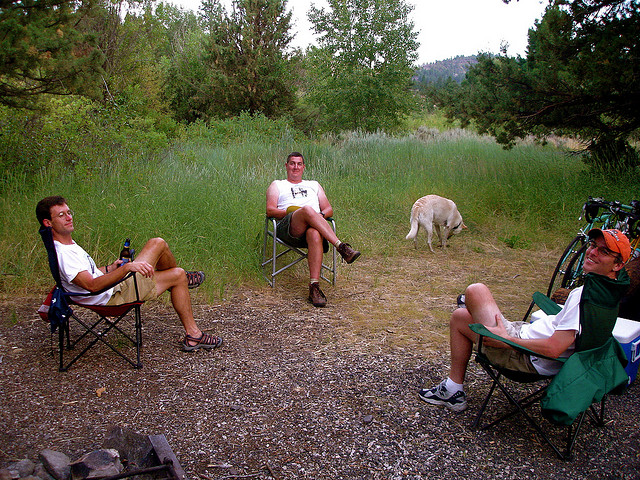
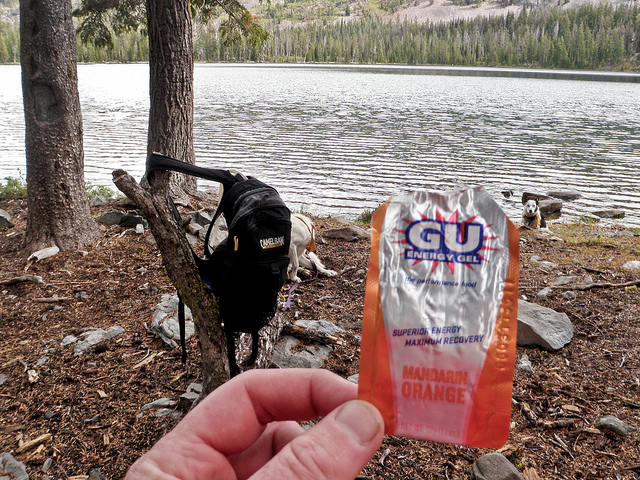
Ninety-five percent of the running that I do is trail running, and almost all that is done with my dogs – so technically I don’t run alone. They don’t care how slow we go – they are simply glad to be out there.

OLYMPUS DIGITAL CAMERA

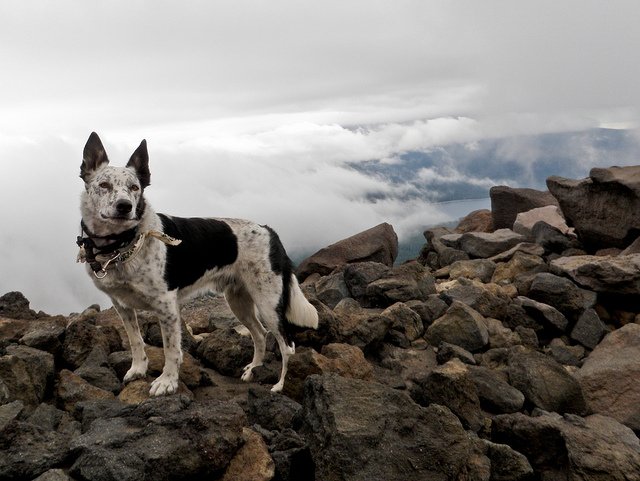
Ringo on Mount McLoughlin

Ringo is a blue healer, border collie cross and is a great trail dog. He behaves well off leash, never chases anything, and always stays with me. There are a couple of races around here that allow dogs and he always gets to go along for these events.

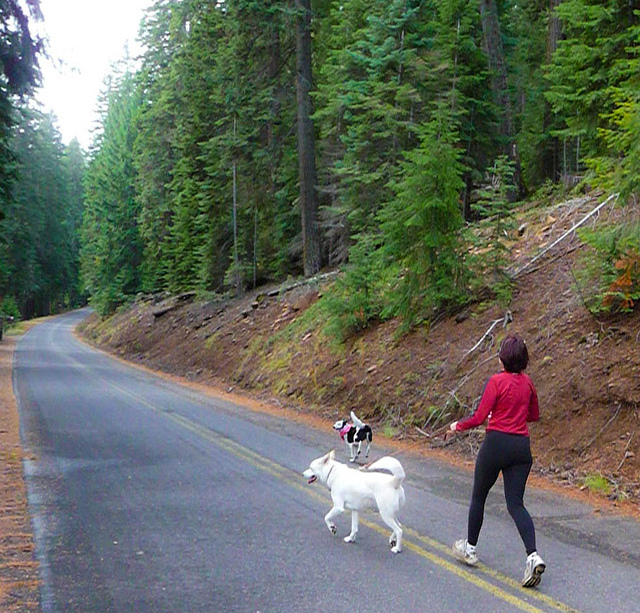
Our other dog, Sophie, is a husky/shepherd cross and pretty much needs to be on leash 100% of the time (otherwise she runs off after God knows what), which can be challenging for trail running. It pretty much completely eliminates Sophie as a mountain biking partner.

margosophie

Running at Lake of the Woods with Margo, Ringo, and Sophie

I often run in wilderness areas, or even remote trails near town, and sometimes worry about having a fall and getting hurt on the trail. I guess that just has to be an acceptable risk. I like to say I’d rather die in Sky Lakes Wilderness (our local wilderness) than at Sky Lakes Medical Center (our local hospital – where I am on the surgical staff) – but I feel sorry for they people who find me – imagine finding somebody on the trail . . . that big and that dead! As a precaution I always like to tell my wife where I’m going, and of course, I always have my cell phone with me. I usually take a bandanna along so I have something I can use for a tourniquet if necessary – don’t forget I am on a potent anticoagulant (Pradaxa).

I’d be interested in hearing from other runners and mountain bikers who are training while on anticoagulants and find out what type of precautions you take. Please feel free to leave a comment.

Heat and Salt and A Fib

As stated previously I get pretty lightheaded when I get up from a sitting position after a hard workout, particularly in hot weather. Orthostatic hypotension. I don’t know why I get dehydrated so easily now, but I have learned that I need to eat something salty and drink a lot of water  after a workout, particularly a run or a bike ride which is longer than an hour or two, otherwise I get pretty dizzy when I first standup, and I’ve had a friend who is an nephrologist and another friend who is an internist both tell me to make sure I drink plenty of water after a workout and get some salt. Just one more fun aspect of being in persistent atrial fibrillation.

OLYMPUS DIGITAL CAMERA

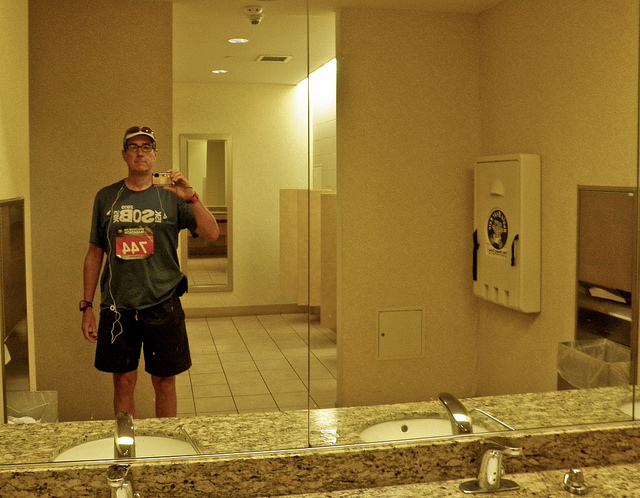
Pre-Race Motel

This is the first time in my life I’ve ever actually been trying to get more salt. Most people spend their lives trying to avoid salt. I have started bringing potato chips for a post run snack to the trailhead for my long runs. Another great post run snack is some blue corn chips with some hummus with some Hoisin sauce.

OLYMPUS DIGITAL CAMERA

Pre-Race

Although it is neither here nor there, I’d like to state that I am a vegetarian (nearly vegan – if not for the occasional veggie pizza) as far as diet is concerned.

I also find that I am more sensitive to heat, which is obviously related. Last summer I would often start to feel pretty tired 17 miles into a 20 mile training run. In cool weather a 20 mile trail run is no problem. When I’m training for a 50K I basically try to do a 20 mile run every weekend.

Fortunately I live in Klamath Falls, on the East side of the Cascades of Oregon, where we have relatively cold Winters and generally cool Spring and Autumn. Summer, obviously, can be pretty hot – but nothing like Southern California, Arizona, Mexico, the South, etc.

OLYMPUS DIGITAL CAMERA

Resting During a Trail Run

I have also noticed over the past several years that I did quite poorly during marathons if the weather got hot. The concept of hot weather is a relative term – for me anything over 70°F (21°C) would be considered hot. My ideal running weather would be 35 to 55°F. Ten years ago I could do a 20 mile run when it was 90°F (32°C) without much problem. Those days are over.

I’d be interested in hearing from other people with atrial fibrillation with respect to this. Please comment.

ringotired

Ringo – Pooped Out After a Long Trail Run